Is Your Headache Trying to Tell You Something Serious? Warning Signs You Should Never Ignore

You know the drill. You reach for the ibuprofen, dim the lights, maybe skip your afternoon coffee, and hope the pounding behind your eyes calms down by dinner. Most of the time, that’s exactly what happens. Headaches are almost a universal language — nearly everyone gets one sooner or later, and for most of us, it’s just our body’s way of saying “slow down.”

But every so often, a headache isn’t just a headache. It’s a signal. And learning to tell the difference between “annoying but harmless” and “get help now” could genuinely save your life — or someone else’s.

The Headaches That Are (Usually) Fine

Tension headaches — that dull, tight feeling like a rubber band around your skull — are the most common type out there. Stress, poor sleep, too much screen time, dehydration, even bad posture can trigger them. Migraines are more intense, often one-sided, and can come with nausea or sensitivity to light, but they’re also a known pattern for millions of people. If your headache feels familiar, similar to ones you’ve had before, and it responds to rest, water, or your usual painkiller, it’s probably not an emergency.

The Red Flags Worth Paying Attention To

Doctors sometimes call these “thunderclap” symptoms, and they’re worth burning into memory:

It hits like a lightning bolt. A sudden, explosive headache that reaches peak intensity within seconds — often described as “the worst headache of my life” — can be a sign of a brain bleed or aneurysm. This isn’t something that builds gradually. It’s instant and shocking.

It comes with neurological changes. Slurred speech, numbness on one side of your body, blurred or double vision, confusion, or trouble walking alongside a headache are classic warning signs of a stroke. Time matters enormously here — every minute counts.

You have a fever, stiff neck, and headache together. This combination can point to meningitis, an infection of the tissue surrounding your brain and spinal cord. It can escalate fast and needs immediate medical attention.

It follows a head injury. Even a “minor” bump can cause a concussion or, less commonly, bleeding inside the skull. If a headache after a fall or hit gets worse instead of better, or you feel increasingly drowsy or disoriented, don’t wait it out.

It’s a new pattern after age 50. If you’ve never really had headaches and suddenly start getting them regularly later in life, it’s worth a conversation with your doctor, since this shift can occasionally be linked to conditions like temporal arteritis or other underlying issues.

It wakes you up at night or is worse in the morning. Headaches that consistently disturb sleep or feel worse when you first wake up, especially alongside nausea or vision changes, deserve medical evaluation.

It comes with vision loss or eye pain. Sudden vision changes paired with a headache, especially in one eye, can signal anything from a migraine variant to more urgent issues like a stroke or acute glaucoma.

What to Actually Do ?

If you notice any of the “thunderclap” symptoms above, that’s an ER visit, not a wait-and-see situation.Get to urgent care immediately — this isn’t the moment to Google your symptoms and hope for the best.

For headaches that are unusual but not alarming — different from your normal pattern, lasting longer than expected, or just nagging at you — it’s completely reasonable to call your doctor and describe what’s going on. You don’t need to justify checking in. Doctors would genuinely rather see you for a headache that turns out to be nothing than miss the one that wasn’t.

The Bottom Line

Your body talks to you constantly, and most of the time a headache is just noise — stress, dehydration, too many hours staring at a screen. But your body also has a way of raising its voice when something’s actually wrong. Learning the difference isn’t about becoming anxious over every twinge; it’s about trusting yourself enough to know when “this feels different” is worth listening to.

If in doubt, don’t tough it out alone. A quick call to a doctor, or a trip to urgent care, is always the safer bet than hoping it’ll just pass.

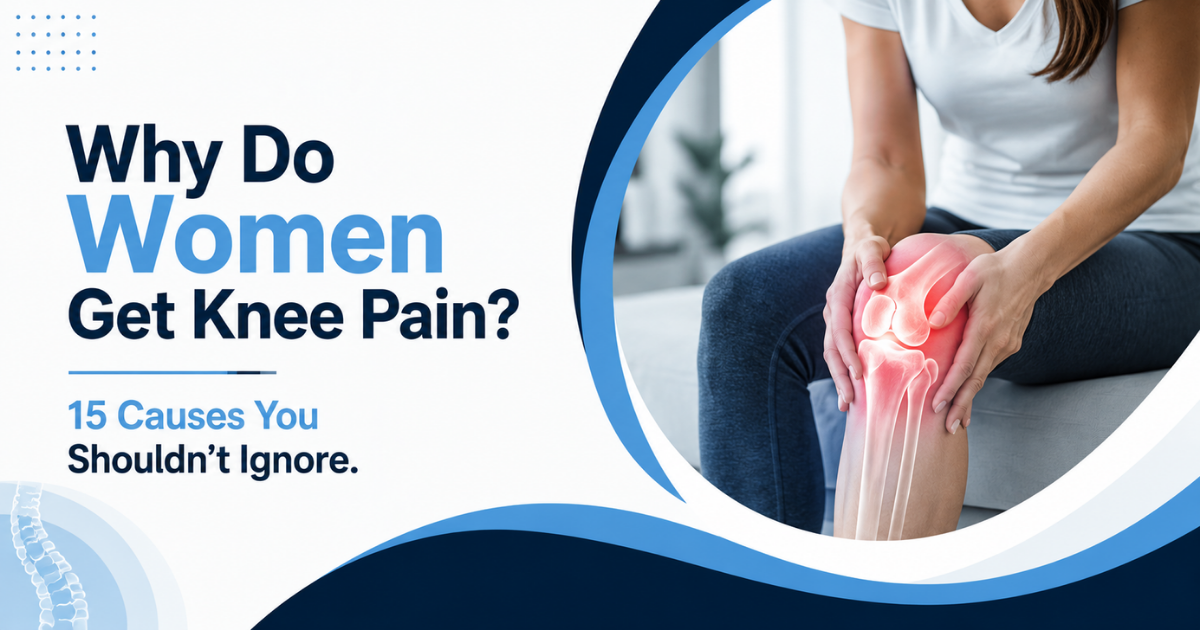
Why Do Women Get Knee Pain? 15 Causes You Shouldn’t Ignore.

So your knee’s been bothering you. Maybe it’s a dull ache after your morning walk, or a sharp twinge every time you take the stairs. Whatever it is, you’re in good company — knee pain is one of the most common complaints doctors hear from women across the U.S. And it’s not random. Women’s bodies are simply built a little differently: wider hips, shifting hormones, looser ligaments. All of that adds up to a knee joint that works a little harder than it does in men. Here’s what’s usually behind the pain, how it gets diagnosed, and what tends to actually help.

What’s Really Going On With Your Knee ?

Osteoarthritis. This is the big one — plain old wear and tear on the cartilage. It hits women harder than men, and menopause seems to make it worse. You’ll usually notice morning stiffness, some swelling, maybe even a grinding feeling when you bend your knee.

Runner’s knee (patellofemoral pain syndrome). That ache right around or under the kneecap? Because women’s hips are wider, the angle of the knee joint is a bit sharper, which puts more stress on it during things like running or squats.

ACL tears. Female athletes tear this ligament far more often than men — some studies say two to eight times as often. It usually happens during a jump landing or a sudden pivot.

Meniscus tears. A bad twist, or just years of everyday use, can wear down the cartilage cushion in your knee. The telltale sign is a locking or catching sensation when you move.

IT band syndrome. Ask any runner or cyclist about this one. A tight iliotibial band drags along the outside of the knee and causes real irritation.

Rheumatoid arthritis. This autoimmune disease shows up two to three times more in women than men. It tends to hit both knees at once, with stiffness that’s worst first thing in the morning.

Bursitis. Small cushioning sacs around the knee get inflamed, often from kneeling too much or repetitive motion — think gardening or scrubbing floors.

Patellar tendinitis, aka jumper’s knee. Overuse of the tendon just below the kneecap. Common in anyone doing a lot of jumping or high-impact training.

Chondromalacia patella. The cartilage under the kneecap softens and starts breaking down — this one shows up a lot in younger, active women.

Baker’s cyst. A fluid-filled lump behind the knee. It’s usually a sign that something else is happening underneath, like arthritis or a tear.

Gout. Uric acid crystals build up and cause sudden, intense pain. Less common in women before menopause, but the odds go up afterward.

Menopause-related joint pain. As estrogen drops, cartilage and connective tissue lose some of their cushioning power. A lot of women just start feeling achier in their 40s and 50s, and this is often why.

Pregnancy-related knee pain. Extra weight, a shifted center of gravity, and the hormone relaxin loosening up your joints — pregnancy asks a lot of your knees.

Referred pain from the hip. Sometimes the knee is innocent. A weak or misaligned hip can send pain traveling down the leg.

Extra weight on the joints. Every pound you carry adds real pressure to your knees with every step, which speeds up wear over time.

How a Doctor Figures Out What’s Wrong ?

It usually starts simple: a hands-on exam to check how your knee moves, whether it’s swollen, how stable it feels. From there, depending on what they suspect, you might get:

  • An X-ray, to look for arthritis or bone changes
  • An MRI, for a closer look at ligaments, cartilage, and other soft tissue
  • Blood work, if something like RA or gout seems likely
  • A joint aspiration, where fluid is drawn from the knee and checked for infection or crystals

If the pain’s lasted more than a couple of weeks, or your knee feels unstable, locks up, or swells, don’t just push through it. Get it looked at.

What Actually Helps ?

For everyday knee pain, treatment is often pretty straightforward:

  • Rest, ice, compression, elevation — the classic RICE approach for anything acute
  • Physical therapy, to build strength and fix alignment issues
  • NSAIDs, to take the edge off pain and swelling
  • A little weight loss, if it applies, to ease pressure on the joint
  • A brace or orthotics for extra support during activity

If that’s not cutting it, your doctor might talk about:

  • Injections (corticosteroid or hyaluronic acid) for longer relief
  • Arthroscopic surgery to repair torn ligaments or cartilage
  • Knee replacement, for advanced arthritis that isn’t responding to anything else

It’s Not Just About Exercise

Stretching and strengthening go a long way, but they’re rarely the whole story. Most people find real relief comes from combining a few approaches:

  • Physical therapy — a therapist can build a routine around your specific pain patterns instead of a generic list.
  • Ice, then heat — ice for the first 48 hours after a flare-up to calm inflammation, then heat afterward to loosen things up.
  • Your workspace — a proper chair, a monitor at eye level, and a 5-minute walk every hour make a bigger difference than most people expect.
  • Medical support — for tougher cases, doctors may suggest anti-inflammatories, chiropractic care, or targeted injections.

Questions People Actually Ask

Why do women get more knee problems than men? 

Mostly anatomy and hormones. Wider hips create a sharper angle at the knee, and conditions like osteoarthritis and RA just show up more in women, period.

Is it normal for my knees to hurt more during menopause? 

Pretty much, yes. Falling estrogen affects your cartilage and connective tissue. Still, if it’s getting worse or not letting up, it’s worth having a doctor check it out — don’t just chalk it up to “getting older.”

When should I actually go see someone about it?

 If it’s been more than two or three weeks, or you’re dealing with swelling, instability, locking, or trouble putting weight on it — that’s your cue.

Can I actually prevent this stuff? 

A lot of it, yes. Strengthening your quads, hamstrings, and hips, keeping your weight in a healthy range, and using good form when you exercise all make a real difference.

Should I still walk if my knees hurt? 

Usually, yes — walking is low-impact and often recommended by physical therapists. The exception is if you have a specific injury that needs rest first, so check with a doctor if you’re not sure which camp you’re in.

Will I need surgery for a torn meniscus?

 Not necessarily. A lot of tears, especially the age-related kind, heal just fine with physical therapy. Surgery tends to come up for bigger, unstable tears — more often in younger, active people.

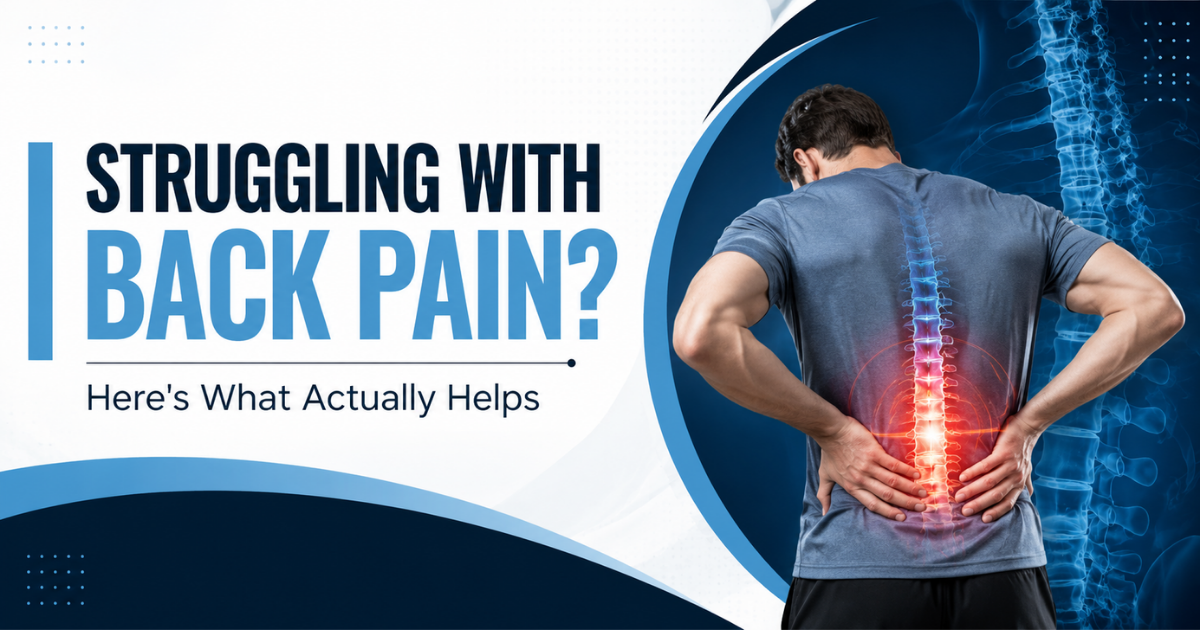
Struggling With Back Pain? Here’s What Actually Helps

If you’re reading this while shifting around in your chair trying to find a spot that doesn’t hurt — you know exactly what I mean. Skipped a barbecue because you couldn’t sit that long. Winced picking up your kid. Dreaded the drive to work because your back was already stiff before you even got in the car.

That’s just… life with back pain. It sneaks into everything and makes you feel older than you are.

Here’s the thing though: the fix usually isn’t in a pill bottle. For most people, it’s movement. Not intense workouts, just consistent, gentle motion that retrains the muscles supporting your spine.

Why Lying Down Isn’t Always the Answer

When your back hurts, the instinct is to crawl onto the couch and stay there. And sure, a day of rest after a sudden injury can help. But too much stillness backfires — muscles stiffen up, your core weakens, tight hamstrings start yanking on your lower spine, and suddenly you’re in more pain than when you started.

Gentle movement does the opposite. It gets blood flowing, loosens up the joints, and basically kickstarts your body’s own repair process.

Four Stretches Worth Doing Today

Go slow. Breathe. If something causes a sharp pain, stop — a little discomfort during a stretch is normal, sharp pain is not.

Child’s Pose An old yoga standby, and for good reason — it stretches the lower back and opens up space between your vertebrae. Kneel with your knees hip-width apart, sit back onto your heels, and fold forward with your arms stretched out ahead of you. Let your forehead rest on the floor. Stay there, breathing, for 30–60 seconds.

Knee-to-Chest Great for that “I woke up stiff” feeling. Loosens the hips and lower spine. Lie on your back, knees bent, feet flat. Pull one knee toward your chest with both hands while keeping the other foot planted. Hold 30 seconds, switch legs, repeat three times each side.

Cat-Cow A moving stretch that wakes up your whole spine. Get on hands and knees. Inhale, drop your belly, look up (Cow). Exhale, round your spine, tuck your chin (Cat). Flow between the two for 1–2 minutes.

Seated Hamstring Stretch Tight hamstrings pull on your pelvis, which strains your lower back — so this one matters more than people think. Sit on the edge of a sturdy chair. Straighten one leg out, heel down, toes up. Sit tall, then hinge forward from the hips until you feel a gentle pull in the back of your thigh. Hold 30 seconds, switch legs.

Three Exercises to Keep It From Coming Back

Stretching eases what’s already tight. Strengthening stops the next flare-up before it starts. Your core isn’t just abs — it’s the whole band of muscles acting like a built-in support belt for your spine.

Bird-Dog Start on hands and knees. Extend your right arm forward and left leg back at the same time, keeping them level with your torso and your hips square. Hold 5 seconds, return, switch sides. Ten reps per side.

Glute Bridges Weak glutes push more of the workload onto your lower back — bridges wake them back up. Lie on your back, knees bent, feet flat and hip-width apart. Squeeze your glutes and lift your hips until your body forms a straight line from shoulders to knees. Hold 2 seconds at the top, lower slowly. Two sets of 10–12.

Partial Crunches Skip full sit-ups — they’re rough on the spine. Lie back, knees bent, arms crossed over your chest. Tighten your abs and lift just your shoulders off the floor as you exhale. Don’t pull on your neck. Ten to fifteen reps.

It’s Not Just About Exercise

Stretching and strengthening go a long way, but they’re rarely the whole story. Most people find real relief comes from combining a few approaches:

  • Physical therapy — a therapist can build a routine around your specific pain patterns instead of a generic list.
  • Ice, then heat — ice for the first 48 hours after a flare-up to calm inflammation, then heat afterward to loosen things up.
  • Your workspace — a proper chair, a monitor at eye level, and a 5-minute walk every hour make a bigger difference than most people expect.
  • Medical support — for tougher cases, doctors may suggest anti-inflammatories, chiropractic care, or targeted injections.

When It’s More Than “Just a Sore Back”

Most back pain fades within a few weeks with basic care. But some symptoms mean it’s time to stop self-treating and call a doctor:

  • Numbness, tingling, or weakness in your legs, groin, or buttocks
  • Sudden loss of bowel or bladder control
  • A fever or unexplained weight loss alongside the pain
  • Pain that’s severe, constant, and doesn’t ease when you lie down
  • Pain that started right after a fall, accident, or sports injury

Frequently Asked Question

1.Does walking actually help?

 Yes — it’s low-impact, keeps you upright, and gets blood moving to the muscles supporting your spine without the pounding of running. A brisk 20-minute walk most days does a lot.

2.Heat or ice — which one?

 Ice for anything new and sharp (under 48 hours old). Heat for the dull, chronic stuff — stiffness, spasms, achy days.

3.How often should I actually do this? 

The gentle stretches — Child’s Pose, Cat-Cow — you can do daily, even twice a day if you’re sitting a lot. The strength moves like bridges and bird-dogs are better at 3–4 times a week, giving your muscles a chance to recover between sessions.

Final Thought 

You don’t have to just live with it. Ten to fifteen minutes a day of the right movement can genuinely change how your back feels — not overnight, but steadily. Be patient with it, stay consistent, and don’t ignore the small wins along the way.

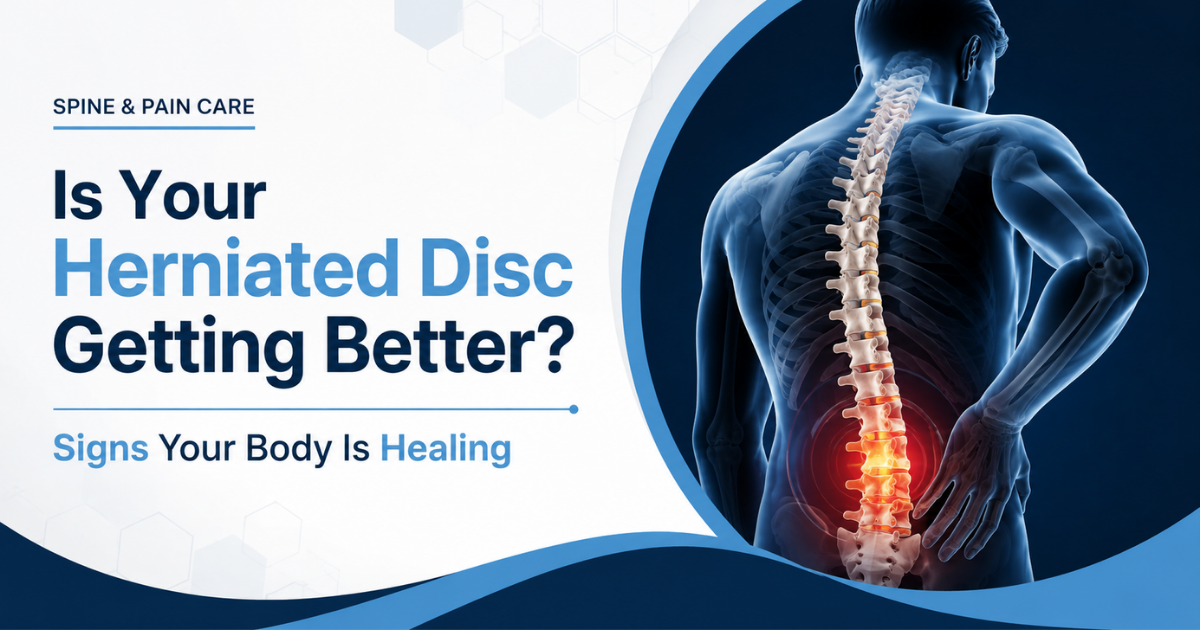
Is Your Herniated Disc Getting Better? Signs Your Body Is Healing

If you’ve ever experienced the sharp, shooting agony of a herniated disc, you know it’s so much more than a literal “pain in the neck” (or back). It completely hijacks your life. Suddenly, simple everyday tasks—like bending down to feed the dog or just getting through a grocery trip—feel like trying to summit Mount Everest. It’s exhausting, frustrating, and honestly, a little scary.

But here is the good news you need to hear today: your body is remarkably resilient. Despite how terrifying it feels, the vast majority of herniated discs heal entirely on their own within a few weeks to a few months—no surgery required.

The tricky part is that healing isn’t a straight line. You’ll have great days followed by frustratingly stiff days. So, how do you know if your body is actually doing the hard work of repairing itself, or if you’re just having a temporary “good day”? Let’s walk through five clear signs that your spine is finally on the mend.

You Just Forget to Take Your Medicine

Think back to those first couple of weeks. Remember when you were staring at the clock, practically counting down the minutes until you could safely take another ibuprofen or Tylenol?

If you suddenly look at your phone, realize it’s 2:00 in the afternoon, and notice you completely forgot your morning dose because you just didn’t feel like you needed it—take a second to celebrate that. It means your body is officially doing the heavy lifting on its own.

The Recovery Timeline: What to Expect

Everyone heals on their own schedule, so try not to compare your Day 20 to someone else’s. But to give you an idea of what the comeback trail usually looks like, here is a general roadmap:

  • Phase 1 (Weeks 1–4): The Fire Cools Down This is when the worst of that angry, sharp inflammation finally starts to back off. Instead of a massive, overwhelming ache, you’ll likely notice the pain shrinking down into one specific, much more manageable spot.
  • Phase 2 (Weeks 4–8): Getting Your Groove Back This is where you really start feeling like yourself again. Moving around gets a lot easier, you feel more flexible, and you’ll start noticing the strength returning to your legs or arms.
  • Phase 3 (Months 2–6): The Home Stretch Behind the scenes, your disc is continuing to settle, heal, and find its footing again. This is the window where you can safely and gradually get back to the more intense activities and workouts you love.

⚠️ A Quick Look out for Each Other: While healing naturally is what happens most of the time, there is one major red flag you shouldn’t ignore. If you experience a sudden loss of bowel or bladder control, or notice a numb, “pins-and-needles” feeling in your groin area (like the parts of your body that would touch a saddle), please don’t wait it out. Head to the nearest emergency room right away. It’s a sign of something called Cauda Equina Syndrome, which is rare but needs a doctor’s eyes immediately.

Frequently Asked Questions

Can a herniated disc really  heal for good on its own?

Yes, it absolutely can. Words like “herniated,” “slipped,” or “ruptured” sound terrifying—like a piece of your spine is permanently broken. But your body has an amazing, built-in “cleanup crew.”

When a disc herniates, your immune system looks at the misplaced piece and says, “Hey, you don’t belong there.” It automatically triggers a natural process to break down and safely absorb that material over time. Your body is basically clearing its own traffic jam.

What does the end of recovery actually feel like?

Honestly? It feels like getting your life back. You’ll go about your daily routine without constantly thinking about your back or planning your movements.

Sure, you might still get a little stiff if you sit at a desk for too long, or when a rainy weather front rolls in, but your strength, reflexes, and flexibility will feel pretty close to 100%.

Does walking help, or should I just stay in bed?

Please keep moving! When you’re hurting, your first instinct is to curl up on the couch and stay there. But too much bed rest actually works against you—it causes your back to stiffen up and slows everything down.

Think of walking as a gentle, natural pump that sends fresh oxygen and nutrient-rich blood straight into your spine to speed up healing. Just stick to flat ground, wear comfy shoes, and keep your pace totally easy and natural.

What can I do at home to speed things up?

Keep moving gently: Try not to sit or lie down for hours at a time. A two-minute stroll around the kitchen every hour works wonders.

Swap between ice and heat: Use ice for the first 48 hours to numb the sharp, biting pain. After that, switch to a heating pad to melt away the tension in those tight, protective back muscles.

Prioritize your sleep: Sleep isn’t just rest; it’s medicine. Your body does the vast majority of its physical repair work while you’re deeply asleep.

Conclusion

Don’t think of a Physical Therapist as another doctor’s appointment. Think of them as your personal recovery coach. They’re the strategist in your corner, figuring out exactly what your specific body needs to bounce back.

Instead of handing you a generic workout sheet, a great PT designs movements tailored just for you. Their main goal? To help you build what they call a “core corset”—a natural shield of muscle that protects your spine for the long haul so you don’t have to go through this again.

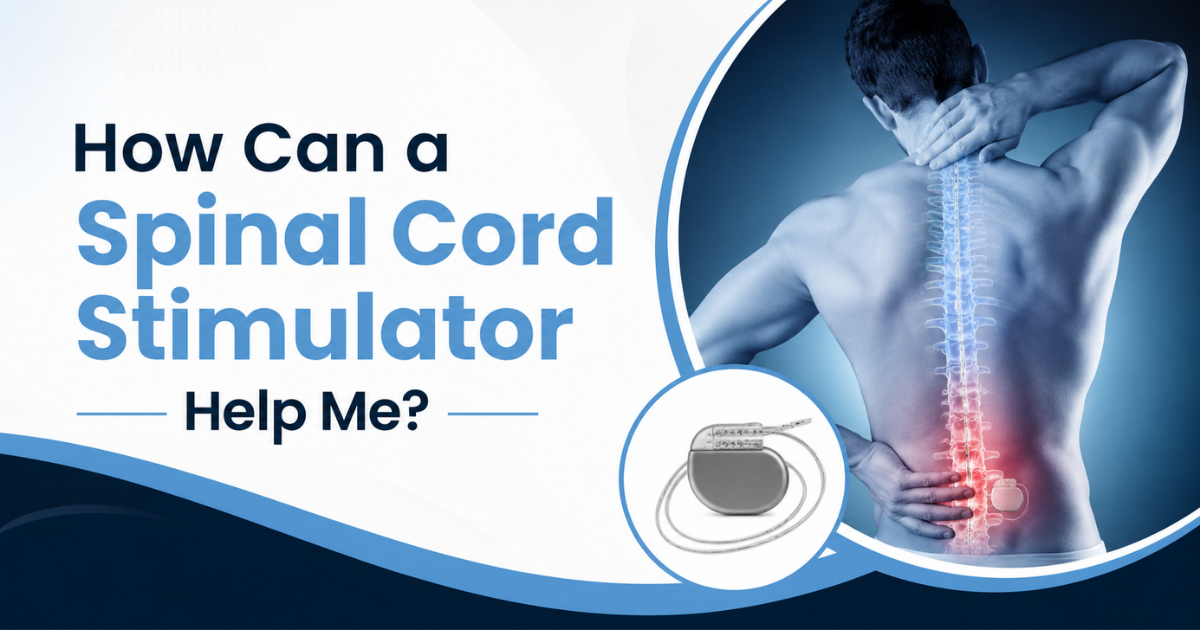
How Can a Spinal Cord Stimulator Help Me?

If you’ve been living with chronic pain for years, you already know the drill. You’ve tried physical therapy, medications, maybe even a surgery or two. And yet the pain is still there, showing up uninvited every single day. If that sounds familiar, there’s a good chance your doctor has mentioned spinal cord stimulation as a next step — and you’re probably wondering whether it’s actually worth it.

Let’s break down what this device actually does, who it’s for, and what life with one might realistically look like.

What Is a Spinal Cord Stimulator ?

Imagine a tiny pacemaker — except instead of keeping your heart in rhythm, it’s quietly working to turn down your pain. That’s essentially what a spinal cord stimulator does. It’s a small device implanted just under the skin, usually somewhere around your buttock or abdomen, with thin wires that travel up to your spinal cord.

The clever part is how it works. Rather than dulling pain chemically, the way a pill would, it sends gentle electrical pulses to your spinal cord, and those pulses intercept pain signals before they ever reach your brain. Some people feel a soft tingling or buzzing where the pain used to be, almost like a low hum replacing the ache. Newer devices can do this so subtly that you don’t feel anything at all, which a lot of patients actually prefer. It just quietly does its job in the background.

Who Actually Benefits From This?

Spinal cord stimulators aren’t usually the first option a doctor reaches for. They tend to come into the picture after other treatments haven’t worked well enough. People who often find relief include:

Folks dealing with failed back surgery syndrome, which is just a clinical way of saying “I had back surgery and the pain came back anyway.” Also people managing complex regional pain syndrome (CRPS), nerve-related pain from conditions like diabetic neuropathy, and chronic pain that radiates down the legs or arms. Some patients with certain types of chest pain related to heart conditions have also found relief with this technology.

If your pain has stuck around for more than three to six months despite trying other treatments, you’re probably in the range where your doctor might bring this up.

What Does It Actually Feel Like to Have One?

This is usually the part people are most curious about. Before you commit to a permanent implant, you actually get to try it out first. It’s called a trial period, and it typically lasts about a week. Thin wires are placed near your spine through a needle, no major surgery involved, and connected to an external device you wear on your belt or clip to your clothes. You go about your normal life for several days and pay attention to one simple question: does this actually reduce my pain?

If the answer is yes, and most people see meaningful relief during this trial, then you move forward with the permanent implant. That’s a quick outpatient procedure, and the battery sits comfortably under the skin where you’d barely notice it’s there.

What Life Can Look Like After Successful Spinal Cord Stimulation ?

People who respond well to spinal cord stimulation often talk about getting parts of their life back. Less reliance on opioids or other pain medications, which is a big deal for a lot of people trying to avoid the side effects and risks that come with long-term opioid use. Better sleep, since chronic pain and bad sleep tend to feed off each other in a miserable cycle. The ability to do things again that pain had taken away, whether that’s gardening, playing with grandkids, or just getting through a workday without gritting your teeth.

And because you trial it first, you’re not signing up for a surgery and hoping for the best. You actually know it works for your body before the permanent device goes in.

Understanding the Limits of Spinal Cord Stimulation 

It’s worth being upfront here: a spinal cord stimulator isn’t a cure, and it won’t erase your pain completely for most people. The realistic goal is usually a 50% or greater reduction in pain, which sounds modest on paper but can be life-changing in practice. It also requires some upkeep. You’ll need to recharge or replace the battery depending on the device, and you’ll work with your doctor to adjust the settings as your body responds.

It’s also not for everyone. People with certain bleeding disorders, active infections, or who haven’t responded to the trial period typically aren’t good candidates.

Is a Spinal Cord Stimulator Right for You? What to Ask Your Doctor 

If chronic pain has been running your life and nothing else has made a real dent in it, this is a conversation worth having with a pain management specialist. Ask about whether you’re a good candidate, what the trial period would look like for your specific situation, and what kind of results other patients with your condition have typically seen.

Chronic pain can make you feel like you’ve run out of options. A spinal cord stimulator isn’t a magic fix, but for a lot of people, it’s been the thing that finally gave them some breathing room.

This article is for general informational purposes and isn’t a substitute for medical advice. Talk to your doctor or a pain management specialist about whether spinal cord stimulation is right for you.

Life After Back Surgery Still Hurts — Here’s What You Need to Know

You did everything you were supposed to do.

You saw the specialists. You got the scans. You went through surgery — probably scared, probably hopeful — and you waited for life to get better. And maybe it did, for a little while. Or maybe it never really did at all.

Either way, you’re still in pain. And that’s a uniquely exhausting place to be.

If this sounds like your story, there’s something important you should hear: this is not in your head, it’s not your fault, and you are far from alone.

So What’s Actually Going On?

There’s a name for what you’re experiencing — Failed Back Surgery Syndrome, or FBSS. Doctors sometimes call it Persistent Spinal Pain Syndrome. Either way, it means one thing: the pain didn’t stop after surgery like everyone hoped it would.

And despite the word “failed” — which, honestly, feels cruel when you’re the one living with it — this doesn’t mean your surgeon made a mistake. It means that pain is complicated. The spine is complicated. Sometimes surgery fixes exactly what it was supposed to fix, and pain still finds a way to stay.

Studies show that anywhere from 10 to 40% of spinal surgery patients continue dealing with significant pain afterward. That’s not a small number. That’s potentially millions of people quietly suffering, wondering why no one warned them this could happen.

Why Does the Pain Stick Around?

There’s rarely a single clean answer, which is part of what makes FBSS so frustrating.

Sometimes the body forms scar tissue around the surgical site that starts pressing on nearby nerves — and suddenly you’re dealing with the same burning, shooting pain you thought was behind you.

Sometimes a disc herniates again. Sometimes nerves that were compressed for too long before surgery sustained damage that surgery alone couldn’t reverse. Sometimes fusing one part of the spine just shifts the stress somewhere else, wearing down adjacent levels over time.

And sometimes — as hard as it is to hear — the original source of pain wasn’t fully identified before surgery. So the procedure solved one piece of the puzzle while another piece quietly remained.

None of this is your fault. Your body isn’t broken. It’s just hurting, and it deserves real attention.

The Part That Doesn’t Get Talked About Enough

Here’s what the medical pamphlets often leave out: chronic pain after surgery doesn’t just hurt physically. It gets inside your head. It strains your relationships. It quietly chips away at who you were before all of this started.

A lot of FBSS patients describe feeling like they’ve lost a version of themselves. They feel frustrated — sometimes furious — that surgery didn’t deliver what they hoped. They feel anxious about the future, exhausted by the present, and sometimes deeply depressed.

If that’s you, please know those feelings are valid. They’re not weak. They’re a completely human response to something genuinely hard. And they deserve to be addressed as part of your care — not brushed aside.

What Can Actually Help?

Here’s the good news, and it’s real: another surgery is not your only option. In fact, repeated spinal surgeries often have lower success rates than the first. Most specialists will encourage you to explore other paths first — and there are genuinely effective ones.

Physical Therapy — Not generic exercises, but targeted, spine-focused rehab designed to rebuild what chronic pain has taken from your strength and mobility.

Medication Management — The right combination of nerve pain medications, anti-inflammatories, or muscle relaxants can make daily life more manageable while other treatments take effect.

Epidural Steroid Injections — When nerve inflammation is driving your pain, these precisely guided injections can quiet things down, sometimes significantly.

Radiofrequency Ablation — If your facet joints are part of the problem, this treatment interrupts the pain signals coming from those nerves — often for months at a time.

Spinal Cord Stimulation — This is a game-changer for many FBSS patients. A small implanted device sends gentle electrical signals that essentially intercept pain messages before they reach your brain. The results can be remarkable — less pain, better sleep, more movement, fewer medications. And you can trial it before committing to anything permanent.

Minimally Invasive Procedures — From nerve blocks to epidural adhesiolysis, there’s a whole range of targeted options a good pain specialist can tailor specifically to your history and anatomy.

You Deserve More Than “Just Live With It”

If your pain has lasted months beyond surgery, if it’s keeping you from sleeping or working or simply enjoying your life — please don’t wait. See a pain specialist. Get a proper evaluation. Ask hard questions and expect real answers.

Because here’s the truth: FBSS is not a dead end. It’s a detour. A painful, exhausting one — but a detour nonetheless.

FREQUENTLY ASKED QUESTION

Q1: I had surgery months ago and I’m still in pain. Does that mean I’ll feel like this forever?

Not at all. Lasting pain doesn’t mean permanent pain. Many people in exactly your situation have found real relief through the right treatment approach. The key is finding a specialist who takes your pain seriously and digs deeper into what’s actually driving it. Your body hasn’t given up — and neither should you.

Q2: My doctor says the surgery was “successful.” So why do I still hurt so much?

A technically successful surgery and ongoing pain can absolutely coexist. Scar tissue, nerve sensitivity, adjacent spinal changes — there are many reasons pain persists even after a perfectly performed procedure. “Successful” describes the surgery, not necessarily your outcome. That gap deserves real attention, not dismissal.

Q3: I’m scared of more procedures after everything I’ve already been through. Is that normal?

Completely normal — you’re not being difficult, you’re human. The good news is that many effective FBSS treatments are minimally invasive. Some, like Spinal Cord Stimulation, even let you do a temporary trial before anything permanent is decided. You don’t have to leap blindly.

Q4: Some days the pain affects my mood more than my body. Is that part of this too?

Yes — and it’s more common than you’d think. Depression, anxiety, and frustration aren’t separate from your condition. They’re part of it. Good pain care treats the whole person, not just the spine. If you’re struggling emotionally, please bring it up with your care team — it’s central to your healing.


Persistent Pain After a Work Injury? Advanced Treatment Options in the Triangle

A work injury can change your life in an instant. Whether it’s a back strain from lifting heavy materials, a repetitive stress injury from office work, or an accident on a construction site, many workers expect their pain to improve with rest and basic treatment. Unfortunately, for some people, pain persists long after the initial injury has healed.

If you’re dealing with ongoing pain after a workplace injury, you’re not alone. Millions of Americans experience chronic pain following work-related accidents, affecting their ability to work, enjoy daily activities, and maintain their quality of life.

The good news is that advanced, minimally invasive pain management treatments are helping many patients find relief when traditional therapies aren’t enough.

Why Does Pain Persist After a Work Injury?

Pain that lasts for more than three months is generally considered chronic pain. In some cases, the body’s healing process is complete, but the nervous system continues sending pain signals.

Common reasons pain may continue after a workplace injury include:

  • Nerve damage or irritation
  • Herniated or bulging discs
  • Joint inflammation
  • Soft tissue injuries
  • Scar tissue formation
  • Complex Regional Pain Syndrome (CRPS)
  • Chronic muscle tension and spasms
  •  

Persistent pain can affect:

  • Job performance
  • Sleep quality
  • Mental health
  • Mobility
  • Overall quality of life
  •  

Early evaluation by a pain management specialist can help identify the source of ongoing discomfort and develop a targeted treatment plan.

Common Work Injuries That Can Lead to Chronic Pain

Back and Neck Injuries

Among the most common workplace injuries, back and neck pain can result from:

  • Heavy lifting
  • Falls
  • Repetitive motions
  • Poor ergonomics

These injuries may cause:

  • Disc problems
  • Pinched nerves
  • Sciatica
  • Chronic neck pain

Shoulder Injuries

Workers in construction, manufacturing, healthcare, and warehouse settings often experience:

  • Rotator cuff injuries
  • Tendonitis
  • Joint instability

Persistent shoulder pain can limit lifting, reaching, and daily activities.

Joint Injuries

Workplace accidents frequently affect:

  • Knees
  • Hips
  • Ankles
  • Wrists

Joint injuries may lead to long-term inflammation and mobility challenges.

Repetitive Stress Injuries

Repeated movements can cause:

  • Carpal tunnel syndrome
  • Tendonitis
  • Nerve compression syndromes

These conditions are especially common among office workers, assembly line workers, and healthcare professionals.

Advanced Treatment Options for Persistent Work Injury Pain

Modern pain management has evolved significantly beyond medications and surgery. Many patients find relief through minimally invasive procedures that target the source of pain.

1. Epidural Steroid Injections

When inflammation around spinal nerves contributes to pain, epidural steroid injections may help reduce irritation and improve function.

Conditions Treated:

  • Sciatica
  • Herniated discs
  • Spinal stenosis
  • Radiculopathy

Potential Benefits:

  • Reduced inflammation
  • Improved mobility
  • Temporary or long-lasting pain relief
  • Reduced reliance on pain medications

2. Facet Joint Injections and Medial Branch Blocks

The small joints in the spine can become painful after an injury.

These procedures help:

  • Diagnose the pain source
  • Reduce inflammation
  • Determine if radiofrequency ablation may be effective

Commonly Used For:

  • Chronic neck pain
  • Chronic back pain
  • Arthritis-related pain

3. Radiofrequency Ablation (RFA)

For patients who experience temporary relief from diagnostic nerve blocks, radiofrequency ablation may provide longer-lasting results.

How It Works:

RFA uses heat generated by radiofrequency energy to interrupt pain signals traveling through specific nerves.

Benefits:

  • Minimally invasive
  • No major surgery
  • Relief lasting 6-18 months or longer for some patients

4. Peripheral Nerve Blocks

Persistent pain can sometimes originate from irritated peripheral nerves.

Nerve blocks may help diagnose and treat pain involving:

  • Arms
  • Legs
  • Shoulders
  • Knees
  • Feet

Advantages:

  • Fast procedure
  • Minimal downtime
  • Can improve participation in physical therapy

5. Peripheral Nerve Stimulation (PNS)

One of the most exciting advances in pain management is Peripheral Nerve Stimulation (PNS).

What Is PNS?

A small device is placed near the affected nerve and delivers mild electrical impulses that help disrupt pain signals before they reach the brain.

Conditions That May Benefit:

  • Post-surgical pain
  • Chronic nerve pain
  • Work-related nerve injuries
  • Shoulder pain
  • Knee pain
  • Neuropathic pain

Why Patients Like PNS:

  • Minimally invasive
  • Drug-free pain relief
  • Often avoids major surgery
  • Can improve function and quality of life

6. Spinal Cord Stimulation (SCS)

For severe, ongoing pain that has not responded to other treatments, spinal cord stimulation may be considered.

How It Works:

Electrical signals are delivered to the spinal cord to alter pain perception.

Common Uses:

  • Failed back surgery syndrome
  • Chronic neuropathic pain
  • CRPS
  • Persistent back and leg pain

Many patients undergo a temporary trial before permanent implantation.

7. Regenerative Medicine Approaches

Some pain specialists offer regenerative therapies designed to support the body’s natural healing response.

These may include:

  • Platelet-Rich Plasma (PRP)
  • Other biologic treatments

Depending on the condition, regenerative therapies may help improve function and reduce pain.

The Importance of a Comprehensive Recovery Plan

Advanced procedures often work best when combined with:

Physical Therapy

Helps restore strength, flexibility, and movement.

Lifestyle Modifications

Small changes in posture, ergonomics, and daily activities can reduce stress on injured areas.

Pain Psychology Support

Chronic pain can affect emotional well-being. Addressing both physical and psychological aspects of pain often improves outcomes.

Medication Management

When appropriate, medications may be used strategically as part of a broader treatment plan.

When Should You See a Pain Specialist?

Consider seeking specialized care if:

✔ Pain has lasted longer than 6-12 weeks

✔ Symptoms interfere with work or daily activities

✔ Physical therapy has not provided adequate relief

✔ Pain medications are no longer effective

✔ You have numbness, tingling, or nerve-related symptoms

✔ Surgery has been recommended and you’d like to explore other options first

Early intervention may prevent pain from becoming more difficult to treat.

Finding Advanced Work Injury Pain Treatment in the Triangle

Residents throughout the Triangle region—including Raleigh, Durham, Cary, Chapel Hill, and surrounding communities—have access to advanced interventional pain management options designed to address the root cause of chronic pain.

A personalized treatment plan can help identify the source of your symptoms and determine whether minimally invasive therapies may be appropriate for your situation.

Frequently Asked Questions (FAQs)

Can chronic pain continue even after an injury has healed?

Yes. Sometimes the nervous system continues sending pain signals after tissues have healed, resulting in chronic pain.

Are advanced pain treatments covered by workers’ compensation?

Coverage varies depending on the injury, treatment recommendation, and workers’ compensation claim details. Your healthcare provider and case manager can often help determine eligibility.

Will I need surgery?

Not necessarily. Many patients find relief through minimally invasive treatments such as injections, nerve blocks, radiofrequency ablation, or peripheral nerve stimulation.

How long does recovery take after a pain procedure?

Most interventional procedures require little downtime, and many patients return to normal activities within a day or two, depending on the treatment.

What if physical therapy hasn’t helped?

A pain specialist can evaluate whether underlying nerve, joint, or spinal issues may be contributing to persistent symptoms and recommend additional treatment options.

Is peripheral nerve stimulation permanent?

Some PNS systems are temporary, while others may be longer-term solutions. Your provider can explain which option may be most appropriate for your condition.

Conclusion

Persistent pain after a work injury doesn’t have to become your new normal. With today’s advanced interventional pain management options, many patients are finding meaningful relief without major surgery.

If chronic pain is affecting your ability to work, stay active, or enjoy life, consulting with a pain specialist may help you discover treatment options tailored to your specific injury and recovery goals.

Diabetic Neuropathy and Foot Pain: How Interventional Treatments Can Help

Let’s be honest: diabetic foot pain is exhausting.

It’s not just the burning or the tingling or that weird electric-shock feeling when your feet hit the sheets at night. It’s the way it wears you down over time. The interrupted sleep. The second-guessing whether you should take that walk. The pile of medications that kind of help but not really.

If that sounds familiar, you’re in good company. Millions of people with diabetes deal with this — it’s called diabetic peripheral neuropathy, and it’s one of the most common complications of diabetes. That doesn’t make it any less miserable, but it does mean there are people who’ve spent a lot of time figuring out how to treat it. And the options have gotten a lot better.

So what’s actually going on?

Your nerves are supposed to carry messages between your brain and your body. When blood sugar stays elevated for a long time, it slowly damages those nerves — and the tiny blood vessels that keep them alive. Once that happens, the nerves start sending scrambled signals. Pain where there’s no injury. Burning when nothing is hot. Tingling for no reason at all.

It’s not in your head. It’s your nervous system misfiring.

The symptoms usually show up in the feet first, sometimes creeping up into the legs over time. People describe it in all sorts of ways — burning, stabbing, pins and needles, a deep ache that gets louder at night when everything else gets quiet. Some people become hypersensitive (even a bedsheet feels like sandpaper). Others gradually lose feeling, which sounds like a relief but actually creates a different problem — you stop noticing small injuries before they become big ones.

What most people try first

The starting point is usually a combination of:

  • Tightening up blood sugar control, which can slow the damage from progressing
  • Medications — things like gabapentin, pregabalin, or duloxetine — that try to quiet the misfiring nerves
  • Lifestyle stuff: moving more, quitting smoking, wearing supportive shoes, keeping a close eye on your feet

For some people, this is enough. The pain becomes manageable. Life goes on.

But for a lot of people? It’s just not. The medications help a little, or they help for a while, or the side effects (brain fog, fatigue, weight gain) become their own problem. And the pain keeps showing up.

That’s not a character flaw. It’s just how nerve damage works sometimes.

There’s another category of treatment most people don’t know about

If you’ve been managing your pain for months with limited success — if it’s messing with your sleep, keeping you off your feet, or just quietly making everything harder — it might be time to see a pain specialist and ask about interventional options.

These aren’t experimental. They’re not a last resort. They’re just a different approach — one that targets the pain signal more directly instead of trying to dampen it system-wide.

Here’s what that can look like:

Peripheral Nerve Stimulation
A small device gets placed near the nerve that’s causing the problem. It delivers gentle electrical pulses that interrupt the pain signal before it ever reaches your brain. Minimally invasive, targeted, and for a lot of people — genuinely life-changing.

Spinal Cord Stimulation
This one has the most evidence behind it for diabetic neuropathy, and certain devices are actually FDA-approved specifically for this condition. Electrodes go near the spinal cord and change how pain signals travel upward. The best part: you try it before you commit. There’s a trial period where you can actually feel whether it’s working before anything permanent happens.

DRG Stimulation
A more precise version of spinal cord stimulation. Instead of broadly modulating pain, it zeroes in on specific nerve clusters. Because neuropathy so often centers on the feet, this kind of precision can make a real difference.

Nerve Blocks
Image-guided injections that interrupt abnormal pain signals. Often used alongside other treatments rather than alone — but they can offer real relief and sometimes improve circulation too.

Why bother with any of this?

Because medications affect your whole body. Interventional treatments affect the problem.

Less pain often means less medication. Less medication often means clearer thinking, better sleep, more energy to actually move around. More movement means better blood sugar. It’s a cycle — and these treatments can help push it in the right direction instead of the wrong one.

A thing worth saying out loud

A lot of people with diabetic neuropathy assume the pain is just part of the deal now. Something to manage, not solve. And honestly? That assumption has kept a lot of people from getting help that could have made a real difference.

You don’t have to wait until things get unbearable. Seeing a pain specialist isn’t giving up — it’s being thorough. A good one will look at your whole picture, what you’ve tried, what’s worked, what hasn’t, and help you figure out what actually makes sense for you.

Quick answers to things people actually wonder about

1.Can the nerve damage be undone? 

Sometimes partially, but often not completely. What can change is how much the pain affects your life — and that matters just as much.

  1. Is spinal cord stimulation really approved for this?

 Yes. Certain devices have FDA approval specifically for painful diabetic neuropathy.

  1. Is any of this safe? 

When done by someone who knows what they’re doing, yes. Your doctor will walk through the specifics with you.

  1. Could I end up taking fewer medications?

 A lot of people do. That’s often part of the goal.

  1. When should I actually make an appointment?

If foot pain, numbness, tingling, or balance issues are affecting your daily life — now is a good time.

You’ve been managing this long enough. There might be more help available than you think.

Peripheral nerve stimulation for chronic pain: a surgery-free option gaining ground Trending advanced procedure

Living with chronic pain is exhausting. Not just physically — it wears on your sleep, your relationships, your sense of what your life can look like. If you’ve been managing pain for months or years and feel like you’ve tried everything, there’s a treatment worth knowing about: Peripheral Nerve Stimulation, or PNS.

It’s not a household name yet, but it’s quietly becoming one of the more promising options in pain management — and for good reason.

So what is it, exactly?

Your nervous system is constantly sending signals, and when something has gone wrong — an injury, a surgical complication, nerve damage — some of those signals become stuck in a “pain” loop. PNS works by placing a small device near the nerve that’s misfiring. It delivers gentle electrical pulses that essentially interrupt that loop before the pain signal reaches your brain.

Think of it like a polite but firm bouncer at the door.

The procedure itself is minimally invasive, often done as an outpatient in under an hour. Most people go home the same day.

Who tends to benefit?

PNS is being used for a range of conditions that haven’t responded well to other treatments:

Chronic back pain that’s outlasted physical therapy and injections

Knee pain, especially post-replacement or from long-standing arthritis

Shoulder pain from rotator cuff injuries or lingering post-surgical discomfort

Neuropathic pain — the burning, shooting kind that often follows nerve injury

Pain that just hasn’t gone away after you should have healed

If you’ve been told “there’s nothing more we can do” or you’re looking for a way off long-term pain medication, this is the kind of conversation worth having with a specialist.

Why are more people choosing it?

A few reasons are driving its growing popularity. First, it doesn’t require major surgery — a big deal for anyone who’s already been through the wringer with procedures and recoveries. Second, it’s reversible. If it doesn’t work for you, it can be adjusted or removed. And third, as concerns around long-term opioid use have grown, patients and doctors alike are actively looking for alternatives.

Patients who’ve had it done commonly report less pain, better sleep, more energy to move around, and less reliance on medication. Results vary — it’s not a guarantee — but the pattern is consistent enough that the clinical evidence behind it keeps growing.

What does the process actually look like?

First, you’d see a pain specialist to talk through your history and figure out whether PNS makes sense for your specific situation. If you’re a candidate, a small lead is placed near the target nerve using imaging guidance. The device then starts delivering its signals, and your provider monitors how you respond and fine-tunes the settings as needed.

It’s a process, not a one-and-done fix. But for many patients, that process leads somewhere meaningfully better.

What Patients Are Actually Experiencing

People who’ve gone through PNS often talk about more than just less pain — they talk about getting their life back.

They’re sleeping through the night again. They’re moving more freely, doing things they’d quietly given up on. Some find themselves reaching for pain medication less and less. Others notice they simply feel like themselves again — more present, more active, more engaged in the things that matter to them.

Every person’s experience is different, and results depend on the condition being treated and your own unique health picture. But for many, the shift goes far beyond pain relief — it’s a real, everyday difference in how they feel and function.

Frequently Asked Questions (FAQs)

1. Is Peripheral Nerve Stimulation Surgery?

PNS is generally considered a minimally invasive procedure rather than traditional surgery. Many systems can be placed through small incisions in an outpatient setting.

  1. 2.Does the procedure hurt?
    Most people are pleasantly surprised by how comfortable the placement process actually is. Your doctor will walk you through pain management options ahead of time so you know exactly what to expect.
  2. 3.How long does the procedure take?
    Generally under an hour — though it depends on the area being treated. Many patients are in and out before they know it.
  3. 4.Will I feel the electrical stimulation?
    Everyone’s experience is a little different. Some notice a soft, gentle tingling beneath the skin. Others just feel their pain quietly fading without much sensation at all. Most people are surprised by how subtle it is.
  4. 5.Is Peripheral Nerve Stimulation permanent?
    Not necessarily. Some systems are temporary — just enough to break the pain cycle. Others are built for longer-term use. Your doctor will help you find what actually fits your life.
  5. 6.Can PNS help me avoid surgery?
    For some people, yes. When PNS works well, surgery can become something you no longer need — or at least not right now. It’s not a guarantee, but if there’s a less invasive path to feeling better, it’s absolutely worth exploring.
  6. 7.Is PNS covered by insurance?
    Honestly, it depends — on your plan, your diagnosis, and what your insurer considers medically necessary. It can feel like a lot to figure out, but your care team has been through this before and can help you navigate it.
  7. 8.How quickly will I notice results?
    Some people walk away from the first few sessions already feeling a shift. For others, it’s more of a slow build — subtle changes that add up over a few weeks until one day you realize you’re just… moving better, sleeping better, living better. Everyone’s timeline looks a little different.
  8. 9.Is PNS safe?
    It’s one of the first things people ask — and rightfully so. In the hands of an experienced specialist, yes, it’s considered safe. That said, no procedure is completely without risk, and a good doctor will be honest with you about that. You’ll have the full picture before you ever commit to anything. No pressure, no guessing.
  9. 10.Who might not be a good candidate?
    Not everyone is, and that’s completely okay. A health condition, an active infection, or something in your history might mean this isn’t the right fit — at least not right now. The only way to know for sure is a real conversation with a specialist who actually looks at you, not just a checklist. You deserve that.

Conclusion

If chronic pain has been quietly stealing pieces of your life — making it harder to work, sleep, move, or simply enjoy your day — you don’t have to keep settling for partial solutions.

Peripheral Nerve Stimulation isn’t right for everyone, but for the right person, it can be genuinely life-changing. The best next step is a conversation with a pain management specialist who can look at your specific situation and give you an honest assessment.