


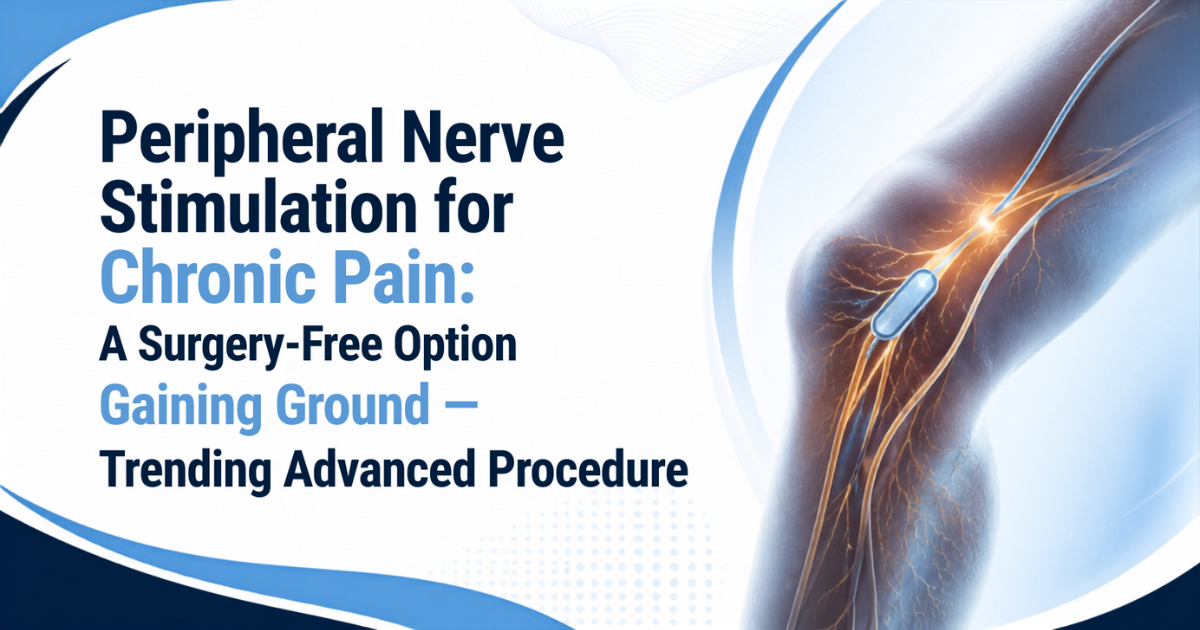
Living with chronic pain is exhausting. Not just physically — it wears on your sleep, your relationships, your sense of what your life can look like. If you’ve been managing pain for months or years and feel like you’ve tried everything, there’s a treatment worth knowing about: Peripheral Nerve Stimulation, or PNS.
It’s not a household name yet, but it’s quietly becoming one of the more promising options in pain management — and for good reason.
So what is it, exactly?
Your nervous system is constantly sending signals, and when something has gone wrong — an injury, a surgical complication, nerve damage — some of those signals become stuck in a “pain” loop. PNS works by placing a small device near the nerve that’s misfiring. It delivers gentle electrical pulses that essentially interrupt that loop before the pain signal reaches your brain.
Think of it like a polite but firm bouncer at the door.
The procedure itself is minimally invasive, often done as an outpatient in under an hour. Most people go home the same day.
Who tends to benefit?
PNS is being used for a range of conditions that haven’t responded well to other treatments:
Chronic back pain that’s outlasted physical therapy and injections
Knee pain, especially post-replacement or from long-standing arthritis
Shoulder pain from rotator cuff injuries or lingering post-surgical discomfort
Neuropathic pain — the burning, shooting kind that often follows nerve injury
Pain that just hasn’t gone away after you should have healed
If you’ve been told “there’s nothing more we can do” or you’re looking for a way off long-term pain medication, this is the kind of conversation worth having with a specialist.
Why are more people choosing it?
A few reasons are driving its growing popularity. First, it doesn’t require major surgery — a big deal for anyone who’s already been through the wringer with procedures and recoveries. Second, it’s reversible. If it doesn’t work for you, it can be adjusted or removed. And third, as concerns around long-term opioid use have grown, patients and doctors alike are actively looking for alternatives.
Patients who’ve had it done commonly report less pain, better sleep, more energy to move around, and less reliance on medication. Results vary — it’s not a guarantee — but the pattern is consistent enough that the clinical evidence behind it keeps growing.
What does the process actually look like?
First, you’d see a pain specialist to talk through your history and figure out whether PNS makes sense for your specific situation. If you’re a candidate, a small lead is placed near the target nerve using imaging guidance. The device then starts delivering its signals, and your provider monitors how you respond and fine-tunes the settings as needed.
It’s a process, not a one-and-done fix. But for many patients, that process leads somewhere meaningfully better.
What Patients Are Actually Experiencing
People who’ve gone through PNS often talk about more than just less pain — they talk about getting their life back.
They’re sleeping through the night again. They’re moving more freely, doing things they’d quietly given up on. Some find themselves reaching for pain medication less and less. Others notice they simply feel like themselves again — more present, more active, more engaged in the things that matter to them.
Every person’s experience is different, and results depend on the condition being treated and your own unique health picture. But for many, the shift goes far beyond pain relief — it’s a real, everyday difference in how they feel and function.
Frequently Asked Questions (FAQs)
1. Is Peripheral Nerve Stimulation Surgery?
PNS is generally considered a minimally invasive procedure rather than traditional surgery. Many systems can be placed through small incisions in an outpatient setting.
- 2.Does the procedure hurt?
Most people are pleasantly surprised by how comfortable the placement process actually is. Your doctor will walk you through pain management options ahead of time so you know exactly what to expect. - 3.How long does the procedure take?
Generally under an hour — though it depends on the area being treated. Many patients are in and out before they know it. - 4.Will I feel the electrical stimulation?
Everyone’s experience is a little different. Some notice a soft, gentle tingling beneath the skin. Others just feel their pain quietly fading without much sensation at all. Most people are surprised by how subtle it is. - 5.Is Peripheral Nerve Stimulation permanent?
Not necessarily. Some systems are temporary — just enough to break the pain cycle. Others are built for longer-term use. Your doctor will help you find what actually fits your life. - 6.Can PNS help me avoid surgery?
For some people, yes. When PNS works well, surgery can become something you no longer need — or at least not right now. It’s not a guarantee, but if there’s a less invasive path to feeling better, it’s absolutely worth exploring. - 7.Is PNS covered by insurance?
Honestly, it depends — on your plan, your diagnosis, and what your insurer considers medically necessary. It can feel like a lot to figure out, but your care team has been through this before and can help you navigate it. - 8.How quickly will I notice results?
Some people walk away from the first few sessions already feeling a shift. For others, it’s more of a slow build — subtle changes that add up over a few weeks until one day you realize you’re just… moving better, sleeping better, living better. Everyone’s timeline looks a little different. - 9.Is PNS safe?
It’s one of the first things people ask — and rightfully so. In the hands of an experienced specialist, yes, it’s considered safe. That said, no procedure is completely without risk, and a good doctor will be honest with you about that. You’ll have the full picture before you ever commit to anything. No pressure, no guessing. - 10.Who might not be a good candidate?
Not everyone is, and that’s completely okay. A health condition, an active infection, or something in your history might mean this isn’t the right fit — at least not right now. The only way to know for sure is a real conversation with a specialist who actually looks at you, not just a checklist. You deserve that.
Conclusion
If chronic pain has been quietly stealing pieces of your life — making it harder to work, sleep, move, or simply enjoy your day — you don’t have to keep settling for partial solutions.
Peripheral Nerve Stimulation isn’t right for everyone, but for the right person, it can be genuinely life-changing. The best next step is a conversation with a pain management specialist who can look at your specific situation and give you an honest assessment.