


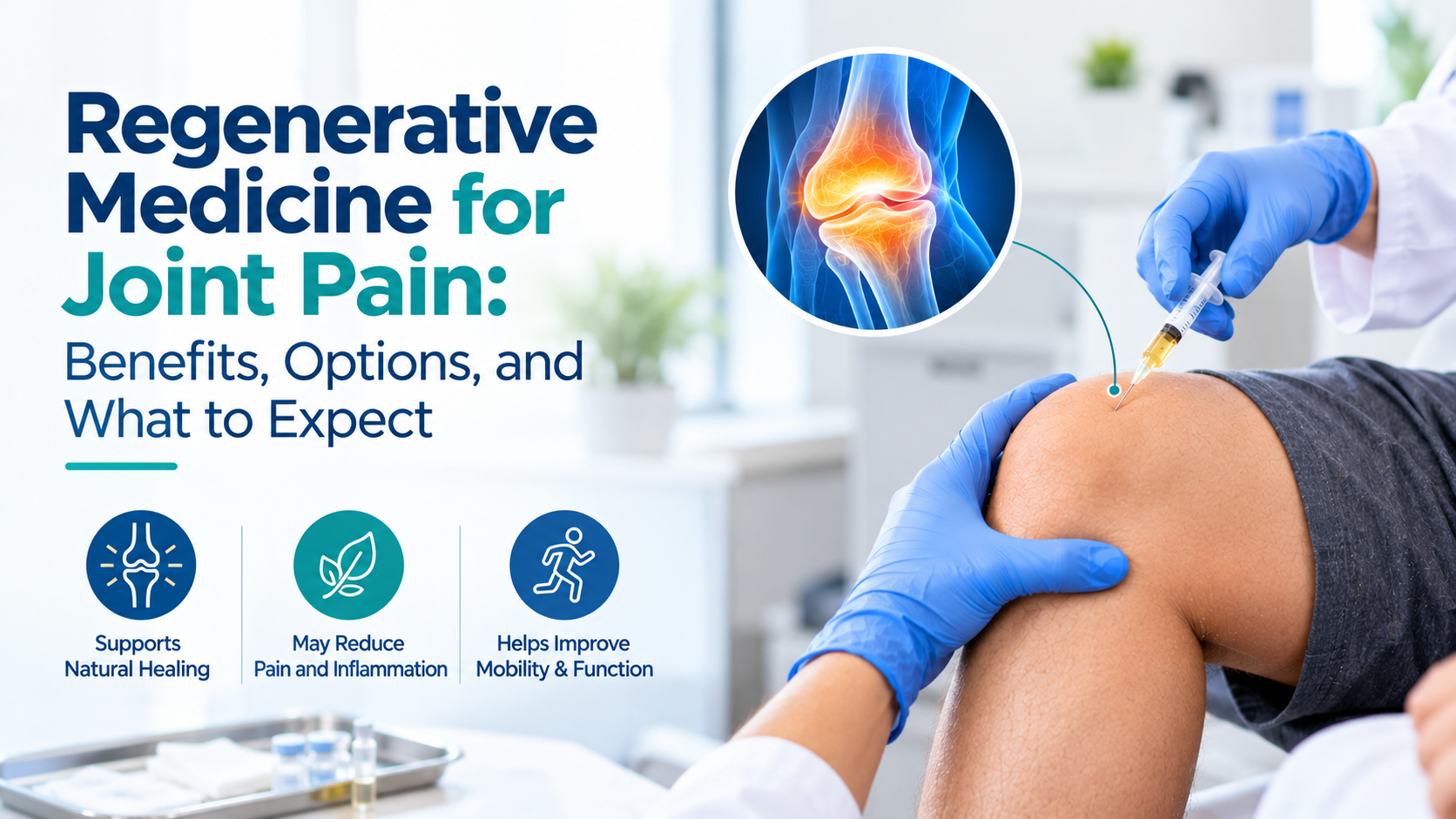
Worn-out joints take over your day. Stairs become something you plan around. Gardening means thinking twice before you kneel, and some mornings it takes a while just to get out of bed. If rest and over-the-counter pills haven’t done much, you’ve probably started asking what else is out there. Regenerative medicine is one answer. Rather than only masking pain, it uses material taken from your own body to help damaged tissue heal. This article covers how it works, the main types of treatment, what recovery looks like, and who tends to be a good candidate.
What Is Regenerative Medicine for Joint Pain?
The idea is simple. When a joint has been hurt or has worn down over time, the goal is to support the body’s own repair process. A doctor draws something biologic, usually blood or fat, and injects it close to the cartilage, tendon, or ligament that’s giving you trouble.
Anti-inflammatories and steroid shots can quiet pain and swelling for a while. Regenerative treatments go after a different target: the environment the tissue has to heal in. Everything is done by injection, and many doctors use ultrasound or fluoroscopy to place the needle accurately. No large incision is involved, so plenty of patients see it as something between routine care and surgery.
What Are the Benefits of Regenerative Medicine for Joint Pain?
Results vary from person to person, but the same benefits come up over and over. Some patients cut back on pain relievers or anti-inflammatories. Most procedures take place in the doctor’s office, and light activity is usually fine soon afterward. Because many treatments rely on your own blood or tissue, allergic-type reactions are less of a concern. Less pain also means moving more easily, which makes exercise and daily chores less of a struggle. And for anyone hoping to avoid surgery, or put it off, this is something to try first.
Keep your expectations in check, though. The research is still young, and some people simply respond better than others.
What Regenerative Medicine Options Are Available for Joint Pain?
You have a few choices, and the right one depends on your diagnosis, the joint involved, and your overall health.
Platelet-rich plasma (PRP): Platelets are concentrated from a sample of your blood, then injected into the painful area to support healing.
Bone marrow concentrate: Cells and growth factors are drawn from your bone marrow and injected into the joint.
Adipose (fat-derived) tissue treatments: Fat is processed and used for cushioning and other supportive components.
Hyaluronic acid injections: These aren’t strictly regenerative. They’re often combined with other treatments to help the joint glide better.
Perinatal and other biologic products: Some clinics offer donated tissue products. Regulation and evidence differ widely, so ask where the product comes from and whether it’s approved.
A good provider will be upfront about what the evidence shows for each and help you choose.
How Can PRP Help With Joint Pain?
PRP gets the most attention, for arthritis and for soft tissue injuries alike. It starts with a small blood draw. The sample goes into a centrifuge, which spins it and concentrates the platelets. Platelets carry growth factors that play a part in natural healing.
The concentrate is then injected in or around the painful joint, often with imaging to guide the needle. Some studies suggest PRP may ease pain and improve function in knee osteoarthritis, although results depend on the person and on how the PRP was prepared. Since it comes from your own blood, the risk is generally considered low when an experienced provider does the procedure.
What Can You Expect During and After Regenerative Treatment?
Your provider will go over your medical history and examine the joint first. An X-ray or MRI is common. You might be asked to stop certain anti-inflammatory medications for a while beforehand.
Set aside an hour or two, prep included. If blood or tissue has to be collected, that comes first and is processed right there. The area is numbed and the treatment is injected.
Soreness, swelling, or stiffness at the site for a few days is normal. Your provider may suggest taking it easy at the start and then returning to activity gradually, with physical therapy.
Improvement is usually slow. A few people feel something within a couple of weeks, but many don’t notice the full effect until two or three months later. Some plans call for more than one session.
Is Regenerative Medicine Safe for Joint Pain?
When the material comes from your own blood or tissue and trained professionals handle it in a clean clinical setting, the risk is generally considered low. Expect temporary pain, swelling, and bruising. Infection at the injection site is possible but rare.
Safety depends heavily on the product and on who performs the procedure. Be cautious with any clinic that promises a cure or makes big claims. Ask about the provider’s credentials, how products are prepared, and what clinical evidence supports the treatment. Your own doctor can also tell you whether a health condition or a medication you take rules it out.
Who May Be a Candidate for Regenerative Medicine?
You may be a good fit if you have mild to moderate joint wear or arthritis, or a tendon, ligament, or cartilage injury that hasn’t improved with basic care. It also tends to suit people who want to avoid or delay surgery, are in reasonably good health, and are willing to follow a rehab plan.
It’s usually a poor match for people with active infections, certain blood disorders, or some cancers. It may also fall short when joint damage is severe and advanced, since surgery can be the better route at that point. Only a proper evaluation can settle that.
When Should You Consider Regenerative Medicine for Joint Pain?
Raise it with your doctor if the pain has hung around for weeks or months, interferes with your routine, or keeps coming back despite physical therapy, bracing, or medication. Asking sooner can also help, before the joint wears down further, because healthier tissue may respond better.
Some symptoms can’t wait. Get medical help right away for sudden severe pain, a joint that looks deformed, a swollen joint with a fever, or if you can’t put weight on it.
Final Thoughts
For a lot of people, regenerative medicine offers a gentler way to deal with long-term joint pain and keep moving. It won’t cure everything, and results differ. Still, with an accurate diagnosis and an experienced provider, it can be a useful part of a bigger treatment plan.
If you’re weighing your options, the team at Restore Spine and Pain can evaluate your condition, explain which approaches make sense for you, and build a plan around your needs.
FAQ’s
What Is Regenerative Medicine for Joint Pain?
Think of it as giving your joint a nudge to heal itself. Your doctor takes a small amount of your own blood or fat, processes it, and injects it into the sore spot. No surgery, no implants. Most people try it hoping for less pain and easier movement.
What Types of Regenerative Treatments Are Available for Joint Pain?
There are three main options: platelet-rich plasma (PRP), bone marrow concentrate, and treatments made from fat tissue. Some clinics add hyaluronic acid too. The right choice depends on which joint hurts and what you want to get back to doing, so talk it over with your provider.
Is Regenerative Medicine for Joint Pain Safe?
Generally, yes. Because the material comes from your own body, your immune system rarely reacts to it. Risks stay low with an experienced clinician. Some soreness or swelling at the needle site is the most common complaint, and it usually fades quickly. Infection is possible but uncommon.
What Can I Expect After a Regenerative Medicine Treatment?
Your joint may feel sore or stiff for a few days after the procedure. Most people get back to their usual routine fairly soon, though. Your provider will probably tell you to go easy at first, then add in stretching, strengthening work, or physical therapy as things settle.
How Long Does It Take to See Results From Regenerative Medicine?
It varies from person to person. A few people feel a difference in the first couple of weeks, but the full effect usually takes two to three months. Three things shape your timeline: the condition of your joint, the kind of treatment you received, and how your body responds to it.