Regenerative Medicine for Joint Pain: Benefits, Options, and What to Expect

Worn-out joints take over your day. Stairs become something you plan around. Gardening means thinking twice before you kneel, and some mornings it takes a while just to get out of bed. If rest and over-the-counter pills haven’t done much, you’ve probably started asking what else is out there. Regenerative medicine is one answer. Rather than only masking pain, it uses material taken from your own body to help damaged tissue heal. This article covers how it works, the main types of treatment, what recovery looks like, and who tends to be a good candidate.

What Is Regenerative Medicine for Joint Pain?

The idea is simple. When a joint has been hurt or has worn down over time, the goal is to support the body’s own repair process. A doctor draws something biologic, usually blood or fat, and injects it close to the cartilage, tendon, or ligament that’s giving you trouble.

Anti-inflammatories and steroid shots can quiet pain and swelling for a while. Regenerative treatments go after a different target: the environment the tissue has to heal in. Everything is done by injection, and many doctors use ultrasound or fluoroscopy to place the needle accurately. No large incision is involved, so plenty of patients see it as something between routine care and surgery.

What Are the Benefits of Regenerative Medicine for Joint Pain?

Results vary from person to person, but the same benefits come up over and over. Some patients cut back on pain relievers or anti-inflammatories. Most procedures take place in the doctor’s office, and light activity is usually fine soon afterward. Because many treatments rely on your own blood or tissue, allergic-type reactions are less of a concern. Less pain also means moving more easily, which makes exercise and daily chores less of a struggle. And for anyone hoping to avoid surgery, or put it off, this is something to try first.

Keep your expectations in check, though. The research is still young, and some people simply respond better than others.

What Regenerative Medicine Options Are Available for Joint Pain?

You have a few choices, and the right one depends on your diagnosis, the joint involved, and your overall health.

Platelet-rich plasma (PRP): Platelets are concentrated from a sample of your blood, then injected into the painful area to support healing.

Bone marrow concentrate: Cells and growth factors are drawn from your bone marrow and injected into the joint.

Adipose (fat-derived) tissue treatments: Fat is processed and used for cushioning and other supportive components.

Hyaluronic acid injections: These aren’t strictly regenerative. They’re often combined with other treatments to help the joint glide better.

Perinatal and other biologic products: Some clinics offer donated tissue products. Regulation and evidence differ widely, so ask where the product comes from and whether it’s approved.

A good provider will be upfront about what the evidence shows for each and help you choose.

How Can PRP Help With Joint Pain?

PRP gets the most attention, for arthritis and for soft tissue injuries alike. It starts with a small blood draw. The sample goes into a centrifuge, which spins it and concentrates the platelets. Platelets carry growth factors that play a part in natural healing.

The concentrate is then injected in or around the painful joint, often with imaging to guide the needle. Some studies suggest PRP may ease pain and improve function in knee osteoarthritis, although results depend on the person and on how the PRP was prepared. Since it comes from your own blood, the risk is generally considered low when an experienced provider does the procedure.

What Can You Expect During and After Regenerative Treatment?

Your provider will go over your medical history and examine the joint first. An X-ray or MRI is common. You might be asked to stop certain anti-inflammatory medications for a while beforehand.

Set aside an hour or two, prep included. If blood or tissue has to be collected, that comes first and is processed right there. The area is numbed and the treatment is injected.

Soreness, swelling, or stiffness at the site for a few days is normal. Your provider may suggest taking it easy at the start and then returning to activity gradually, with physical therapy.

Improvement is usually slow. A few people feel something within a couple of weeks, but many don’t notice the full effect until two or three months later. Some plans call for more than one session.

Is Regenerative Medicine Safe for Joint Pain?

When the material comes from your own blood or tissue and trained professionals handle it in a clean clinical setting, the risk is generally considered low. Expect temporary pain, swelling, and bruising. Infection at the injection site is possible but rare.

Safety depends heavily on the product and on who performs the procedure. Be cautious with any clinic that promises a cure or makes big claims. Ask about the provider’s credentials, how products are prepared, and what clinical evidence supports the treatment. Your own doctor can also tell you whether a health condition or a medication you take rules it out.

Who May Be a Candidate for Regenerative Medicine?

You may be a good fit if you have mild to moderate joint wear or arthritis, or a tendon, ligament, or cartilage injury that hasn’t improved with basic care. It also tends to suit people who want to avoid or delay surgery, are in reasonably good health, and are willing to follow a rehab plan.

It’s usually a poor match for people with active infections, certain blood disorders, or some cancers. It may also fall short when joint damage is severe and advanced, since surgery can be the better route at that point. Only a proper evaluation can settle that.

When Should You Consider Regenerative Medicine for Joint Pain?

Raise it with your doctor if the pain has hung around for weeks or months, interferes with your routine, or keeps coming back despite physical therapy, bracing, or medication. Asking sooner can also help, before the joint wears down further, because healthier tissue may respond better.

Some symptoms can’t wait. Get medical help right away for sudden severe pain, a joint that looks deformed, a swollen joint with a fever, or if you can’t put weight on it.

Final Thoughts

For a lot of people, regenerative medicine offers a gentler way to deal with long-term joint pain and keep moving. It won’t cure everything, and results differ. Still, with an accurate diagnosis and an experienced provider, it can be a useful part of a bigger treatment plan.

If you’re weighing your options, the team at Restore Spine and Pain can evaluate your condition, explain which approaches make sense for you, and build a plan around your needs.

FAQ’s

What Is Regenerative Medicine for Joint Pain?

Think of it as giving your joint a nudge to heal itself. Your doctor takes a small amount of your own blood or fat, processes it, and injects it into the sore spot. No surgery, no implants. Most people try it hoping for less pain and easier movement.

What Types of Regenerative Treatments Are Available for Joint Pain?

There are three main options: platelet-rich plasma (PRP), bone marrow concentrate, and treatments made from fat tissue. Some clinics add hyaluronic acid too. The right choice depends on which joint hurts and what you want to get back to doing, so talk it over with your provider.

Is Regenerative Medicine for Joint Pain Safe?

Generally, yes. Because the material comes from your own body, your immune system rarely reacts to it. Risks stay low with an experienced clinician. Some soreness or swelling at the needle site is the most common complaint, and it usually fades quickly. Infection is possible but uncommon.

What Can I Expect After a Regenerative Medicine Treatment?

Your joint may feel sore or stiff for a few days after the procedure. Most people get back to their usual routine fairly soon, though. Your provider will probably tell you to go easy at first, then add in stretching, strengthening work, or physical therapy as things settle.

How Long Does It Take to See Results From Regenerative Medicine?

It varies from person to person. A few people feel a difference in the first couple of weeks, but the full effect usually takes two to three months. Three things shape your timeline: the condition of your joint, the kind of treatment you received, and how your body responds to it.


Neck Pain from Desk Work: Causes, Relief, and When to Get Help

Most people who work at a computer know the pattern. You sit down feeling fine, your neck gets a little stiff by mid-morning, and by 3 p.m. there’s a dull ache that sometimes turns into a headache or tight shoulders that follow you home. It’s common enough that many people write it off as part of the job. It doesn’t have to be. Desk-related neck pain usually comes down to habits you can change, and knowing when it’s something more serious keeps a small problem from dragging on for years.

Why Does Desk Work Cause Neck Pain?

An adult head weighs about 10 to 12 pounds, roughly like a bowling ball. Stacked right over your spine, it’s no big deal for your neck muscles. Push it forward to see a screen and those same muscles have to hold it up the whole time, so they get tired and tight.

A few things usually add to the problem:

  • Forward head posture, from leaning toward the screen or hunching over a laptop
  • A monitor that sits too low, which pulls your chin down and strains the back of your neck
  • Staying in one position for hours. Even a good posture cuts blood flow to your muscles if you never move.
  • Looking down at your phone or laptop for long stretches
  • A chair or desk that doesn’t fit you, so your arms hang unsupported and your shoulders creep up toward your ears
  • Stress, which tends to land right in the neck and shoulders

What Are the Common Symptoms?

It looks a little different for everyone, but these are the usual signs:

  • A dull ache or stiffness across the back of the neck
  • Tight, knotted spots in the upper back and shoulders
  • Pain when you turn your head or look down
  • Tension headaches that start at the base of the skull
  • A tired, heavy feeling in the neck by the end of the day

How Can You Fix Your Desk Setup?

You don’t need to buy a whole new workstation. A few small changes go a long way:

  • Raise your monitor until the top of the screen is level with your eyes or just below, about an arm’s length away.
  • If you work on a laptop, put it on a stand and use a separate keyboard and mouse.
  • Pick a chair that supports the natural curve of your lower back.
  • Plant your feet flat on the floor, with your knees about level with your hips.
  • Let your forearms rest on the desk or armrests so your shoulders can drop.
  • Use a headset for long calls instead of pinning the phone between your ear and shoulder.

What Habits and Exercises Help Relieve Neck Pain?

Moving matters just as much as how you sit. Your best posture is really your next one.

  • Take a short break every 30 to 45 minutes. Stand up, walk around, or stretch for a minute or two.
  • Try chin tucks. Slide your chin straight back, like you’re making a double chin, hold for 5 seconds, and do it 8 to 10 times.
  • Stretch your upper traps by tipping one ear toward the same shoulder and holding for 20 to 30 seconds. Switch sides.
  • Do shoulder rolls and shoulder blade squeezes to loosen up and wake up the muscles that hold you upright.
  • Use a doorway chest stretch to open up the front of your body, since tight chest muscles pull your shoulders forward.
  • Build up your upper back and core with regular strength work. Stronger muscles make good posture feel less like effort.

Heat can help with muscle tightness, and an over-the-counter pain reliever may take the edge off for a few days if it’s safe for you. Go easy on the stretches, and stop right away if you feel sharp pain, tingling, or numbness.

When Is Neck Pain More Than Just Muscle Strain?

Muscle strain explains most desk-related neck pain, but not all of it. A pinched nerve or a disc problem could be behind it if you notice:

  • Pain, numbness, or tingling that runs into your shoulder, arm, or hand
  • Weakness in your arm or a weaker grip
  • Pain that hasn’t eased up after a couple of weeks of taking care of it yourself
  • Pain that wakes you at night or keeps getting worse
  • Symptoms that started after an injury or accident

Get urgent medical care for sudden, severe weakness, trouble walking, loss of bladder or bowel control, a bad headache with fever and a stiff neck, or neck pain after a major trauma.

How Is Persistent Neck Pain Diagnosed?

A provider will usually begin by asking about your history and examining you. They’ll look at your posture, how well you can move your neck, your strength, your reflexes, and how well you can feel touch. If something points to a nerve or structural issue, they might order an X-ray or MRI to get a look at your discs and joints, or an EMG to check how your nerves are working. Plenty of people never need any of this. Tests like these are saved for pain that sticks around, is severe, or doesn’t have a clear cause.

What Treatments Are Available?

What you get depends on what’s causing the pain. Options can include:

  • Physical therapy with an exercise program built for you
  • Coaching on posture and workstation setup
  • Manual therapy or massage
  • Medication management
  • Image-guided injections for nerve or joint pain that won’t quit
  • Minimally invasive procedures when conservative care hasn’t been enough

The aim is to deal with the cause, not just the symptom, so the pain doesn’t keep coming back.

FAQs

Can sitting at a desk all day cause neck pain?

Yes. Sitting still for long stretches, especially with your head pushed forward, strains the muscles in your neck and shoulders. Over time that can lead to stiffness, headaches, and pain that sticks around.

How long does desk-related neck pain last?

A mild strain often settles down in a few days to a couple of weeks once you fix your posture and start moving more. If it lasts longer than that, or spreads into your arm, get it checked.

What is the best desk posture to prevent neck pain?

Keep your ears over your shoulders, your screen at eye level, your back supported, your feet flat, and your forearms resting comfortably. Then change positions often.

When should I see a doctor for neck pain?

See a provider if the pain lasts more than a few weeks, keeps getting worse, or comes with numbness, tingling, or weakness.

Final Thoughts

Neck pain from desk work builds up slowly, and that’s exactly why people put up with it until it gets hard to ignore. A better screen height, more movement through the day, and a few targeted stretches can head off most of it. But if the pain hangs around, spreads, or comes with numbness or weakness, don’t just wait and hope.

The team at Restore Spine and Pain can work out what’s behind your neck pain and put together a plan so you can get back to working comfortably. Schedule a consultation to get started.

EMG and Imaging for Pain Diagnosis: How Doctors Find the Source of Nerve and Back Pain

When pain has no obvious cause, it wears you down fast. You start to wonder if it’s all in your head, or if anyone will ever figure it out. Doctors usually turn to two kinds of tests to get answers. EMG checks how your nerves and muscles are working. Imaging shows what your spine and soft tissues look like. Put the two together and treatment can go after the actual problem, not just the symptoms.

How Is Pain and Nerve Pain Diagnosed Through Diagnostic Testing?

It starts with a conversation. Your provider will ask when the pain began, where it travels, what eases it, and what makes it worse. They’ll also want to know about any numbness, tingling, or weakness. Then comes the physical exam, where they check your reflexes, strength, sensation, and how you move.

Sometimes that’s enough to land on a working diagnosis. If it isn’t, or if the pain is severe or just won’t let up, testing is the next step. Tests fall into two groups:

  • Functional tests, like nerve testing, show how well your nerves and muscles are doing their job.
  • Structural tests, like X-rays, MRI, and CT scans, show how your bones, discs, and soft tissue are arranged.

What Is an EMG Test for Nerve Pain and What Does It Diagnose?

Electromyography (EMG) records the electrical activity in your muscles and the nerves that control them. It’s usually paired with nerve conduction studies (NCS), which measure how fast and how strongly signals travel along a nerve. Together they can tell your doctor whether a nerve is irritated, pinched, or damaged, and how serious it is.

What Happens During an EMG Test?

There are two parts. In the nerve conduction part, small electrodes are placed on your skin and send a mild electrical pulse. Most people say it feels like a quick tap or a tingle. In the EMG part, the doctor slips a thin needle into a few muscles and records their activity while you rest and then move lightly. It can sting for a second, but most people get through it without trouble. Plan on 30 to 60 minutes, and you can carry on with your day afterward.

What Conditions Can EMG Help Evaluate?

  • Pinched nerves and radiculopathy, including sciatica
  • Carpal tunnel syndrome and similar nerve entrapments
  • Peripheral neuropathy, which is often linked to diabetes
  • Muscle disorders, and weakness with no clear reason
  • Nerve injury after trauma or surgery

What Is Diagnostic Imaging for Pain and Why Is It Used?

Imaging lets your doctor see inside your body without any surgery. The common options are:

  • X-ray: bone alignment, fractures, arthritis, and spinal curvature
  • MRI: detailed views of discs, nerves, the spinal cord, ligaments, and muscle
  • CT scan: cross-sections of bone, useful when an MRI isn’t an option
  • Ultrasound: a live look at tendons, muscles, and some nerves

Imaging earns its keep when a doctor suspects a herniated disc, spinal stenosis, a fracture, or another structural problem. It can show exactly where a nerve is being squeezed, whether that’s by a disc, a bone spur, or a canal that has narrowed.

EMG vs Imaging: What Is the Difference?

The short version is that imaging shows structure and EMG shows function.

An MRI might pick up a bulging disc, but it can’t tell you if that disc is really bothering a nerve. Lots of people with no pain at all have bulges or wear and tear on their scans. EMG can show whether a nerve is truly disrupted and which nerve root is involved. The reverse is also true. Imaging can reveal the cause behind something EMG can only hint at.

Neither test is better than the other. They answer different questions, and when both line up with your symptoms and exam, your doctor can be far more confident in the diagnosis.

When Might You Need an EMG or Imaging Test?

Your provider may bring up testing if you have:

  • Pain, numbness, or tingling that runs into an arm or leg
  • Muscle weakness, such as foot drop or hand drop
  • Back or neck pain that hangs on for several weeks despite treatment
  • Symptoms that began after an injury, fall, or accident
  • Pain that wakes you at night or keeps getting worse
  • Earlier test results that didn’t add up

Head to the emergency room if you have sudden weakness, lose control of your bladder or bowels, feel numbness around the groin, or have severe pain after major trauma.

How Do EMG and Imaging Help Guide Pain Treatment?

Once your doctor knows which nerve or structure is behind the problem, treatment gets a lot more targeted:

  • Physical therapy and exercise built around your diagnosis
  • Medication management
  • Image-guided injections, such as epidural steroid injections or nerve blocks
  • Minimally invasive procedures
  • A referral for a surgical opinion, if that makes sense

Testing also helps rule things out, and that matters just as much. Knowing what isn’t causing your pain can spare you treatments you don’t need and give you a more realistic idea of what recovery looks like.

What Happens During a Pain Diagnostic Evaluation?

  • Medical history review: your symptoms, past injuries, and what you’ve already tried
  • Physical and neurological exam: strength, reflexes, sensation, and movement
  • Selected testing: imaging, EMG/NCS, or both, depending on what the exam turns up
  • Results discussion: your provider walks you through the findings and how they fit your symptoms
  • Personalized plan: treatment matched to your diagnosis and your goals

You won’t always need every test. A good specialist only orders the ones that are likely to change your treatment.

What Conditions Can Be Evaluated With EMG and Imaging?

  • Herniated or degenerated discs
  • Sciatica and lumbar radiculopathy
  • Cervical radiculopathy (arm pain that starts in the neck)
  • Spinal stenosis
  • Carpal tunnel and other nerve entrapments
  • Peripheral neuropathy
  • Sacroiliac and facet joint problems (mostly found through imaging)
  • Nerve problems after injury or surgery

When Should You Talk to a Pain Specialist?

Book an appointment if your pain has gone on for more than a few weeks, keeps coming back, or spreads into your arms or legs. The same goes if it’s getting in the way of your sleep, your work, or your everyday life. Numbness, tingling, or weakness are good reasons to call too, as is imaging that doesn’t seem to match how you feel. Getting checked early often means getting relief sooner.

Final Thoughts

Pain is rarely simple, and no single test explains all of it. A careful exam, nerve testing, and imaging work best as a team, and together they help doctors work out what’s really going on and plan around it. If you’re tired of living with pain nobody can explain, a proper diagnostic evaluation is a solid place to start.

The team at Restore Spine and Pain can look at your symptoms, recommend the right tests, and build a treatment plan that fits you. Schedule a consultation and start getting answers.

FAQs

How does EMG help diagnose nerve pain?

An EMG records the tiny electrical signals your muscles produce. Paired with a nerve conduction study, which checks how quickly and cleanly your nerves send signals, it gives your doctor a clear read on what’s going wrong. If a nerve is pinched or damaged, or if the problem is actually in the muscle, the pattern shows up on the test. It also helps pinpoint exactly which nerve is the troublemaker.

When is an EMG test needed for pain?

Usually when you’ve got pain that shoots or radiates, or you’re dealing with numbness, tingling, or a feeling of weakness and nobody can say why. It’s also a common next step when your MRI or X-ray looks fine (or shows something that doesn’t fit what you’re feeling).

What is the difference between EMG and imaging?

Think of imaging as a photo and EMG as a performance check. MRI and X-ray show what your spine and the surrounding tissue look like. EMG shows how your nerves and muscles are actually working. Doctors often use both, since one can answer what the other can’t.

Do I need an EMG or imaging for back pain?

Not always. Most back pain eases up on its own within a few weeks with simple self-care. Tests usually come into the picture if the pain hangs around, travels down into your legs, comes with weakness, starts after an injury, or shows up alongside warning signs like fever or loss of bladder control.

What tests are used to diagnose nerve pain?

The usual ones are EMG with nerve conduction studies, MRI, CT, X-ray, and ultrasound. But tests are only part of it. Your doctor will also listen to your story, do a hands-on neurological exam, and then decide which tests make sense for you.


One Procedure, Longer-Lasting Relief? Understanding Radiofrequency Ablation

If you’ve had pain for months or years, you’ve probably already tried physical therapy, medication, and rest. Maybe they helped for a while, maybe they barely did anything. At that point it’s reasonable to ask a pain specialist about radiofrequency ablation, or RFA.

RFA works on one nerve, the one sending pain signals to your brain. The doctor guides a thin needle through your skin until the tip sits next to that nerve, then uses radio waves to heat it for a short time. The heat damages the nerve enough that it stops passing along the pain. There’s no incision, just local numbing, and most people go home the same day.

It’s mostly used for long-term neck, back, and joint pain. Before doing it, the doctor has to figure out which nerve is the source. That step is important, because RFA only works if it’s aimed at the right nerve.

What Is Radiofrequency Ablation?

RFA uses heat from radio waves to damage the nerves that carry pain signals to the brain. The doctor guides a thin needle to the target nerve, and a small current warms the tip and creates a tiny lesion on the nerve. That nerve can no longer pass pain messages along well, so the area hurts less.

(This post is about RFA for pain. The same technology is also used to treat heart rhythm problems and certain tumors.)

What Conditions Can It Treat?

RFA works best for pain that comes from joints and small sensory nerves, such as:

  • Facet joint pain in the neck or lower back
  • Sacroiliac joint pain, felt in the lower back and buttock
  • Knee osteoarthritis pain, by targeting the genicular nerves
  • Some headaches and nerve-related pain syndromes

Who Is a Good Candidate?

Most candidates have had pain for more than three months without enough improvement from conservative care. Before scheduling RFA, doctors usually do a diagnostic nerve block: a small injection of local anesthetic near the nerve they suspect. If your pain drops a lot, even for a short time, that nerve is probably the source and RFA is likely to help. Many clinics want two successful blocks before going ahead.

What Happens During the Procedure?

Preparation: You lie down, often face down, and the skin is numbed with local anesthetic. Light sedation may be offered.

  • Guidance: The doctor uses X-ray (fluoroscopy) or ultrasound to place the needle right beside the target nerve.
  • Testing: A small stimulation test checks that the position is safe.
  • Ablation: Heat is applied for about 60 to 90 seconds per nerve.
  • Recovery: You rest for a short while and usually go home the same day.

Depending on how many nerves are treated, the whole thing takes 30 minutes.

How Long Does Relief Last?

Don’t expect relief right away. Most people notice improvement after one to three weeks, once the nerve has had time to settle. Results vary, but relief usually lasts between six months and two years, and sometimes longer. The nerves slowly grow back, so the pain can return eventually. RFA can usually be repeated, and it tends to work as well the second time.

So it isn’t a permanent fix. But relief typically lasts much longer than it does with steroid injections, and some people are able to cut back on pain medication.

Recovery: What to Expect

  • Soreness or a sunburn-like feeling at the needle sites for a few days to two weeks
  • Temporary numbness or tingling in the treated area
  • Light activity is usually fine within a day or two
  • Physical therapy afterward helps you build strength while your pain is lower, and that is often where the biggest long-term gains come from

Risks and Side Effects

RFA is generally safe, and serious complications are rare. The more common problems are a temporary increase in pain, bruising, infection, and bleeding. In rare cases the needle can injure a nerve or the skin. Before the procedure, your doctor will review your medical history, including any blood thinners or implanted devices, to lower these risks.

Frequently Asked Questions

Is radiofrequency ablation painful?
The area is numbered first. Most people feel pressure and a brief sense of warmth. Some soreness afterward is normal.

Is RFA a permanent solution?
No. Nerves can grow back, so the relief lasts a long time but not forever. The procedure can often be repeated.

How soon will I feel better?
A few people notice relief within days, but the full effect usually takes two to three weeks. Soreness in the first few days can mask the results.

Will I need general anesthesia?
Usually not. Local anesthetic is standard.

How many people benefit?
It depends on the condition and on how well patients are selected. Many people report a real drop in pain, but it doesn’t work for everyone.

Can I go back to work right away?
Many people with desk jobs are back within one to two days. Avoid strenuous activity and heavy lifting for a few days, or for as long as your doctor tells you to.

How often can it be repeated?
If it worked well the first time, it can usually be repeated when the pain returns, generally no more than once every six months. Your doctor can advise you on timing.

Does insurance cover it?
It depends on your insurer, your region, and your condition. Insurers often want proof that conservative treatment failed and that diagnostic blocks worked, so check with your provider first.

Who should avoid RFA?
People with an active infection, an uncontrolled bleeding disorder, or certain implanted devices may need to skip it or take extra precautions. If you’re pregnant, talk to your doctor first.

The Bottom Line

RFA falls between medication and surgery. It’s a short outpatient procedure, and for the right patient it can relieve pain for months or even years. If chronic pain is limiting what you can do, ask a pain specialist whether diagnostic blocks and RFA make sense for you.

When Arthritis Starts Changing Your Everyday Life—Don’t Ignore the Signs

Arthritis often starts small. Your knee is stiff after a long meeting, your fingers ache in the morning, or a walk you used to enjoy leaves you sore. Over time these things add up. The CDC says about 1 in 4 U.S. adults has doctor-diagnosed arthritis, and it’s one of the main reasons people can’t work. If this sounds familiar, plenty of others are dealing with the same thing, and there are practical ways to manage it.

The Early Signs It’s Touching Your Routine

Most people don’t notice it all at once. These are the things that tend to show up first:

  • Morning stiffness that takes a while to loosen up
  • Trouble with fine motor tasks, like buttoning a shirt, opening a jar, or turning a key
  • Pain on stairs or when getting out of a low chair or a car
  • Swelling or warmth around a joint
  • Less range of motion, such as trouble reaching overhead or bending down

How Daily Life Changes

Everyday tasks take longer. Cooking, dressing, showering, and cleaning can wear you out, and a lot of people start skipping things to avoid the pain.

Sleep gets worse. Sore joints make it hard to fall asleep or stay asleep, and a bad night tends to make the next day’s pain worse.

Fatigue builds up. This is common with inflammatory types like rheumatoid arthritis. It’s a heavier kind of tiredness than a normal long day, and resting doesn’t always fix it.

Work gets harder. Typing, driving, lifting, or standing through a long shift can set off flare-ups. Some people cut their hours or switch jobs, and that can put real pressure on their finances.

Your mood suffers. Chronic pain is closely tied to anxiety and depression. Feeling frustrated, isolated, or sad about what you can no longer do easily is a normal reaction.

Your social life shrinks. If you keep turning down invitations because of pain or exhaustion, you can slowly lose touch with friends and hobbies.

What Can Help

Acting early makes a real difference.

  • Get a proper diagnosis: Osteoarthritis, rheumatoid arthritis, psoriatic arthritis, and gout are each treated differently, and the right treatment started early can help protect your joints.
  • Keep moving: Low-impact exercise like walking, swimming, cycling, yoga, or tai chi builds the muscles that support your joints and can ease stiffness. A physical therapist can put together a plan that fits you.
  • Use heat and cold: Warmth can loosen up stiff joints in the morning, and a cold pack can calm a swollen, sore one.
  • Try adaptive tools: Jar openers, ergonomic utensils, raised toilet seats, shower chairs, and button hooks can make daily tasks easier to do on your own.
  • Maintain a healthy weight: Extra weight puts more load on your knees and hips.
  • Pace yourself: Switch between activity and rest, and spread heavier chores across the day instead of doing them all at once.
  • Protect your mental health: If you’re struggling, talk to your doctor, a counselor, or an arthritis support group.
  • Ask about workplace accommodations: In the U.S., the Americans with Disabilities Act may entitle you to reasonable adjustments, such as an ergonomic workstation or modified duties.

When to See a Doctor

See a doctor if you have joint pain or stiffness that lasts more than a few weeks, swelling, redness, or warmth in a joint, or pain that wakes you at night. Get care quickly if a joint suddenly becomes hot and swollen and you also have a fever, since that can point to an infection.

Frequently Asked Questions

Is arthritis just a normal part of getting older?

Not really. It’s more common as people age, but kids and young adults get it too. If joint pain is interfering with your day, see a doctor rather than writing it off as age.

Can arthritis be cured?
For most types, no. But it can be kept under control. Medicines, exercise, a few changes to daily habits, and surgery in some cases can ease the pain and keep you moving.

Should I rest or exercise when my joints hurt?
A bit of both. Staying still for too long tends to make joints stiffer, so regular gentle movement helps. Resting for a day or two during a bad flare is fine. Check with your doctor about what’s safe for your joints.

What’s the difference between osteoarthritis and rheumatoid arthritis?
Osteoarthritis is what happens when the cartilage in a joint wears down over time. Rheumatoid arthritis is an autoimmune disease, where the body’s own immune system attacks the joints. It usually hits both sides of the body at once, and people can also feel tired or run a low fever.

Does diet affect arthritis?
No diet will cure it. Still, eating well helps, and so does keeping your weight in check, since extra weight puts more strain on your joints. Think vegetables, fruit, whole grains, fish, and olive oil. If you have gout, drink less alcohol and go easy on high-purine foods like red meat and organ meats.

When should I consider seeing a specialist?
If your regular doctor thinks it could be an autoimmune or inflammatory type, ask for a referral to a rheumatologist. Do the same if you’re not improving with the treatment you’re on.

The Bottom Line

Arthritis can change how you get through your day, but early diagnosis, the right treatment, and a few small adjustments let many people keep doing the things that matter to them. If it’s affecting your life, talk to your healthcare provider soon.

Ilioinguinal and Iliohypogastric Nerve Pain: Treatment and Recovery

If you’ve ever had a sharp, burning, or “electric” pain running through your lower belly, groin, or upper thigh — and it just won’t quit no matter what you try — you already know how much it can mess with everyday life. Walking, bending, even putting on pants can suddenly feel like a challenge. For a lot of people, this pain traces back to two small but surprisingly troublesome nerves: the ilioinguinal and iliohypogastric nerves.

The good news? There’s a targeted, minimally invasive treatment that’s been helping patients get real relief — the ilioinguinal and iliohypogastric nerve block. Let’s break down what it is, who it helps, and what to actually expect if you’re considering it.

What Are These Nerves, and Why Do They Cause So Much Trouble?

The ilioinguinal and iliohypogastric nerves both branch off from the L1 spinal nerve near your lower back. From there, they travel forward through the muscle layers of your abdominal wall, eventually reaching the lower belly, groin, and upper thigh (and for men, sometimes the scrotum; for women, the labia).

Normally, you never notice these nerves — that’s the whole point of a healthy nervous system. But they’re surprisingly easy to irritate or injure. Hernia surgery, C-sections, appendectomies, pelvic surgery, and even everyday muscle strain can inflame or entrap them. When that happens, they don’t just cause dull soreness — they can create sharp, burning, stabbing pain that seems to come out of nowhere and refuses to respond to ordinary painkillers or rest.

What Exactly Is the Nerve Block?

Think of it as a precision strike rather than a broad hit. Using ultrasound guidance, a pain specialist locates the exact spot where these nerves run between the muscle layers of your abdominal wall — a tiny corridor just above your hip bone. A thin needle is guided into that plane, and a combination of local anesthetic (and sometimes an anti-inflammatory steroid) is injected right where the irritated nerves live.

Because it’s ultrasound-guided, the doctor can actually see the nerves, nearby blood vessels, and muscle layers in real time. That precision is a big part of why this procedure has become the go-to option over older “blind” techniques — it’s safer and more accurate.

The whole thing typically takes less than 30 minutes, is done on an outpatient basis, and most people are back to their day (with some rest) shortly after.

Who Actually Benefits From This Procedure?

This isn’t a one-size-fits-all treatment, but it’s remarkably effective for a specific group of people, including those dealing with:

  • Chronic groin or lower abdominal pain after hernia repair surgery
  • Post-surgical nerve pain following a C-section, hysterectomy, or appendectomy
  • Nerve entrapment or scar tissue pressing on the nerve
  • Unexplained groin, pelvic, or upper thigh pain that hasn’t responded to physical therapy or medication
  • Diagnostic purposes — sometimes the block is used simply to confirm that these nerves are actually the source of the pain before considering further treatment

If your pain follows a specific nerve pathway — burning or shooting rather than a dull, achy feeling — it’s worth asking your provider whether this nerve distribution matches your symptoms.

What Does Recovery and Relief Actually Look Like?

Here’s the part patients care about most: does it actually work, and for how long?

Relief often starts within minutes, since the local anesthetic takes effect almost immediately. That’s actually part of the diagnostic value — quick relief helps confirm these nerves were the pain generators. As the anesthetic wears off over the following hours, any steroid included in the injection continues working to calm inflammation, which can extend relief for weeks or even months for some patients.

For some, one or two blocks provide lasting improvement. Others may need a series of injections, or the block may be paired with physical therapy, medication management, or other interventional pain techniques for a longer-term plan. Every case is different, which is exactly why a proper evaluation matters before jumping into any procedure.

Why the “Ultrasound-Guided” Part Matters ?

It’s worth repeating: these are small nerves living in a crowded neighborhood of muscles and blood vessels. Precision isn’t a luxury here — it’s the difference between meaningful relief and a wasted trip. Choosing a pain specialist experienced specifically in ultrasound-guided truncal nerve blocks (not just general injections) makes a real difference in both safety and outcome.

Frequently Asked Questions

Is the nerve block painful?

Most patients describe it as a quick pinch and pressure, similar to a routine injection. Numbing medication is used at the injection site beforehand.

How long does the relief last?

It varies — anywhere from several weeks to several months, depending on the underlying cause and whether steroid medication is included.

Is this a permanent fix?

It can be for some people, especially if inflammation or a temporary nerve irritation was the main issue. For chronic or structural causes, repeat treatments or a broader pain management plan may be needed.

Are there risks involved?

As with any injection, there’s a small risk of bruising, temporary numbness, or infection. Ultrasound guidance significantly lowers the risk of nerve or vascular injury compared to older techniques.

Can I go back to normal activities right away?

Most patients resume light daily activities the same day, though it’s smart to avoid strenuous exercise for 24 hours.

Do I need this block forever?

Not necessarily. Many patients use it as a bridge — enough relief to progress through physical therapy or recover from surgery without being sidelined by pain.

The Bottom Line

Chronic groin, lower belly, or upper thigh pain doesn’t have to be something you just “live with.” If it’s been dragging on and nothing seems to touch it, an ilioinguinal and iliohypogastric nerve block might be the missing piece — both as a diagnostic tool and a genuine source of relief.

Chemotherapy-Induced Neuropathy: Why Your Hands and Feet Feel “Not Quite Right” After Treatment

Maybe you finished treatment months ago, or maybe you’re still in the thick of it. Either way, you’ve noticed something strange — your fingertips tingle, your toes feel numb, or there’s a burning sensation that makes something as simple as buttoning a shirt suddenly annoying. You’re not imagining it, and you’re far from the only one dealing with it.

It’s called chemotherapy-induced peripheral neuropathy, or CIPN for short. It’s incredibly common, and yet almost nobody warns you about it in advance. Oncology teams are focused on the tumor — understandably — but the nerve damage left behind can quietly change how your body feels for a long time after the last infusion.

Here’s what’s actually happening, why it happens, and what real relief can look like.

So what is this, exactly?

Some of the most effective chemo drugs out there — platinum-based agents, taxanes, vinca alkaloids — are great at killing cancer cells. The tradeoff is that they can also injure the peripheral nerves, which are the ones responsible for carrying feeling and movement signals between your brain and the rest of your body.

Those nerves happen to be longest on the way down to your hands and feet, which is why that’s usually where you feel it first. Doctors sometimes call this pattern “stocking and glove” numbness, since it tends to show up like you’re wearing an invisible pair of gloves and socks that won’t come off.

What do people actually describe feeling ?

No two people experience it quite the same, but a lot of it sounds familiar across patients:

  • Tingling, or that “pins and needles” feeling in fingers and toes
  • Numbness that makes it hard to feel textures, temperature, or even the floor under your feet
  • Sharp, burning, or electric-shock kinds of pain
  • Weak or cramping muscles
  • Trouble with small tasks — buttoning a shirt, typing, picking up a coin
  • Feeling unsteady, or tripping more than you used to
  • A newfound sensitivity to cold

For some people it fades within a few months of finishing chemo. For others, it sticks around for years — sometimes it never fully goes away. That not-knowing is part of what makes it so hard: there’s rarely a clean answer for when, or whether, it’ll resolve.

Why does this deserve more attention than it gets ?

Neuropathy isn’t just a hand or foot problem — it chips away at independence. It’s dropping a coffee mug because you couldn’t feel it slipping. Feeling shaky on the stairs. Skipping things you used to enjoy because your feet don’t feel like your own anymore.

There’s an emotional weight to it too. A lot of survivors say neuropathy is what finally makes cancer feel like it’s still affecting their life, long after they’ve technically beaten it. That’s a real thing worth naming — this isn’t some minor side effect you’re supposed to just push through quietly.

What actually helps ?

There’s no single fix, but a mix of approaches tends to work better than any one thing alone:

Medication: Duloxetine has research behind it specifically for CIPN, and it’s often one of the first things an oncologist or pain specialist will suggest.

Physical therapy: Targeted exercises can rebuild balance, strength, and coordination — which lowers fall risk and helps you trust your own movement again.

Nerve-specific treatments: Nerve blocks, spinal cord stimulation, and other interventional pain techniques are designed to calm down nerves that are firing when they shouldn’t be. Some patients find real relief here.

Everyday adjustments: Warm (not hot) water, shoes that actually support your feet, non-slip mats, extra caution around sharp or hot things — small changes that protect you from injuries you might not feel happening in the moment.

Acupuncture and other complementary approaches: The research is still catching up, but plenty of patients say it helps, and it’s a reasonable thing to try alongside standard care.

The single most useful thing you can do is tell your care team exactly what you’re feeling — and do it early. Neuropathy is a lot easier to manage before it gets severe.

You don’t have to just live with it

For a long time, lingering nerve pain got written off as the cost of survival — something you grit your teeth through. That’s outdated thinking. Pain management has genuinely improved, and there are real, evidence-based options that can meaningfully cut down symptoms and hand you back some control over your own body.

If numbness or nerve pain has been quietly running your day-to-day life, it’s worth talking to someone who treats nerve pain specifically — not as an afterthought to your cancer care, but as something that deserves its own attention.

FREQUENTLY ASKED QUESTIONS

Does this go away eventually?

Depends on the person, the drug, and the dose. Some people are back to normal within months. Others live with it for years. Catching it early tends to lead to better outcomes.

Which chemo drugs cause this most often?

Platinum-based drugs like cisplatin and oxaliplatin, taxanes like paclitaxel, and vinca alkaloids like vincristine are the usual suspects — though other drugs can cause it too.

Can it get worse after chemo ends?

Yes, actually. It’s called “coasting” — symptoms can keep developing or worsening for weeks or months after treatment stops before they finally level off.

How do doctors diagnose it?

Usually starts with a physical exam and a conversation about your symptoms. Nerve conduction studies or an EMG can give a more precise picture of what’s going on.

Do supplements or diet changes help?

Some research has looked at things like vitamin B or certain antioxidants, but the evidence is mixed at best. Always run anything like this by your oncology team first — some supplements interact with chemo drugs.

When should I actually see a specialist?

If it’s messing with your daily life, your balance, or your sleep — or just not getting better on its own — that’s your sign. Don’t wait it out.

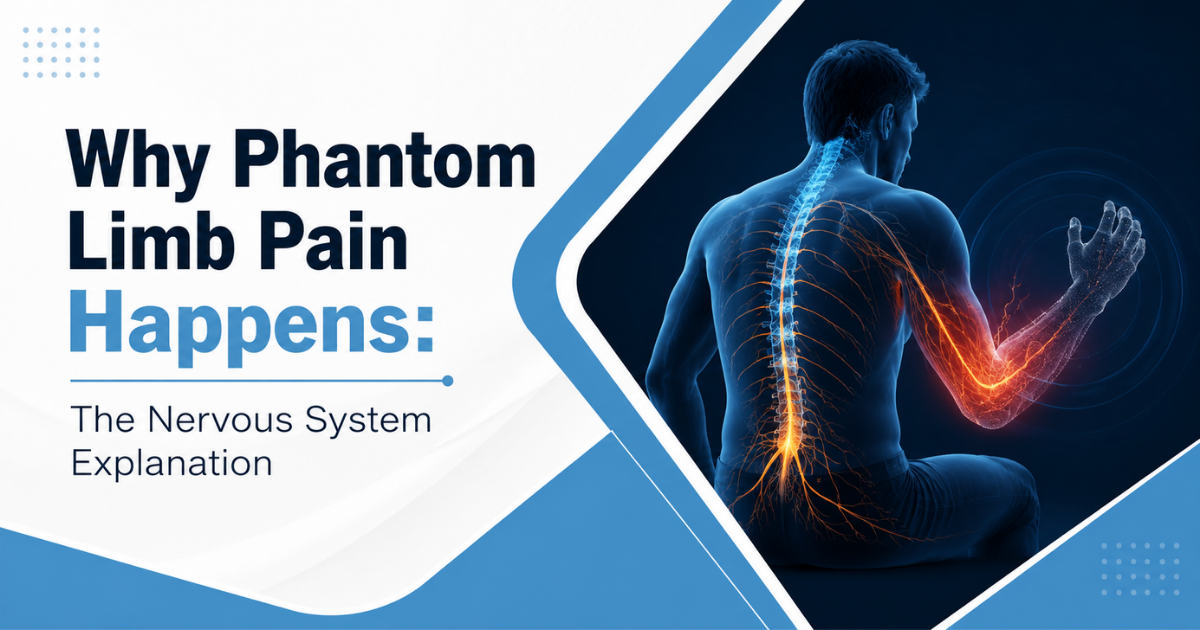
Why Phantom Limb Pain Happens: The Nervous System Explanation

If you’ve lost a limb — or you love someone who has — you’ve probably run into this strange phenomenon called phantom limb pain. Real, sharp, sometimes unbearable pain, coming from a hand or a foot that simply isn’t there anymore. It sounds like it shouldn’t be possible. How do you hurt somewhere you don’t have?

Turns out, the missing limb was never really the source of the problem. The story is happening up in the brain and nervous system, which — as strange as it sounds — doesn’t always get the memo that the limb is gone. Here’s what’s actually going on, without the medical jargon.

Your Brain Has a Map of Your Whole Body

Somewhere in your brain, there’s essentially a map of you — every finger, every toe, your face, your back, all of it, wired in from a lifetime of feeling things happen to your body. That map lives mostly in a region called the somatosensory cortex.

When a limb is amputated, the signals coming from that limb stop cold. But the map itself doesn’t just get erased. Your brain still “expects” that limb to be there, because that’s what years, maybe decades, of wiring have told it. And that gap — a brain that still believes in a limb the body no longer has — is basically where phantom sensations start.

The nerves at the injury site don’t just shut off. 

They’re cut, and the raw ends can get irritated — sometimes clumping into little bundles called neuromas — and keep firing signals up to the brain. The brain reads those signals the only way it knows how: like they’re still coming from the limb. That’s why phantom pain feels so specific — a cramping foot, a clenched fist — because the signal’s riding on pathways built for exactly that sensation.

The brain also “rewires” itself, a little messily.

 The part of the brain that used to handle that limb doesn’t just sit empty — nearby areas start creeping into that space. It’s called cortical remapping, and the more it happens, the worse the pain tends to get. Almost like the brain gets its wires crossed while reorganizing, and that crossed-wire moment is felt as pain.

The spinal cord piles on too. 

It can get more sensitive after amputation — nerve pathways start firing more easily, even without much of a trigger. Add it all up — cranky nerve endings, a jumpy spinal cord, a brain still holding an outdated map — and you get pain that feels completely real, because it is.

And no, it’s not “in your head.” 

It’s physical, rooted in actual nerve and brain activity. Which is exactly why treatment works better when it targets the biology — not the mind.

Treatment usually means hitting more than one of these points at once:

  • Calming the irritated nerves at the injury site
  • Settling down that spinal cord sensitivity
  • Helping the brain re-map itself (mirror therapy is one way)
  • Sometimes, more targeted procedures from a pain specialist

No single fix works for everyone — but understanding where the pain’s actually coming from is usually the first real step toward getting it under control.

Frequently Asked Questions

Is phantom limb pain the same thing as phantom limb sensation?

 Not exactly. Phantom sensation is just the feeling that the limb is still there, which is incredibly common after amputation and usually isn’t painful at all. Phantom limb pain is specifically about pain — burning, cramping, shooting sensations — coming from that missing limb.

How common is this, really? 

More common than most people expect. A large share of people who go through an amputation deal with some degree of phantom limb pain, especially in the months right after surgery — though how intense it is, and how long it lasts, varies a lot from person to person.

Does it ever just go away on its own? 

For some people, yes — it fades as the nervous system settles. For others, it sticks around for years and needs active treatment. There’s no set timeline, which is part of why care really has to be tailored to the individual.

Can this happen with other injuries, not just amputation? 

It can. Similar patterns show up after nerve injuries, spinal cord injuries, and sometimes with paralysis — anywhere the brain’s body maps and the actual signals coming from the body stop matching up.

Does mirror therapy actually work?

 For a lot of people, yes. It uses a mirror to create the visual illusion that the missing limb is there and moving normally, which can help the brain recalibrate its map and ease the pain. It’s not a guaranteed fix for everyone, but it’s helped a meaningful number of patients.

Are there medications that help?

 Yes — usually nerve-pain medications rather than standard pain relievers, since the source is nerve and brain activity rather than damaged tissue in the usual sense. A pain management physician can help figure out what fits a particular case.

What about nerve blocks or injections? 

For some patients, targeted treatments aimed at the nerves near the amputation site can meaningfully cut down on pain signals, especially when a neuroma is part of the picture. This is often something a pain management specialist will discuss as part of a bigger plan.

Does phantom limb pain mean something’s wrong with healing? 

Not usually. It’s a well-known, fairly common part of how the nervous system reacts to amputation, not a sign that something’s gone wrong. That said, any new or worsening pain is worth getting checked, since occasionally it does point to something else, like infection or a problematic neuroma.

When should someone actually see a specialist for this? 

If it’s messing with sleep, daily life, or recovery, it’s worth bringing to a pain management physician. Since the pain comes from several places in the nervous system at once, a specialist can build a plan that tackles it from more than one angle instead of relying on just one approach.

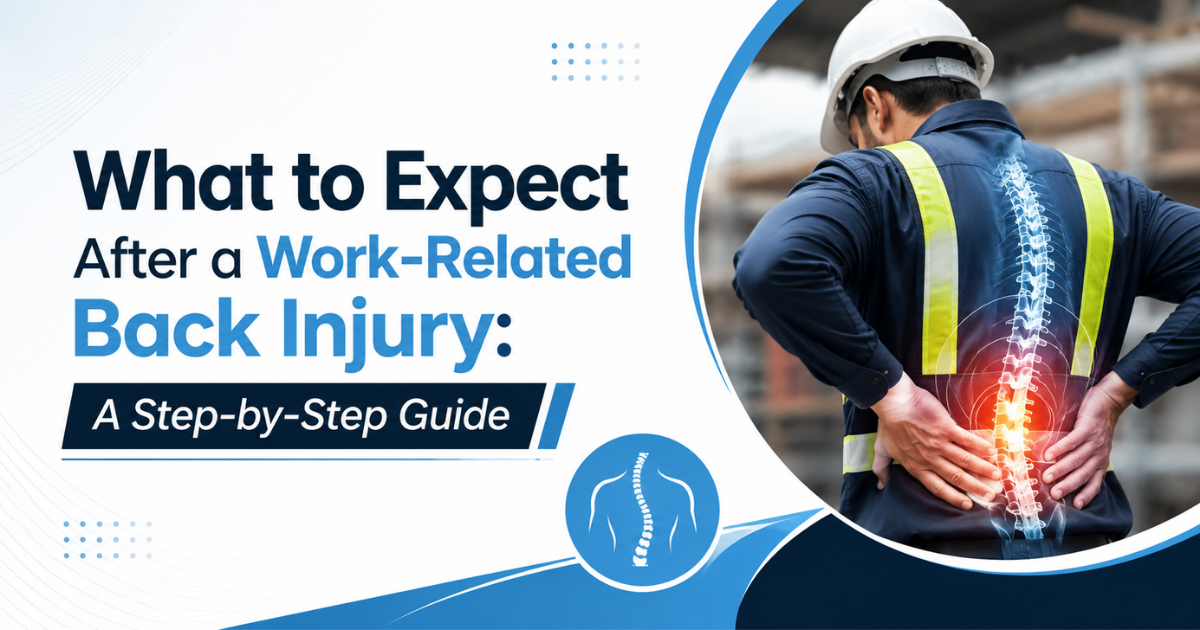
What to Expect After a Work-Related Back Injury: A Step-by-Step Guide

Back injuries are among the most common reasons U.S. workers miss time on the job. Whether you strained your back lifting a box, twisted awkwardly on a job site, or were hurt in a workplace accident, the days and weeks that follow can feel confusing. Between doctor visits, workers’ compensation paperwork, and uncertainty about when you’ll feel normal again, it’s easy to feel overwhelmed.

This guide walks you through what typically happens after a work-related back injury, step by step, so you know what to expect and how to protect both your health and your rights.

  1. Report it fast.

 Even if it feels minor — back injuries often get worse over the next couple of days, and waiting too long to report can mess up your workers’ comp claim.

  1. Get checked out.

 A doctor will look at your strength, reflexes, and movement, and ask about anything scary like numbness. Don’t expect an MRI right away — most doctors start with a hands-on exam first.

  1. Get a real diagnosis.

Could be a simple strain, a herniated disc, a fracture, or an old issue that flared back up. Ask your doctor to explain it in plain English, not medical jargon.

  1. Start treatment — usually non-surgical.

 Think physical therapy, activity adjustments, meds, maybe injections if needed. Surgery is rarely step one.

  1. Keep showing up to follow-ups.

Recovery isn’t a straight line. These visits are how your doctor tracks progress and tweaks your plan.

  1. Understand light duty.

If you’re not 100%, you might get restrictions like no heavy lifting. Going back within those limits is usually better than sitting home completely — but only when your doctor says so, not because your boss is pushing.

  1. Know your rights.

 Workers’ comp is no-fault — you don’t have to prove your employer messed up. It can cover treatment, lost wages, and more. Keep every record. If your claim gets denied, you can push back or get a lawyer involved.

  1. Escalate if you’re not improving.

More imaging, more targeted treatment, or — rarely — surgery, if there’s real nerve damage or instability.

  1. Don’t stop once the pain’s gone

 Keep up with exercises, fix things ergonomically at work, and ease back into full activity instead of diving in headfirst.

Frequently Asked Questions

How soon after a work injury should I see a doctor? 

As soon as possible — ideally the same day. Early evaluation not only supports better outcomes but also helps establish the medical record needed for a workers’ compensation claim.

Can I choose my own doctor for a work-related back injury? 

It depends on your state. Some states allow you to choose your own treating physician, while others require you to see a provider from an employer-approved list, at least initially. Check your state’s workers’ compensation rules or ask your HR department.

Will I need surgery for a work-related back injury?

 Most work-related back injuries do not require surgery. The majority improve with conservative treatments like physical therapy, activity modification, and interventional pain management. Surgery is generally reserved for cases involving fractures, significant nerve compression, or instability that doesn’t respond to other treatments.

How long does it take to recover from a back injury at work? 

Recovery time varies widely depending on the type and severity of the injury. A mild muscle strain may resolve in a few weeks, while a disc injury or more complex case can take several months. Your provider can give you a more specific timeline once your diagnosis is confirmed.

What if my employer disputes my workers’ compensation claim? 

You still have rights, even if your claim is disputed or denied. You can request a review, appeal the decision, or consult a workers’ compensation attorney. Keeping thorough medical and incident documentation from day one makes this process easier.

Can I be fired for filing a workers’ compensation claim?

 Retaliation against employees for filing a legitimate workers’ compensation claim is illegal in every U.S. state, though the specific protections and enforcement mechanisms vary. If you believe you’ve experienced retaliation, document everything and consider consulting an employment attorney.

What’s the difference between light duty and full duty? Light duty (or modified duty) means you’re cleared to work within specific restrictions set by your provider — for example, limited lifting or no prolonged standing. Full duty means you’re cleared to perform all normal job functions without restriction.

Should I keep working through the pain? 

Not without medical guidance. Pushing through pain can worsen an injury or delay healing. If your job duties conflict with your symptoms, talk to your provider about appropriate restrictions rather than toughing it out.

When should I see a pain management specialist instead of just physical therapy?

 If pain persists beyond a few weeks of physical therapy, limits your ability to participate in rehab, or involves radiating symptoms like numbness or weakness, it may be time to see a pain management physician. They can offer targeted, minimally invasive treatments that complement physical therapy and support a fuller recovery.