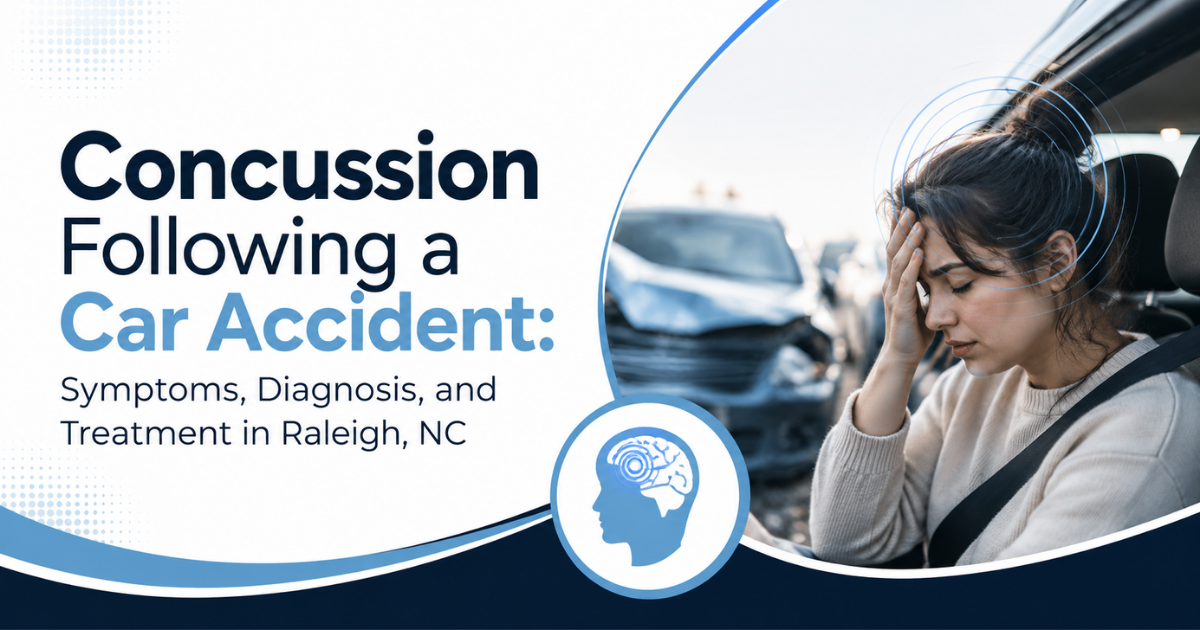
Concussion Following a Car Accident: Symptoms, Diagnosis, and Treatment in Raleigh, NC

Office Locations: Holly Springs | Fuquay-Varina | Apex | Cary | Raleigh, North Carolina

Concussion Following a Motor Vehicle Accident

Concussion is a type of mild traumatic brain injury (mTBI) that frequently follows a motor vehicle accident, even in the absence of a direct head injury. The acceleration and deceleration forces generated by a car accident can cause the brain to shift and impact against the interior of the skull, resulting in a concussion and subsequent symptoms that may not manifest until days after the accident.

At Restore Spine and Pain, we commonly see patients in Raleigh, Holly Springs, Cary, Apex, Fuquay-Varina, Chapel Hill, Durham, and the surrounding Triangle area who have developed concussion symptoms following a car accident.


What Is a Concussion?

Concussion: A mild traumatic brain injury that temporarily affects the function of the brain. A concussion may occur from direct trauma to the head or from rapid movement of the head and neck during a collision.

Important Points:

  • Loss of consciousness is not required
  • Standard CT or MRI scans are often normal
  • Symptoms may be subtle and develop over time

Because concussions do not always appear on imaging studies, diagnosis is often made by clinical evaluation and symptom assessment.

Why Concussions Occur After Car Accidents

During a motor vehicle accident, the head and neck may rapidly move in various directions. This motion can produce stretching and shearing forces in the brain, resulting in chemical and metabolic alterations that 

Symptoms may be delayed and affect how brain cells function.


Typical Concussion Symptoms Following a Car Crash

Concussion symptoms following a car accident can impact several systems and may include:

  • Headaches or pressure in the head
  • Dizziness, vertigo, or problems with balance
  • Nausea or sensitivity to light and sound
  • Confusion, slowed thinking, or problems concentrating
  • Memory issues
  • Fatigue or sleep problems
  • Neck pain or stiffness
  • Visual problems
  • Mood changes or irritability

These symptoms can vary and may exacerbate with physical activity, screen time, driving, or mental tasks.


How Concussions Are Diagnosed After a Motor Vehicle Accident

Concussions can be diagnosed through a comprehensive evaluation and include:

  • Accident mechanism review
  • Thorough symptom review
  • Neurological exam
  • Cognitive and balance function testing
  • Cervical spine exam

Imaging studies such as CT or MRI scans may be reviewed as necessary, especially when ruling out more severe injury or when symptoms persist.

A proper diagnosis is crucial, as concussion symptoms often mimic neck injury, vestibular dysfunction, and post-traumatic headaches.


Concussion Treatment and Recovery

Concussion treatment involves active, guided recovery—not just rest. After the initial period of rest, treatment gradually returns physical and cognitive function while carefully monitoring symptoms.

Treatment may involve symptom management, vestibular and balance therapy, cervical spine treatment, cognitive and visual therapy, and a step-by-step return to normal activities. Treatment plans are tailored to the individual and modified as the patient progresses in recovery.


Why Prompt Concussion Evaluation is Important


Putting off concussion evaluation after a car accident can raise the risk of:

  • Chronic post-concussion symptoms
  • Chronic headaches and dizziness
  • Trouble returning to work and normal activities
  • Overlapping neck and vestibular problems left untreated

Prompt evaluation enables accurate diagnosis, effective treatment, and optimal recovery outcomes.


Comprehensive Concussion Treatment at Restore Spine and Pain

At Restore Spine and Pain, we offer comprehensive concussion treatment following motor vehicle accidents, emphasizing accurate diagnosis, individualized treatment, and safe return to normal activities.

We regularly treat patients with:

Concussion following a car accident

Mild traumatic brain injury (mTBI)

Post-accident headaches and dizziness


Concussion with neck injury

If you are suffering from concussion symptoms following a motor vehicle accident, please contact Restore Spine and Pain today to schedule an appointment and initiate a personalized treatment program.
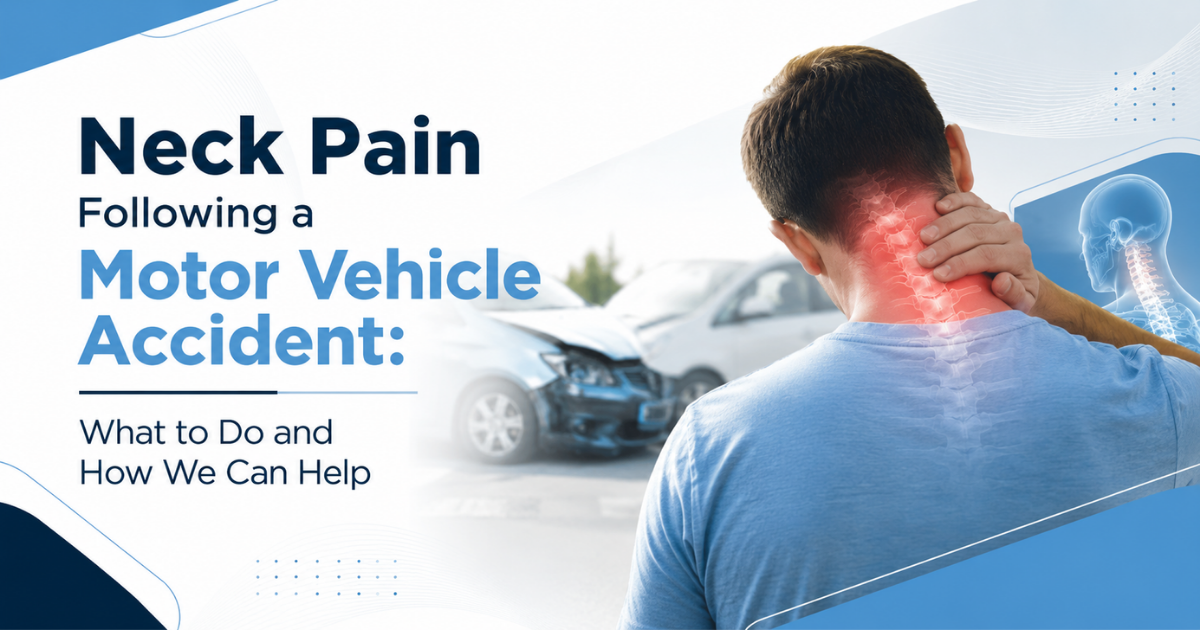
Neck Pain Following a Motor Vehicle Accident: What to Do and How We Can Help

Neck pain following a motor vehicle accident is one of the most common and frequently overlooked injuries that occur as a consequence of a collision. Even if the damage to the vehicles seems minimal, the acceleration forces that pass through the neck can result in soft tissue injury, joint irritation, disc injury, or nerve damage.

At Restore Spine and Pain, we treat patients in Raleigh, Holly Springs, Cary, Apex, Fuquay-Varina, and the surrounding Triangle area who experience neck pain following car accidents, whether immediate or delayed.

Why Neck Pain Following a Car Accident is Frequently Delayed

Injuries such as fractures or lacerations are often immediately apparent following a collision. However, neck pain following a car accident is frequently delayed, as inflammation, muscle spasm, and joint irritation may not reach their peak for 24 to 72 hours following the injury.

This is particularly true in cases of:

  • Rear-end collisions
  • Sudden deceleration injuries
  • Side-impact crashes


Why Neck Pain After a Car Accident is Frequently Delayed

Unlike other injuries, such as fractures, neck pain after a car accident often takes time to develop. This is because inflammation, muscle spasm, and joint irritation may not reach their peak for 24 to 72 hours after the accident.

This is particularly true in the following types of accidents:

  • Rear-end accidents
  • Sudden deceleration injuries
  • Side impact accidents

The sudden forward and backward movement of the head and neck causes strain to the cervical muscles, ligaments, joints, discs, and nerves. This is often related to whiplash injuries, but neck pain after an accident can involve more than one structure and should not be considered simply a case of “muscle strain.”


Common Signs of a Motor Vehicle–Related Neck Injury

Patients with neck pain after a motor vehicle accident may experience:

  • Neck stiffness or persistent aching
  • Pain that worsens with turning or prolonged sitting
  • Shoulder or upper back pain
  • Headaches following the collision
  • Muscle tightness or spasms
  • Tingling, numbness, or heaviness in the arms
  • Difficulty maintaining posture or activity tolerance

These symptoms can interfere with work, driving, sleep, and daily activities — especially if not properly addressed early.

How We Evaluate Neck Pain After an Accident

At Restore Spine and Pain, we take a focused, step-by-step approach to post-accident neck pain. We review how the accident happened, assess your symptoms and limitations, perform a musculoskeletal and neurological exam, and review imaging when needed.
Our goal is to identify the source of your pain and guide the right treatment for recovery.


Treatment Options for Post-Accident Neck Pain

Your treatment plan is tailored to your injury and recovery goals. It may include targeted physical therapy to restore movement and strength, activity and ergonomic guidance to prevent reinjury, and image-guided treatments to address inflammation or nerve irritation.

In some cases, cervical facet or epidural steroid injections may be used to reduce pain and support rehabilitation.

Accident-Focused Neck Pain Care at Restore Spine and Pain

We specialize in caring for patients with:

  • Neck pain after motor vehicle accidents
  • Whiplash-associated injuries
  • Post-collision joint and nerve pain
  • Accident-related spine and musculoskeletal injuries

Our approach emphasizes accurate diagnosis, individualized treatment, and restoring function so patients can return to daily life with confidence.

If you are experiencing neck pain after a car accident, contact Restore Spine and Pain to schedule an evaluation and begin a personalized recovery plan.

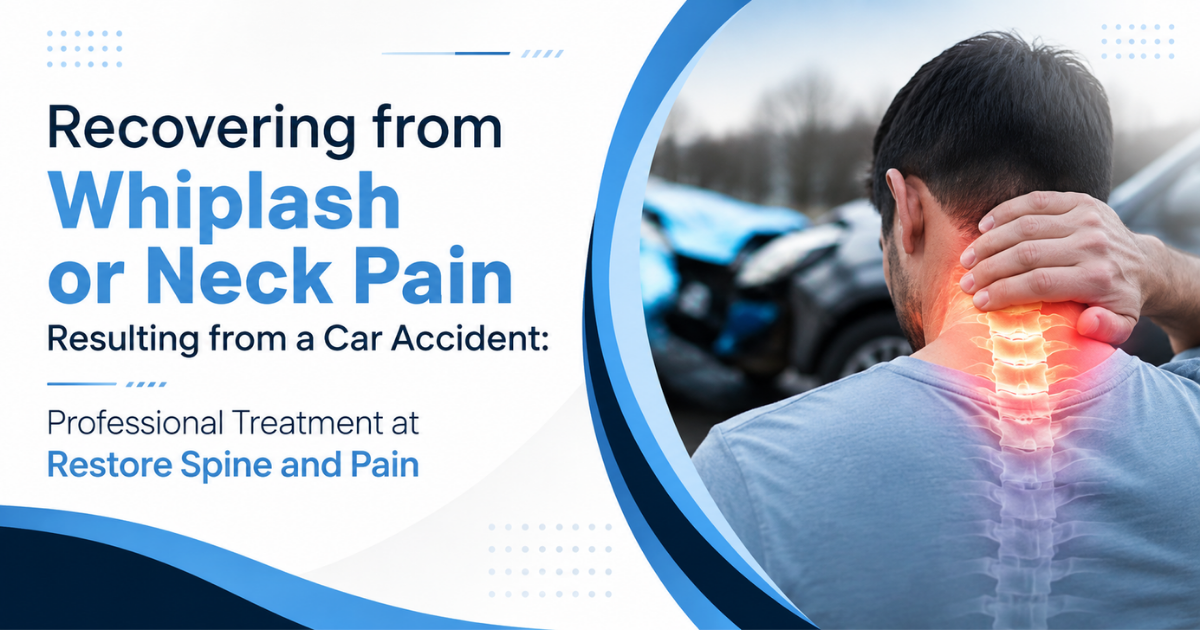
Recovering from Whiplash or Neck Pain Resulting from a Car Accident: Professional Treatment at Restore Spine and Pain

Address: Holly Springs | Fuquay-Varina | Apex | Cary | Raleigh, North Carolina

A car accident can result in more than just bruising; it can also cause strain to the muscles, ligaments, discs, and joints of the neck, which can lead to diseases linked to whiplash. 

What is Whiplash Injury?

Whiplash, which can happen after rear-end crashes or abrupt stops, is a quick jerking or snapping movement of the head that resembles the cracking of a whip.


The patient may experience:

  • Neck pain and stiffness, which starts shortly after the accident
  • Headaches that start at the base of the head
  • Pain in Shoulder or upper back area
  • Not able to turn the head fully

Concussion symptoms 

These symptoms may not start until hours or even days after the accident, which is why proper evaluation is so important.


Comprehensive Care for Your Neck Pain

At Restore Spine and Pain, we follow a systematic and evidence-supported approach to whiplash injuries, including:


  • Careful physical examination and imaging analysis
  • Physical therapy to regain strength and range of motion
  • Conservative injections under image guidance when inflammation is a prominent factor
  • Team care for complex cases


Every treatment program is designed to meet your specific needs and goals. 


Return to Pain-Free Living


You don’t have to live with neck pain after an injury. Prompt and expert care can help alleviate chronic pain and restore your freedom of movement. Contact Restore Spine and Pain today to schedule a consultation.

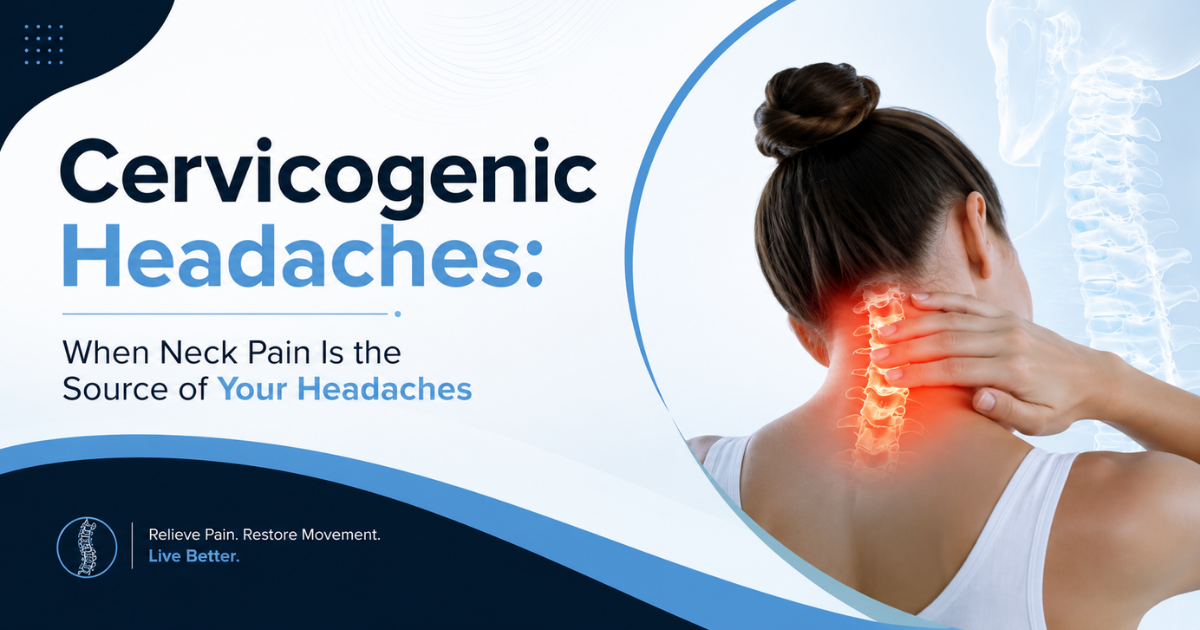
Cervicogenic Headaches: When Neck Pain Is the Source of Your Headaches

Location:
Holly Springs | Fuquay-Varina | Apex | Cary | Raleigh, North Carolina

Not all headaches begin in the head.Cervicogenic headaches are caused by the dysfunction of the cervical spine, which may be due to irritation or arthritis of the joints, muscles, or nerves of the neck. Cervicogenic headaches are often overlooked and can persist if the neck problem is not treated.

At Restore Spine and Pain, we frequently see patients who have been experiencing chronic headaches that have not responded to typical headache treatments, only to discover that neck issues are the underlying cause.

What Causes Cervicogenic Headaches?

Cervicogenic headaches are caused by the referral of pain from the neck to the head. They are commonly due to:

  • Inflammation or arthritis of the cervical facet joints
  • Degenerative conditions of the cervical spine
  • Muscle tightness and trigger points
  • Poor posture and forward head posture
  • Previous neck injury or whiplash trauma

Because the upper cervical nerves travel the same course as the nerves that carry pain from the head, neck problems can cause headaches.

Common Symptoms of Cervicogenic Headaches

Patients with cervicogenic headaches may experience:

  • Pain originating from the base of the head
  • Headache that is typically one-sided
  • Neck stiffness or limited mobility
  • Headache pain exacerbated by neck movement or posture
  • Shoulder or upper back pain
  • Neck muscle tenderness

Unlike migraines, cervicogenic headaches are less likely to be accompanied by nausea, photophobia, or aura.

How Cervicogenic Headaches Are Diagnosed

Diagnosis involves a careful history and physical examination, with particular attention to the neck.

The process of diagnosis includes:

  • Headache pattern and trigger point analysis
  • Neck mobility and posture analysis
  • Musculoskeletal and neurological examination
  • Cervical imaging analysis when available

It is critical to recognize the neck as the source of headache pain to effectively treat the condition.

How We Treat Cervicogenic Headaches at Restore Spine and Pain

Restore Spine and Pain treatment focuses on the underlying neck condition, not just the headache pain.

  • Treatment options may include:
  • Physical therapy and postural retraining
  • Image-guided cervical facet injection or medial branch block
  • Radiofrequency ablation in carefully selected patients
  • Activity and ergonomic modifications

The goal of these treatments is to reduce pain from the neck and offer improved long-term headache relief.

Get Back to Living Without Headaches

If headaches are associated with neck pain, then neck treatment is the answer to a headache-free life. If headaches persist despite conventional treatments, then cervical spine evaluation may provide the answers.

Call Restore Spine and Pain today to schedule an assessment and learn if your headaches are coming from your neck.

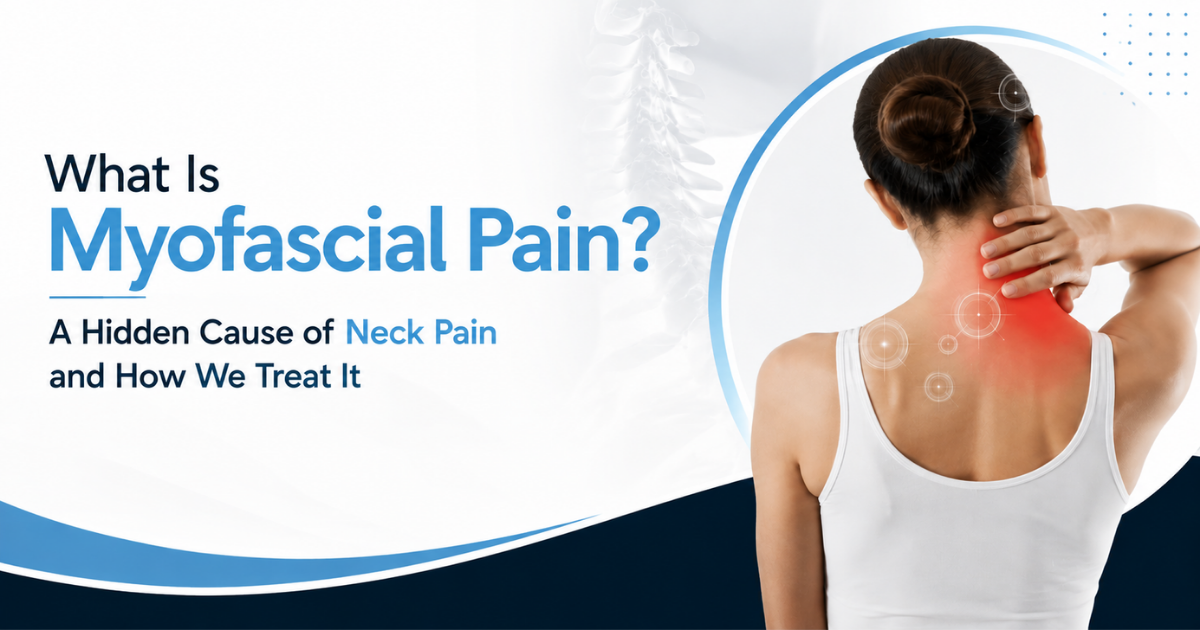
What Is Myofascial Pain? A Hidden Cause of Neck Pain and How We Treat It

Not all neck pain is due to joints or nerves. Sometimes, the problem of neck pain is with your muscles — and that’s where myofascial pain syndrome comes in. This condition involves tender trigger points in tight muscles that cause pain.


What Is Myofascial Neck Pain?


Myofascial pain syndrome can be characterized by the following symptoms:

– Ongoing pain and stiffness in the neck

-Pain that spreads in the shoulder or upper back area

– Tightness that doesn’t improve with  regular stretching

– Sensitive, painful “knots” felt deep within the muscles

 Factors like muscle strain, poor posture, daily stress, or past injuries can play a major role in the development of these trigger points.


How We Treat Myofascial Neck Pain

At Restore Spine and Pain, we take a personalized approach to help reduce muscle tension and restore movement. Depending on your needs, treatment may include:

  • – Guidance on improving  your posture and lifestyle habits

  • – Physical therapy to help stretch and strengthen your muscles

  • – Therapies such as heat, ultrasound, or electrical stimulation

  • – Trigger point injections to relax tight muscles

Our goal isn’t just short-term relief; we focus on addressing the root cause to support long-term healing and prevention.


A Pathway Back to Comfort

Myofascial pain can be quite stubborn, but with the right combination of care, many patients can see a significant improvement. If you have tried “waiting it out” with only limited success, a more tailored approach may make all the difference.

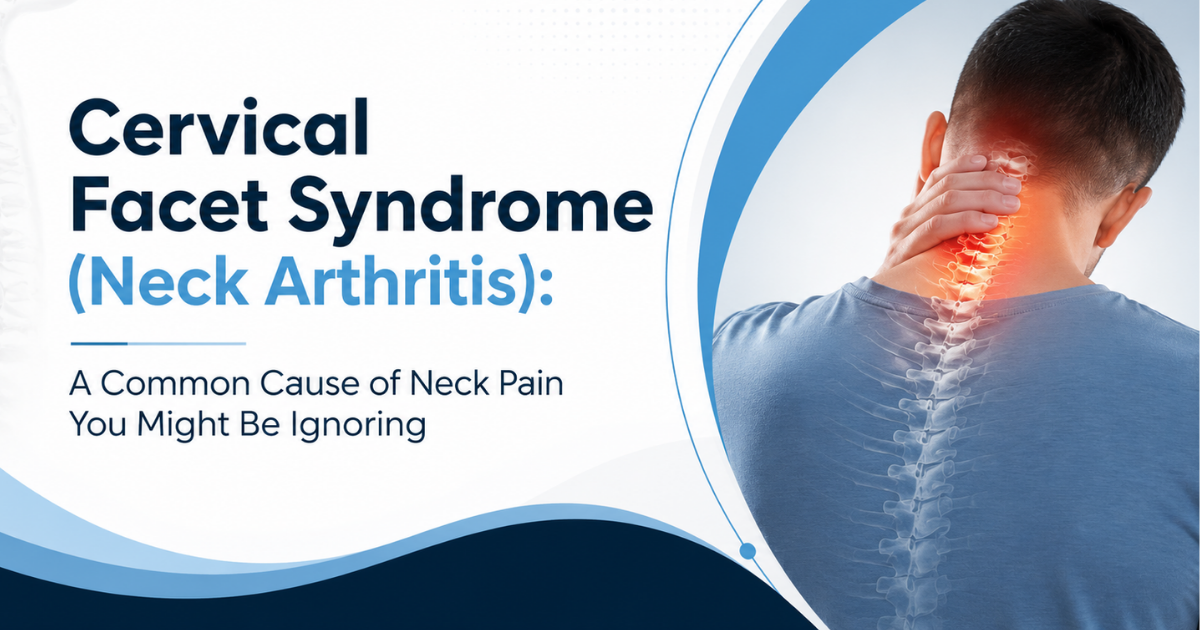
Cervical Facet Syndrome (Neck Arthritis): A Common Cause of Neck Pain You Might Be Ignoring

Do you wake up with a stiff neck that gets worse when you turn or twist?It may not be a “kink” in the neck but rather cervical facet syndrome (neck arthritis), a common yet often overlooked cause of neck pain.

What Are Facet Joints?

Facet joints are small joints that give stability to the cervical spine. Facet joints act as a restriction to the movement between two adjacent cervical vertebrae. Facet joints can become irritated or arthritic due to injury or wear and tear. When this happens, you may experience pain that is more deep-seated than muscle pain.

  • Possible Symptoms of Facet Syndrome
  • Individuals with cervical facet syndrome may experience:
  • A dull, aching pain in the back and side of the neck
  • Pain that increases with extension (looking up)
  • Stiffness and loss of range of motion
  • Referred pain in the area of the shoulder blade

These symptoms may resemble muscular strain in the neck, but do not always respond to typical stretching and rest.

Common Causes of Facet Joint Irritation

  • The following are common contributing factors:
  • Aging and natural wear and tear
  • Repetitive strain injuries to the neck
  • Poor posture (such as forward head posture from computer use)
  • Previous injuries or whiplash
  • Facet joints can become irritated or develop arthritis, leading to chronic pain. 


How We Treat Cervical Facet Syndrome at Restore Spine and Pain

Our treatment plan is centered on relieving irritated joints and restoring the neck range of motion through:

  • Posture and ergonomic advice to decrease strain
  • Customized physical therapy and exercise retraining
  • Specific injections, such as cervical medial branch blocks and radiofrequency ablation, to reduce irritation

These methods are intended to promote comfort without resorting to unnecessary surgery when possible. 


Don’t Let Neck Pain Stop You

Neck pain can restrict your activities and enjoyment of life. If you have not already, Restore Spine and Pain can provide a complete assessment and customized treatment plans to target the underlying cause, not just the symptoms.


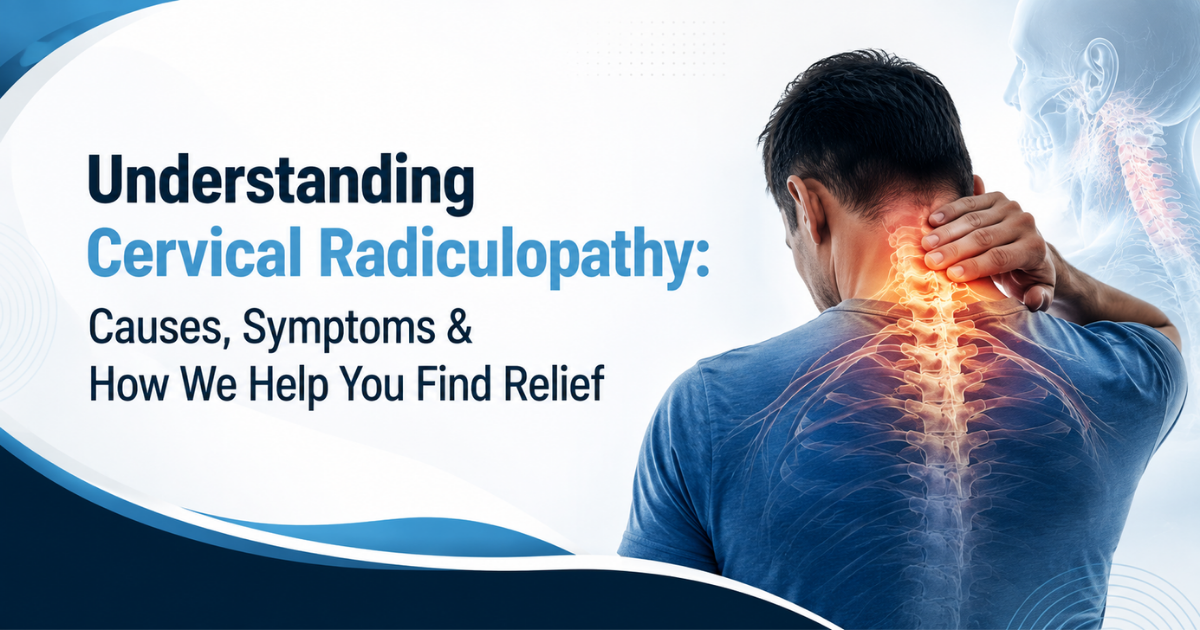
Understanding Cervical Radiculopathy: Causes, Symptoms & How We Help You Find Relief

Neck pain can be caused by many things other than just tight muscles. Neck pain that radiates into arms, hands, and fingers could mean you have cervical radiculopathy, also known as a ‘pinched nerve’ in the neck.  This condition is not just about pain sensations and can affect not just sleep but also your basic movements and activities.

What Is Cervical Radiculopathy?

Cervical radiculopathy is a condition in which a cervical nerve root is irritated. These nerve roots leave the spinal column and carry messages related to sensation and strength to your hand, arm, and shoulder. They can be irritated due to compression caused by disc herniations, degenerative changes, and even arthritis.

Common Symptoms to Watch For

Complaints are commonly described by patients with cervical radiculopathy:

Neck pain radiating into the arm or hand

Tingling, burning, or numbness of the fingers

Weakness or clumsiness in the shoulder, arm, or hand muscles

Pain, discomfort that may be exacerbated by specific movements of the head

These symptoms often appear on one side of the body and can vary in intensity from mild discomfort to sharp, nerve-like pain.

Why It Happens

  • Several things can cause cervical nerve compression, and these are:
  • Degenerative Disc Changes and Cervical Arthritis
  • Herniated or Bulging Discs
  • Bone spurs that constrict the nerve exits
  • Repetitive strain injury of the neck
  • Activities that involve poor posture or repeated overhead or forward bending can also lead to increased risk.

How We Diagnose and Treat Cervical Radiculopathy

In our office at Restore Spine and Pain, we start with a thorough evaluation, which includes a physical exam and review of imaging studies. From there, your treatment is tailored to fit the specifics of your symptoms and goals.

Our evidence-based strategies could include:

  • Conservative Care: Emphasis on postures, movement, and muscle strength
  • Physical therapy and exercise at home
  • Non-opioid pain management options
  • Fluoroscopic-guided cervical epidural steroid injections for reducing inflammation and irritation of nerves
  • In a few instances, a collaborative care approach involving spine surgeons and neurologists can be advocated.

Your Next Step Toward Relief

Suffering from neck pain that is not merely “aching,” but is, instead, radiating, tingling, or even weakening your arm? Consult the expert team at Restore Spine and Pain to create a personalized plan of treatment designed to provide long-term solutions.

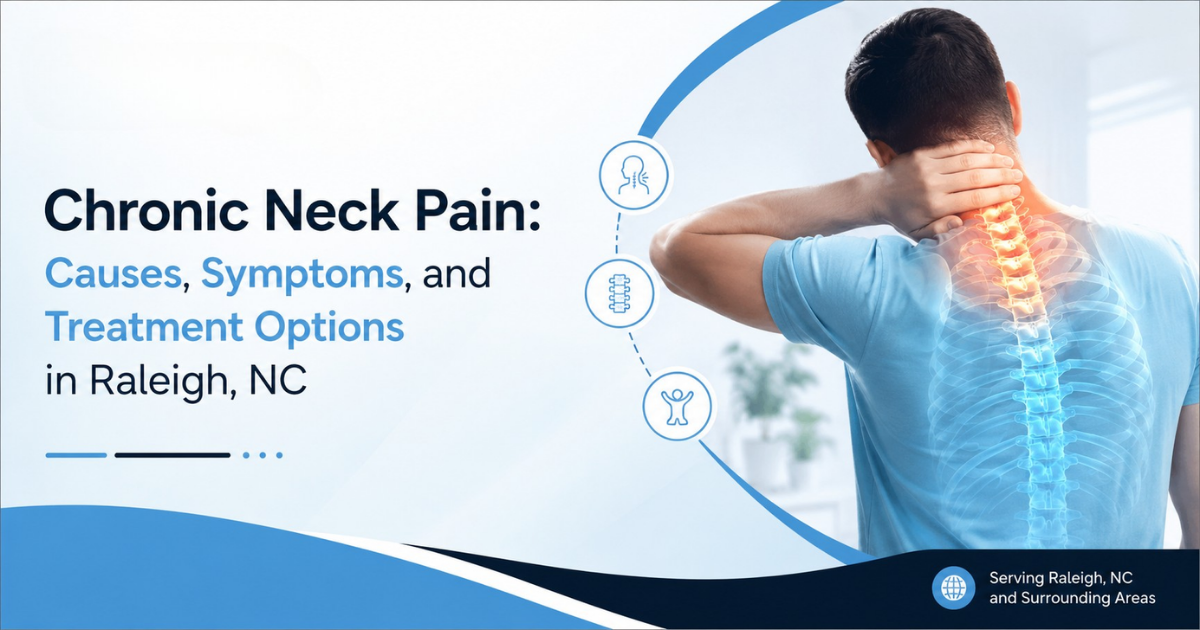
Chronic Neck Pain: Causes, Symptoms, and Treatment Options in Raleigh, NC

Chronic Neck Pain: When Neck Pain Doesn’t Go Away

Generally, chronic neck pain refers to the sensation of pain that lasts for more than three months. Unlike other pains that can be easily explained as resulting from muscle strain, chronic pain is usually the expression of underlying problems that affect the muscles, joints, or discs.

At Restore Spine and Pain, we help patients from Raleigh, Cary, Holly Springs, Apex, and Fuquay-Varia who suffer from persistent neck pain even after resting, using medication, or having physical therapy. Our approach begins by understanding the reason behind such painful conditions and why neck pain tends to become a lingering problem.


Common Causes of Chronic Neck Pain

Most chronic neck pain is not due to a single cause but rather a multifactorial process that may include:

Cervical Facet Joint Arthritis

Degenerative disc disease

Cervical radiculopathy 

Myofascial pain and muscle trigger points

Poor Posture or postural imbalance 

Repetitive strain from work or other activities

Previous neck injuries or whiplash

Over time, neck pain that is not properly treated or is under-treated may cause stiffness, loss of mobility, and problems with everyday activities.

Symptoms of Persistent Neck Pain

Patients with chronic neck pain may experience:

  • Ongoing neck stiffness or soreness
  • Pain that worsens with movement or prolonged sitting
  • Limited range of motion
  • Headaches related to neck tension
  • Shoulder or upper back discomfort
  • Muscle tightness or spasms
  • Intermittent arm pain, numbness, or tingling

Symptoms can fluctuate in intensity and may worsen with stress, poor posture, or physical activity.

Why Chronic Neck Pain Is Often Missed or Undertreated

Most people believe that neck pain is part of aging or desk work and therefore delay seeking evaluation. Some receive symptomatic treatment that does not try to identify the source of the pain.

Chronic neck pain tends to be persistent in nature because:

There are multiple pain generators involved.

The posture and movement patterns are not attended to.

Overlapping musculoskeletal and nervous problems

Inflammation is not effectively treated

As such, an in-depth evaluation is necessary to ascertain why the pain is persisting. 

How Chronic Neck Pain Is Diagnosed

Evaluation at Restore Spine and Pain begins with a careful history and physical examination, emphasizing the origin of symptoms and how those symptoms impact daily living.

Evaluation may include:

Comprehensive musculoskeletal and neurological examination. This includes assessments of posture and movement patterns. Muscle, joint, disc, or nerve involvement can be identified. This will help in delineating the main pain factors and thereby focusing the treatment.

Review of imaging studies including X-ray, MRI or CT scans of the cervical spine.  

Treatment Options for Chronic Neck Pain

Treatment is personalized depending on the diagnosis, severity of symptoms, and the goals of the patients. They may involve:

Physical Therapy and Rehabilitation

Focused therapy to help develop strength, flexibility, posture, and cervical stability.

Activity and Ergonomic Modifications

Recommendations on how to properly set up workstations, sleeping positions, and postural retraining/education.

Non-Opioid Pain Management

Strategies that provided evidence-based, long-term solutions rather than temporarily relieving symptoms.

Image-Guided Interventional

Other procedures, like a cervical epidural injection of steroids or facet joint injections, might provide benefits such as reduced inflammation.

When to Seek Care for Chronic Neck Pain

If it has already been more than a few weeks since the pain in the neck started, or if it limits daily activities, it might be necessary to thoroughly evaluate it to prevent further progression of the condition.

Chronic Neck Pain Care at Restore Spine and Pain

Restore Spine and Pain delivers comprehensive care to those in need of relief from prolonged chronic neck aching, emphasizing proper diagnosis, customized treatment, and regaining functionality.

Failure to see improvement in neck discomfort, consider seeking an appointment with Restore Spine and Pain to discuss treatment options and find a solution to the issue.