


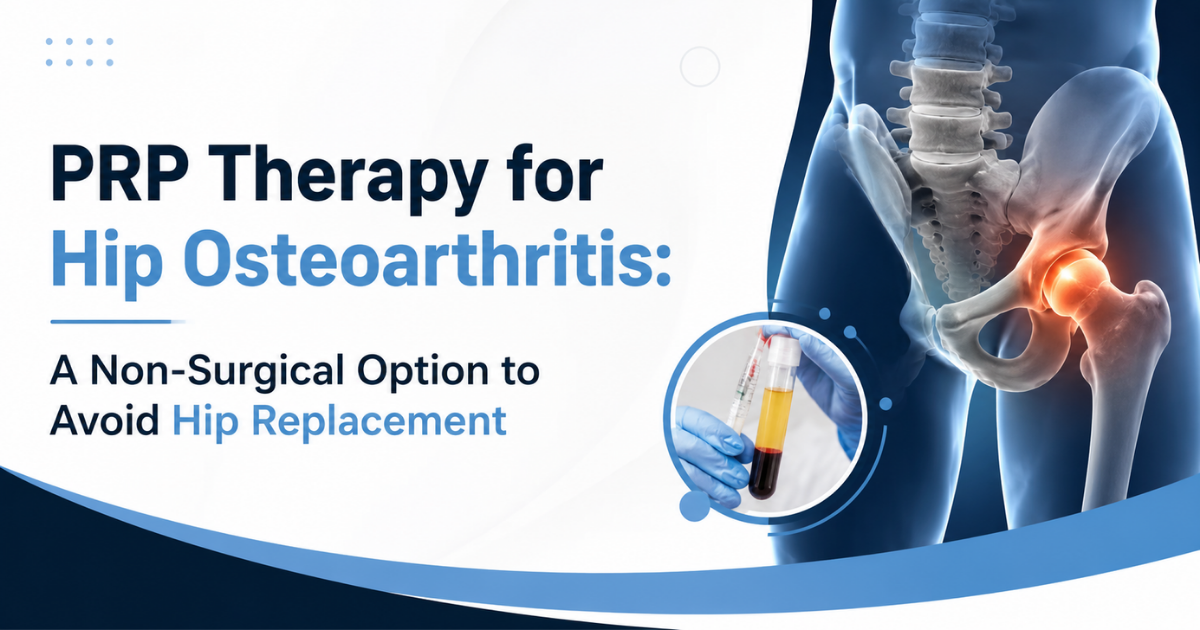
Pain in the hip means more than just another ache or stiff joint. It can mean the early morning awakenings when pain forces you to get out of bed; it can mean an extra struggle to stand up after sitting down, or it can even mean being unable to do the things you once loved to do. Having trouble moving your hip joint is frustrating and draining, no matter how you look at it.
In the United States, when people talk about hip problems, there is one answer on everyone’s mind: surgery. However, surgery isn’t always a viable treatment option for every patient. This is where platelet-rich plasma (PRP) therapy comes into play.
Hip Osteoarthritis Explained: Causes, Symptoms, and Non-Surgical Treatment Options
Osteoarthritis of the hip occurs due to the wear and tear of the cushioning material that separates the bones making up the ball-and-socket joint in the hip. The deterioration of the cartilage causes the bones to grind against each other, thus resulting in pain, inflammation, stiffness, and limited mobility.
According to the CDC, approximately 32.5 million US adults suffer from osteoarthritis. Among the millions, many people who have the disease develop arthritis in their hip joints. The risk factors include advancing age, hip injury, obesity, genetic predisposition, and strenuous physical activity.
Conventional therapies such as NSAIDs, physiotherapy, corticosteroid injections, and lifestyle changes alleviate pain but do not stop joint damage. However, once the disease progresses to a level where conventional therapy fails to relieve symptoms, hip joint replacement may be considered.
PRP offers a viable option for treating the ailment as an intermediate approach between controlling pain and conducting surgery.
PRP Treatment in the Hip Joint
Since the hip joint is located deep in the body, accuracy is critical in PRP treatment. The process involves injecting the PRP into the joint space using either ultrasound or fluoroscopy at Restore Spine & Pain. The PRP treatment in the hip joint works by activating platelets that:
- Minimize chronic inflammation in the joint capsule
- Repair and regenerate damaged cartilage cells
- Enhance collagen formation to maintain joint structure
- Lubricate joints by acting on the synovial membrane
For most individuals, PRP treatment in the hip joint leads to reduced pain and increased movement without any drug or surgery-related complications.
What Does the Clinical Evidence Say About PRP for Hip Osteoarthritis?
Although the number of studies and clinical trials regarding hip PRP is less compared to knee OA, there is good news. The studies and reviews done show that hip pain sufferers with mild to moderate osteoarthritis who receive PRP shots experience significant improvements for up to one year.
The reason why we believe PRP can offer advantages over cortisone injections is that its effects are more sustained and do not come at the price of potential joint destruction. Although cortisone injections offer temporary relief faster than PRP, they only mask symptoms.
There is one point that deserves mention when considering hips – hip bursitis is very common. Hip PRP has also been found effective in treating hip bursitis, especially in patients with greater trochanteric pain syndrome who are unresponsive to cortisone injections.
Patient Perspective: Most of our patients with hip problems come to us with previous experience with cortisone shots. Initially, they work well, but eventually they stop bringing results. That’s why PRP presents an option for them, which is both non-invasive and different in nature from what they were taking before.
Can PRP Help You Avoid or Delay Hip Replacement?
That’s what all patients would like to know outright. The simple response to that is: yes, for some patients – and studies back this view.
PRP treatment does not offer a one-time solution to OA of the hip. Regeneration of completely worn-out cartilage tissue cannot be expected of it. However, PRP can relieve symptoms in patients suffering from mild to moderate OA with some cartilage remaining. PRP will decrease inflammation, inhibit joint degradation, and ease the condition enough for the patient to avoid the need for surgery for a considerable period of time.
For patients who are elderly or have numerous medical issues, PRP may offer a sensible way out of undergoing an extensive operation.
Who Is the Best Candidate for Hip PRP?
- Adult patients with radiographic confirmation of mild to moderate osteoarthritis in their hips
- Individuals who have not achieved satisfactory results with either cortisone or HA shots
- Candidates who are not yet ready for surgery or who would like to postpone it
- Athletes and active people wanting to resume their activities without any pain
- Hip bursitis sufferers who have not received benefits from other non-surgical treatments
PRP therapy is not advisable for those suffering from end stage OA characterized by extensive bone deterioration. It is important to have a proper diagnosis of the condition after analyzing the x-rays or MRI results.
What to Expect From Hip PRP Treatment ?
The actual procedure will take place right here in our office and usually takes about 60 to 90 minutes to complete. Blood collection, PRP preparation using a centrifuge, and guided injection will be done by our highly-trained experts.
A small amount of discomfort can be expected near the site of injection for a few days after treatment. Most patients resume light activities within 24 to 48 hours after the injection. It will typically require one to three injections, given in four to six-week intervals.
The effects of the treatment will improve slowly but surely. Many patients report feeling positive changes in their condition starting from four to eight weeks after the first injection.
Start the Conversation
PRP hip treatment might just be what you need if you have tried all other means of managing hip pain through medication without success. Or maybe you are considering surgery but want to know what your other options are first.
Conclusion
The professionals who guide our practice have all been board certified in interventional pain medicine and employ state-of-the-art techniques to ensure that your PRP injections are administered in a precise and safe manner.
At our facility, we focus on personalizing your experience by evaluating your imaging studies, medical history, and creating a unique treatment regimen for you.
If you think that you would be a good candidate for PRP treatments, feel free to contact us to set up an appointment.