


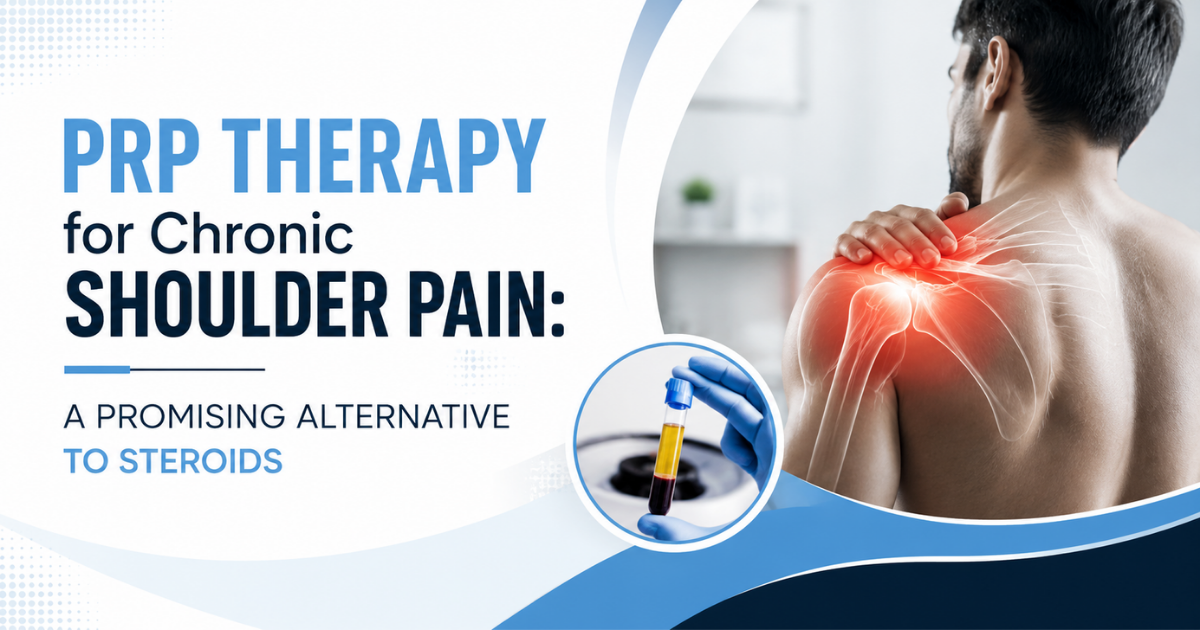
Among all other joints in the human body, the shoulder is the one that enjoys the most movement ability. The joint’s complicated structure, consisting of rotator cuff tendons, glenohumeral joint, bursa, ligaments, and others, makes the joint prone to many various injuries and diseases.
Once shoulder pain turns into a chronic state, patients have to resort to multiple courses of cortisone injections and physiotherapy sessions, but without positive effects. One of the possible alternative ways of managing such a painful condition is represented by PRP treatment.
Causes of Persistent Shoulder Pain
Pain that continues to linger in the shoulder over a period of weeks or months usually indicates an underlying condition such as:
- Degeneration or microscopic tears in the tendons of the rotator cuff, resulting from repetitive lifting overhead, aging, or previous trauma. It is the most prevalent problem with the shoulder in adults. Rotator Cuff Tendinopathy:
- Partial tears in the rotator cuff, which result in considerable pain and loss of strength. Total tears may need surgery, while partial tears are excellent candidates for regenerative therapy. Rotator Cuff Tears:
- Arthritis in the shoulder’s ball and socket joint, leading to deep-seated pain and gradual stiffening. Glenohumeral Osteoarthritis:
- Bursitis in the shoulder, where inflammation of the bursa causes acute pain during movements over the head. Shoulder Bursitis
- Tears in the labrum at the top portion of the shoulder socket, which frequently occur in individuals who throw a lot or engage in activities requiring frequent overhead motion.
How Does PRP Work in the Shoulder?
When PRP injections are administered to the shoulder, they target the injured tissues of the shoulder with growth factors, which depends on the pathology, either in the glenohumeral joint, subacromial space (bursitis and tendinopathy of the rotator cuff), or directly to the tendons under ultrasound guidance.
After PRP administration, the growth factors contained in it initiate various repair mechanisms within the body:
- Tendon and ligaments tissues are rebuilt due to enhanced collagen production
- The inflammatory response is regulated, minimizing the effects of chronic low-level joint inflammation
- Blood vessel formation is stimulated, allowing better oxygen and nutrients transport.
What Does the Research Say About PRP for Shoulder Conditions?
Rotator Cuff Tendinopathy
Many papers discuss PRP in rotator cuff tendinopathy, indicating that, on average, a clinically relevant improvement was observed when comparing PRP against corticosteroid injections. These results have been obtained in patients whose medium and long-term follow-up period reached six months or more.
Shoulder Osteoarthritis
In 2022, the results of the PROBE trial were published, which involved comparing PRP against corticosteroid injections to treat shoulder osteoarthritis. As the study demonstrated, although patients who received cortisone felt immediate pain relief, PRP resulted in longer-lasting pain reduction and improved functional status of joints. The difference is clinically significant because, depending on the patient’s needs, PRP may be used for a lasting solution rather than a temporary relief.
Moreover, according to the journal Clinical Journal of Sports Medicine, in patients with glenohumeral osteoarthritis, a statistically significant decrease in shoulder pain score was achieved after administering PRP or hyaluronic acid.
Partial Rotator Cuff Tears
PRP injections appear promising for treating partial tears of the rotator cuff because this approach helps to promote healing of the damaged tissue and relieve pain in the area. Patients with partial tears have to choose between surgical intervention and conservative therapy; however, PRP provides a good biological substitute for such procedures.
Who is not a candidate: Complete, full-thickness rotator cuff tears typically require surgical repair. PRP is not a substitute for surgery in these cases, though it may be used as an adjunct to support healing after repair.
PRP vs. Cortisone for Shoulder Pain: Which Treatment Works Better Long-Term?
While cortisone injections may provide quick relief from pain during an acute flare-up, it is worth noting that their effects do not fix the issue; the mode of action involves reducing inflammation and therefore does not restore damaged tissue. Repeated use of cortisone injections could eventually lead to tendon deterioration, especially with respect to the rotator cuff.
The benefits from PRP therapy may take longer to kick in – usually between four to eight weeks – but the effect comes about because of the restoration of the tissue. For individuals who have been on cortisone injections that no longer work or for whom cortisone injections only provide temporary relief, PRP therapy offers something better.
What to Expect During and After Shoulder PRP Treatment
PRP therapy for the shoulder joint follows the same protocol as for other joints: drawing blood, spinning it down in the centrifuge, and carefully injecting it into the site. The whole process usually takes between 60 and 90 minutes. The use of ultrasound helps to ensure that PRP is injected in the right spot. Following the treatment, patients will experience some discomfort in their shoulders for up to three to five days. They can go back to work at a desk or perform light duties after 24 hours. Heavy lifting or other vigorous movements need to be avoided for a period of one to two weeks. A physiotherapy regime might be suggested in conjunction with PRP therapy.
Who Should Consider PRP for Shoulder Pain?
The only way to know if you are a good candidate for PRP injections for your shoulder is through a full assessment at our office. Here at Restore Spine and Pain, we will review your scans, examine your functionality issues, and ask you about your history before recommending anything.
The individuals that seem to benefit most from shoulder PRP treatment are patients who have:
- Rotator cuff tendinopathy which does not respond well to physical therapy
- Gleno-humeral arthritis in a mild to moderate stage
- Small rotator cuff tears with continued pain and loss of function
- Bursitis of the shoulder which doesn’t respond well to cortisone injections
If you have been dealing with recurring shoulder pain, then let us help you find out how PRP can help! Call Restore Spine and Pain now to schedule your shoulder pain consultation.