


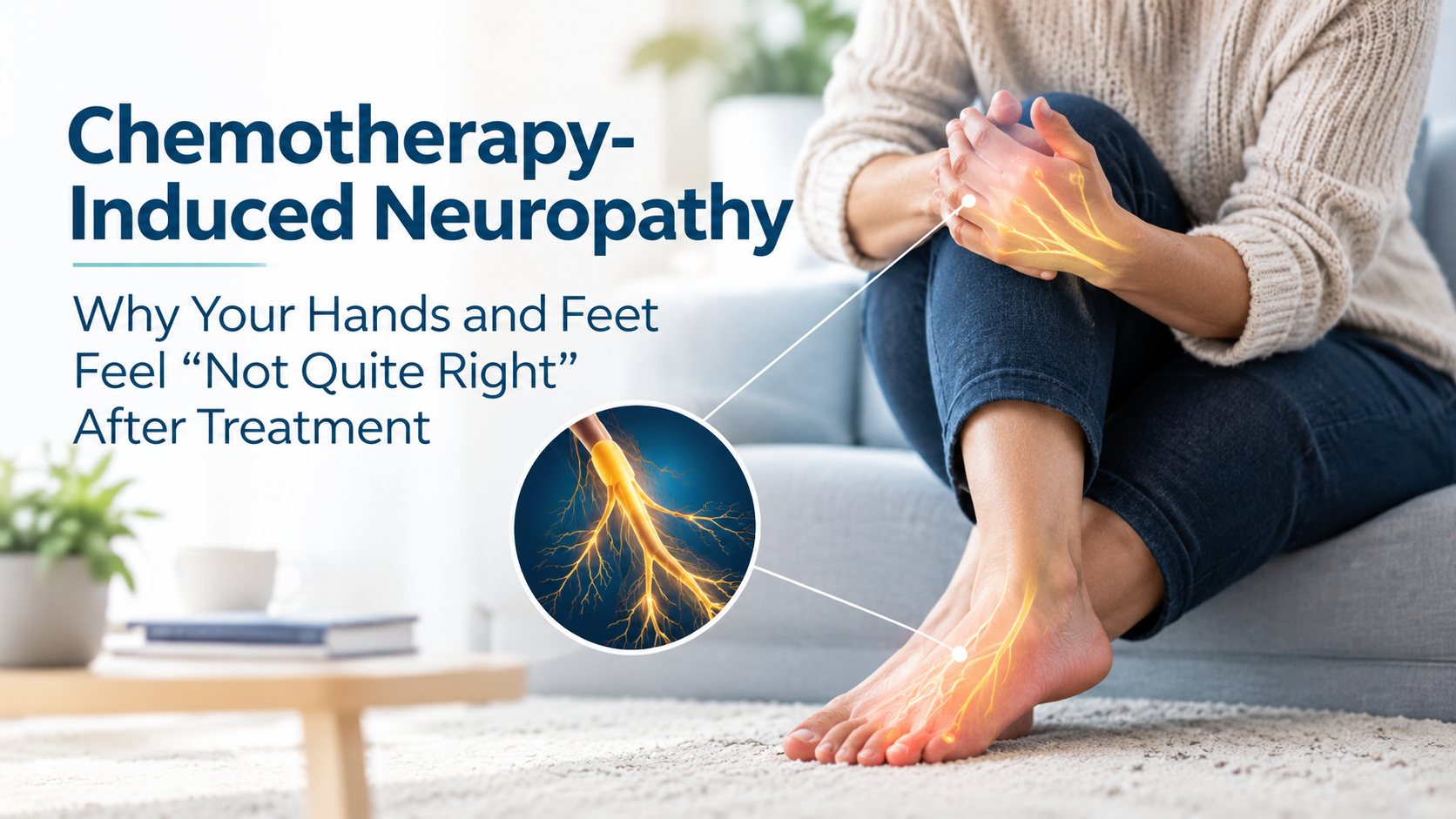
Maybe you finished treatment months ago, or maybe you’re still in the thick of it. Either way, you’ve noticed something strange — your fingertips tingle, your toes feel numb, or there’s a burning sensation that makes something as simple as buttoning a shirt suddenly annoying. You’re not imagining it, and you’re far from the only one dealing with it.
It’s called chemotherapy-induced peripheral neuropathy, or CIPN for short. It’s incredibly common, and yet almost nobody warns you about it in advance. Oncology teams are focused on the tumor — understandably — but the nerve damage left behind can quietly change how your body feels for a long time after the last infusion.
Here’s what’s actually happening, why it happens, and what real relief can look like.
So what is this, exactly?
Some of the most effective chemo drugs out there — platinum-based agents, taxanes, vinca alkaloids — are great at killing cancer cells. The tradeoff is that they can also injure the peripheral nerves, which are the ones responsible for carrying feeling and movement signals between your brain and the rest of your body.
Those nerves happen to be longest on the way down to your hands and feet, which is why that’s usually where you feel it first. Doctors sometimes call this pattern “stocking and glove” numbness, since it tends to show up like you’re wearing an invisible pair of gloves and socks that won’t come off.
What do people actually describe feeling ?
No two people experience it quite the same, but a lot of it sounds familiar across patients:
- Tingling, or that “pins and needles” feeling in fingers and toes
- Numbness that makes it hard to feel textures, temperature, or even the floor under your feet
- Sharp, burning, or electric-shock kinds of pain
- Weak or cramping muscles
- Trouble with small tasks — buttoning a shirt, typing, picking up a coin
- Feeling unsteady, or tripping more than you used to
- A newfound sensitivity to cold
For some people it fades within a few months of finishing chemo. For others, it sticks around for years — sometimes it never fully goes away. That not-knowing is part of what makes it so hard: there’s rarely a clean answer for when, or whether, it’ll resolve.
Why does this deserve more attention than it gets ?
Neuropathy isn’t just a hand or foot problem — it chips away at independence. It’s dropping a coffee mug because you couldn’t feel it slipping. Feeling shaky on the stairs. Skipping things you used to enjoy because your feet don’t feel like your own anymore.
There’s an emotional weight to it too. A lot of survivors say neuropathy is what finally makes cancer feel like it’s still affecting their life, long after they’ve technically beaten it. That’s a real thing worth naming — this isn’t some minor side effect you’re supposed to just push through quietly.
What actually helps ?
There’s no single fix, but a mix of approaches tends to work better than any one thing alone:
Medication: Duloxetine has research behind it specifically for CIPN, and it’s often one of the first things an oncologist or pain specialist will suggest.
Physical therapy: Targeted exercises can rebuild balance, strength, and coordination — which lowers fall risk and helps you trust your own movement again.
Nerve-specific treatments: Nerve blocks, spinal cord stimulation, and other interventional pain techniques are designed to calm down nerves that are firing when they shouldn’t be. Some patients find real relief here.
Everyday adjustments: Warm (not hot) water, shoes that actually support your feet, non-slip mats, extra caution around sharp or hot things — small changes that protect you from injuries you might not feel happening in the moment.
Acupuncture and other complementary approaches: The research is still catching up, but plenty of patients say it helps, and it’s a reasonable thing to try alongside standard care.
The single most useful thing you can do is tell your care team exactly what you’re feeling — and do it early. Neuropathy is a lot easier to manage before it gets severe.
You don’t have to just live with it
For a long time, lingering nerve pain got written off as the cost of survival — something you grit your teeth through. That’s outdated thinking. Pain management has genuinely improved, and there are real, evidence-based options that can meaningfully cut down symptoms and hand you back some control over your own body.
If numbness or nerve pain has been quietly running your day-to-day life, it’s worth talking to someone who treats nerve pain specifically — not as an afterthought to your cancer care, but as something that deserves its own attention.
FREQUENTLY ASKED QUESTIONS
Does this go away eventually?
Depends on the person, the drug, and the dose. Some people are back to normal within months. Others live with it for years. Catching it early tends to lead to better outcomes.
Which chemo drugs cause this most often?
Platinum-based drugs like cisplatin and oxaliplatin, taxanes like paclitaxel, and vinca alkaloids like vincristine are the usual suspects — though other drugs can cause it too.
Can it get worse after chemo ends?
Yes, actually. It’s called “coasting” — symptoms can keep developing or worsening for weeks or months after treatment stops before they finally level off.
How do doctors diagnose it?
Usually starts with a physical exam and a conversation about your symptoms. Nerve conduction studies or an EMG can give a more precise picture of what’s going on.
Do supplements or diet changes help?
Some research has looked at things like vitamin B or certain antioxidants, but the evidence is mixed at best. Always run anything like this by your oncology team first — some supplements interact with chemo drugs.
When should I actually see a specialist?
If it’s messing with your daily life, your balance, or your sleep — or just not getting better on its own — that’s your sign. Don’t wait it out.