


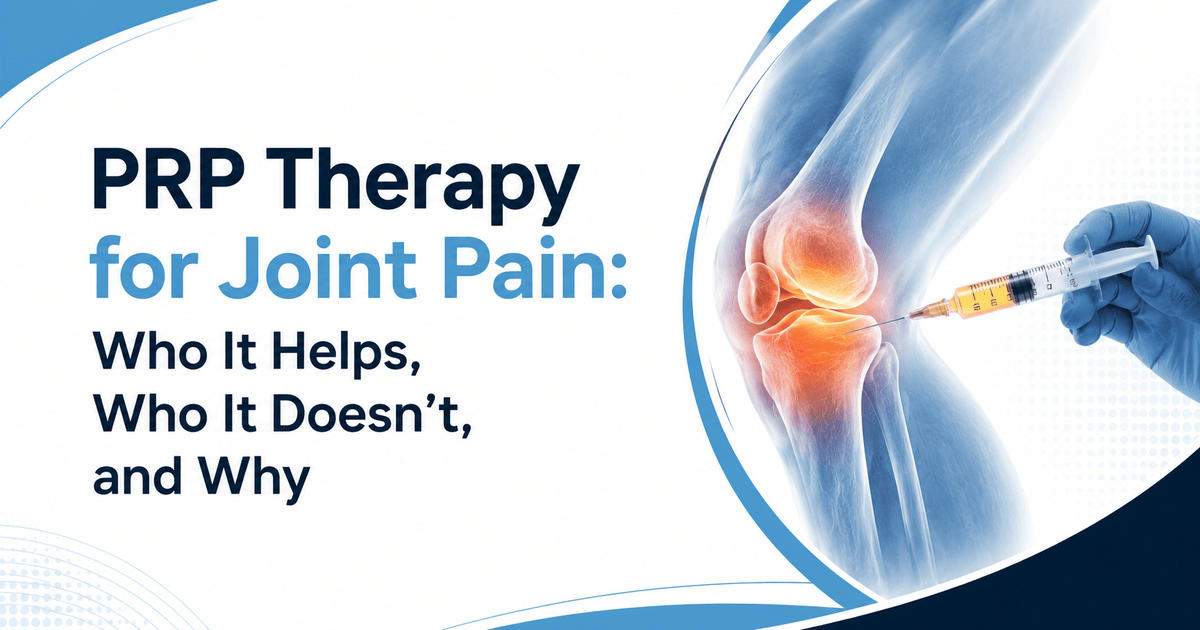
Painful joints tend to sneak up and limit your horizons. At first, they affect only the steps; then the morning exercise routine; then the fun activities you used to look forward to on weekends. At Restore Spine and Pain, we see patients daily who, despite exhausting conventional approaches like anti-inflammatories, physical therapy, or even cortisone injections, cannot find adequate pain relief.
Many of our patients with joint problems find that PRP therapy helps them take an entirely different approach. Not every patient can benefit from PRP treatment, and we firmly believe that transparency is the key to establishing genuine trust with our patients. With that in mind, today’s post covers the basics of PRP treatment, the diseases it’s most effective at treating, and the realistic criteria we consider when deciding if a particular patient is a good match for the procedure.
What Is PRP Therapy?
PRP involves the use of your blood to form the basis of treatment. Your blood is extracted from your arm, processed through the centrifuge machine to separate out the platelets, which have potent growth factors, and then the concentrated platelets are injected directly into the injured area. Since your own blood is being used, there is little chance of an allergic response to the treatment.
The growth factors contained in PRP initiate the body’s natural healing cascade, which includes the reduction of inflammation in the affected area, increased collagen synthesis, improved blood flow to the damaged area, and in some cases the arrest of joint degeneration. The procedure takes 60-90 minutes on average.
Problems That Can Be Addressed Using PRP Therapy
- Knee joint osteoarthritis
- Hip joint osteoarthritis and bursitis of the hip joint
- Arthritis of the shoulder and shoulder tendinitis (partial tearing)
- Tennis elbow
- Golfers elbow
- Achilles tendonitis and patellar tendinitis
- Strained muscles and torn muscles
- Sprain in the ligaments with chronic instability
Who Gets the Best Results from PRP?
There are some common traits among those people whose condition may improve when treated with PRP. These include having a definite source of pain in their body – an injured, damaged, or degenerated joint, tendon, or tissue confirmed via imaging techniques. It is necessary that such patients have undergone first-line therapy, which did not produce desired results. In addition, people suffering from mild to moderate stages of the disease respond better to the procedure. End-stage joint damage with cartilage loss would not be appropriate for the treatment.
One of the indications that PRP treatment can be attempted includes the fact that initial cortisone injection was effective, but stopped being efficient enough.
Cost vs Value Perspective: Looking Beyond the Price Tag
The next question that comes up when discussing PRP injections concerns their cost. Again, this is understandable, but considering treatments like PRP, it would be better to focus on the value of the treatment itself rather than its cost.
Need for Fewer Drugs
Joint pain sufferers typically use non-steroidal anti-inflammatory drugs or other pain relievers to alleviate their condition. However, as we mentioned above, such treatment only addresses the symptoms and not the cause. If PRP is successful, you will notice an improvement in your condition, making it possible to use fewer drugs, which saves money and reduces dependence on them.
Opportunity to Avoid Surgery
Surgical intervention is a serious procedure requiring considerable investment and time for rehabilitation. In addition, it may have negative consequences and undesirable side effects. PRP provides a safer alternative treatment approach that does not involve any risks and adverse reactions associated with surgical intervention. Some people can postpone or even avoid surgery thanks to the PRP treatment.
Long-Term Solution Versus Quick Fixes
Corticosteroid injections are commonly employed to quickly alleviate pain, but their effects typically fade away in a few weeks or months. PRP treatment offers an alternative approach. Through its ability to facilitate self-repair, its benefits may not manifest instantly, but when they do, they are usually long-lasting. For someone frustrated by the repeated cycle of quick fixes, such a change from a short-term solution to a longer-lasting solution can have a significant impact.
The Big Picture
Looking at the broader picture, the importance of PRP therapy extends far beyond the actual treatment process. In the long run, it means fewer follow-up treatments, lower dependency on medication, and even the freedom to continue exercising without resorting to more aggressive treatment methods. For the appropriate patient, this can add up to quite a lot indeed.
Who Should Not Consider PRP Treatment?
At our practice, we are firm believers in providing our patients with complete transparency. PRP treatment is contraindicated for tendon tears where surgical intervention is required, for advanced stages of arthritis involving bone degeneration, for individuals with active infections or blood-related issues, or for people taking blood-thinning medication. We will be able to explain this clearly to you during your consultation.
Consultation Expectations
When coming to the Restore Spine & Pain Center for the first time, patients should expect a thorough examination, rather than a sales pitch. Your medical history, imaging findings, past interventions, treatment objectives, and level of physical activity will all be taken into consideration. Then, our professional opinion regarding whether or not PRP injections are right for you will be provided, along with the potential results you can achieve, as well as alternative options if you are not a candidate for PRP therapy.
If you are looking for more information regarding PRP therapy and suffer from joint pain, tendon injuries, and muscular discomfort, come talk to us!