


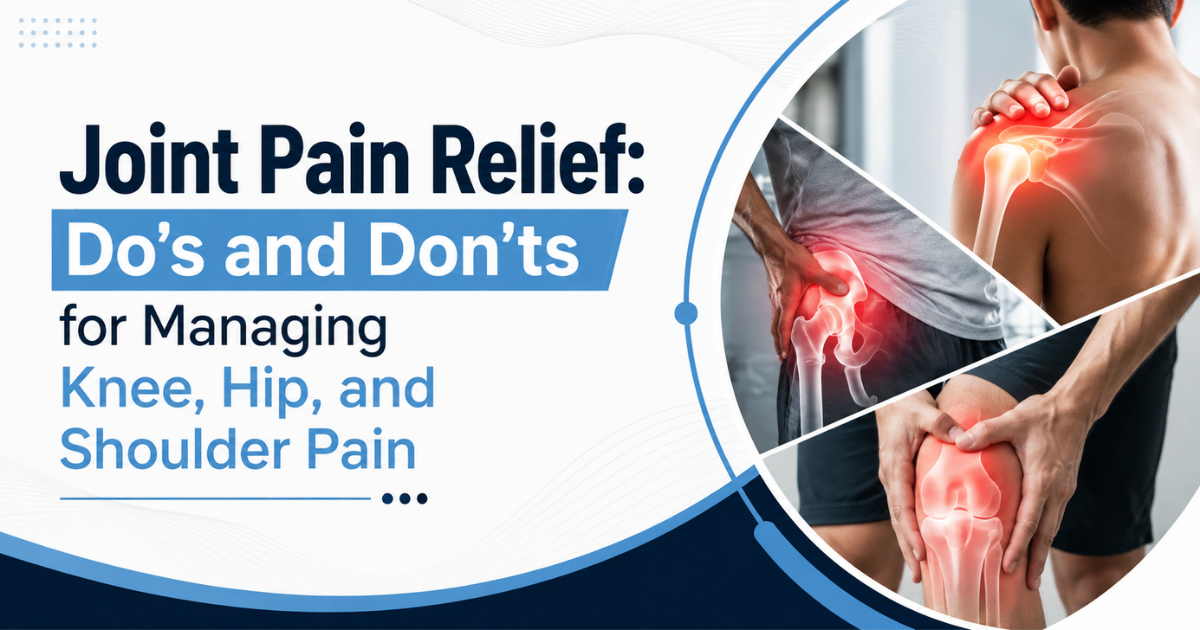
Joint pain has a way of sneaking into your daily routine.
At first, it’s mild. Just a little stiffness when getting out of bed. Then you start avoiding stairs. Then long walks. Then lifting things overhead.
Most people try to push through it.
Sometimes that works. Sometimes it makes things worse.
Here’s the truth — managing joint pain isn’t about doing more. It’s about doing the right things.
Let’s break it down simply.
Learn more about joint pain treatment options in Holly Springs.
DO: Keep Moving (Even When It’s Uncomfortable)
This surprises people.
When your knee or shoulder hurts, your first instinct is to stop using it. Short-term rest is fine. But complete rest for days or weeks? That usually backfires.
Joints need movement. Controlled movement.
Low-impact activities like:
- Walking
- Swimming
- Light cycling
- Gentle stretching
help maintain circulation and reduce stiffness. Movement really does help with joint pain relief.
DON’T: Ignore Swelling or Warmth
If your joint is swollen, warm, or red — that’s inflammation.
Pushing through inflamed joint pain can make things worse.
In those cases:
- Ice can help calm inflammation
- Elevation can reduce swelling
- Temporary activity changes can help
The key is knowing the difference between soreness and inflammation. Persistent inflammation may require non-surgical pain management treatments.
DO: Strengthen the Muscles Around the Joint
Here’s something most people don’t realize.
The joint itself isn’t the only issue.
Weak muscles around the joint increase stress inside the joint. Strong muscles absorb impact.
- For knee pain → focus on quads and hips
- For shoulder pain → focus on the rotator cuff and upper back
- For hip pain → glutes matter more than most people think
Strength creates stability. Stability reduces irritation. This approach is often used in treating knee pain, shoulder pain, and hip joint conditions.
DON’T: Depend Only on Pain Medication
Over-the-counter anti-inflammatories can help in the short term. But relying on them daily without addressing the cause won’t solve chronic joint pain.
If you’re taking medication just to get through the day, it may be time to explore other treatment options. Options like PRP therapy and regenerative medicine may help support healing.
DO: Maintain a Healthy Weight
Even small weight changes can reduce stress on weight-bearing joints.
For example, every extra pound adds more pressure across the knee when walking. This isn’t about perfection. It’s about reducing long-term strain.
DON’T: Wait Until It Becomes Severe
One of the biggest mistakes we see?
People wait too long. They assume it’s “just aging.” Or they think surgery is the only option. That’s rarely the case.
There are many non-surgical treatments for knee, hip, and shoulder pain — including physical therapy, image-guided injections, and regenerative options like PRP. Early evaluation usually means simpler treatment. A consultation with a pain management specialist in Holly Springs can help identify the root cause early.
When Should You See a Specialist for Joint Pain?
Consider getting evaluated if:
- Pain lasts more than a few weeks
- The joint feels unstable
- You notice catching or locking
- Pain interferes with sleep
- You’re avoiding activities you used to enjoy
Joint pain relief is possible. But it starts with understanding what’s actually causing the problem.
Final Thoughts
Joint pain doesn’t just affect the joint. It affects how you move. How do you sleep? How active do you feel? Most cases improve with the right balance of movement, strengthening, and targeted treatment. You don’t have to live with it. And you don’t have to jump straight to surgery either.
If joint pain is interfering with your life, it may be time to explore personalized treatment options and get back to moving comfortably again.
Visit https://restorespineandpain.com/ to schedule a consultation.
FAQ
Q1: What is the fastest way to relieve joint pain?
Gentle movement, ice or heat therapy, and anti-inflammatory strategies can help. However, long-term relief depends on treating the root cause.
Q2: When should I see a doctor for joint pain?
If pain lasts more than a few weeks, worsens, or affects your daily activities, it’s time to get evaluated.
Q3: Can joint pain go away without treatment?
Mild joint pain may improve with rest and movement. But persistent pain often requires targeted treatment.
Q4: What are non-surgical treatments for joint pain?
Options include physical therapy, joint injections, nerve blocks, and regenerative medicine like PRP.
Q5: Is walking good for joint pain?
Yes. Low-impact movement like walking helps improve circulation, reduce stiffness, and support joint health.