


Serving patients in Holly Springs, Raleigh, Apex, and Cary, NC
We’ve all heard it before: “It’s just a little whiplash. I’ll be fine in a few days.”
And sometimes, that’s true.
But here’s what we see every day — whiplash isn’t one single injury. It’s a spectrum. And the way your body responds to trauma can be delayed.
The version of you standing on the side of the road after a fender bender… It isn’t always the version of you that wakes up 48 hours later.
Learn more about how we treat neck pain after an accident at Restore Spine and Pain.
What’s Actually Happening in Your Neck?
Think of your neck like a bridge — stable, but not built for sudden force.
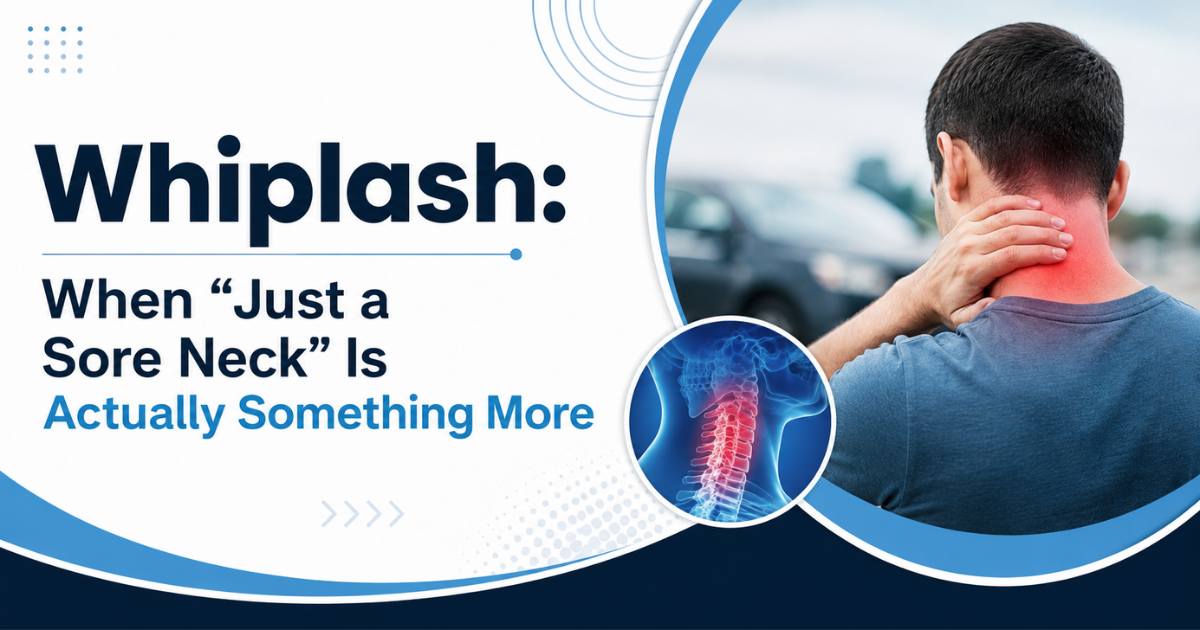
When you are hit from behind, your head snaps forward and backward quickly. That motion puts stress not just on muscles, but also on:
- Ligaments
- Facet joints
- Discs
- Nerves in the cervical spine
In some cases, this can lead to ongoing issues like chronic neck pain or cervical spine conditions if not addressed early.
The “Adrenaline Mask”: Why You Feel Fine at First
One of the biggest misconceptions about whiplash is this: “If it doesn’t hurt right away, it’s not serious.”
That’s not always true.
Right after an accident, your body releases adrenaline and cortisol. You are in survival mode. These chemicals are helpful — but they also mask pain.
Once things settle down — usually within 24 to 72 hours — inflammation starts to build, and symptoms begin to show up.
That’s when patients often notice stiffness, headaches, or reduced movement.
The Red Flags: When to Listen to Your Body
Some soreness is expected. But certain symptoms suggest something more than a simple strain.
Pay attention to:
Pain That Gets Worse Instead of Better
Most minor injuries gradually improve. If your neck feels tighter, more painful, or starts “locking up,” that’s a sign to get checked.
Tingling or “Electric” Sensations
Pins and needles, burning, or pain traveling down your arm may indicate nerve irritation.
This may be related to cervical radiculopathy or nerve-related pain.
Weakness in Your Hands or Arms
If gripping objects feels harder than usual, don’t ignore it. Weakness is an important warning sign.
Dizziness, Headaches, or Vision Changes
Blurry vision, brain fog, or headaches that feel different from your usual tension headaches should be evaluated.
Why “Waiting It Out” Isn’t Always the Best Plan
We understand — no one wants to spend time at a doctor’s office after a minor accident.
But with whiplash, timing matters.
Early evaluation can mean the difference between a short recovery…
and ongoing, chronic discomfort.
A simple rule of thumb:
If pain is affecting your sleep, your work, or your ability to turn your head safely, it’s time to get it checked.
Early care with a pain management specialist in Holly Springs can help prevent long-term issues.
Your Path Back to Normal
The good news? Most whiplash injuries are treatable — especially when addressed early.
Treatment options may include:
- Physical therapy
- Anti-inflammatory care
- Image-guided injections
- Targeted non-surgical treatments
Explore more about non-surgical pain management options available at Restore Spine and Pain. Surgery is rarely the first step.
Final Thoughts
You don’t have to “tough it out.” If something feels off after an accident — trust that instinct. It’s always better to rule out a serious issue early than to deal with chronic pain later.
Take the Next Step
If you are experiencing neck pain, stiffness, or unusual symptoms after an accident, Restore Spine and Pain offers personalized evaluation and treatment in Holly Springs, NC.
Visit https://restorespineandpain.com/ to schedule a consultation
You don’t have to guess what’s going on — and you don’t have to live with it.
FAQ
Q1: How long after an accident can whiplash symptoms start?
Symptoms often appear 24–72 hours after an accident due to delayed inflammation.
Q2: What are the serious signs of whiplash?
Radiating pain, numbness, weakness, dizziness, and worsening symptoms should be evaluated.
Q3: Should I see a doctor if my neck doesn’t hurt right away?
Yes. Some injuries take time to show symptoms, and early evaluation can prevent complications.