


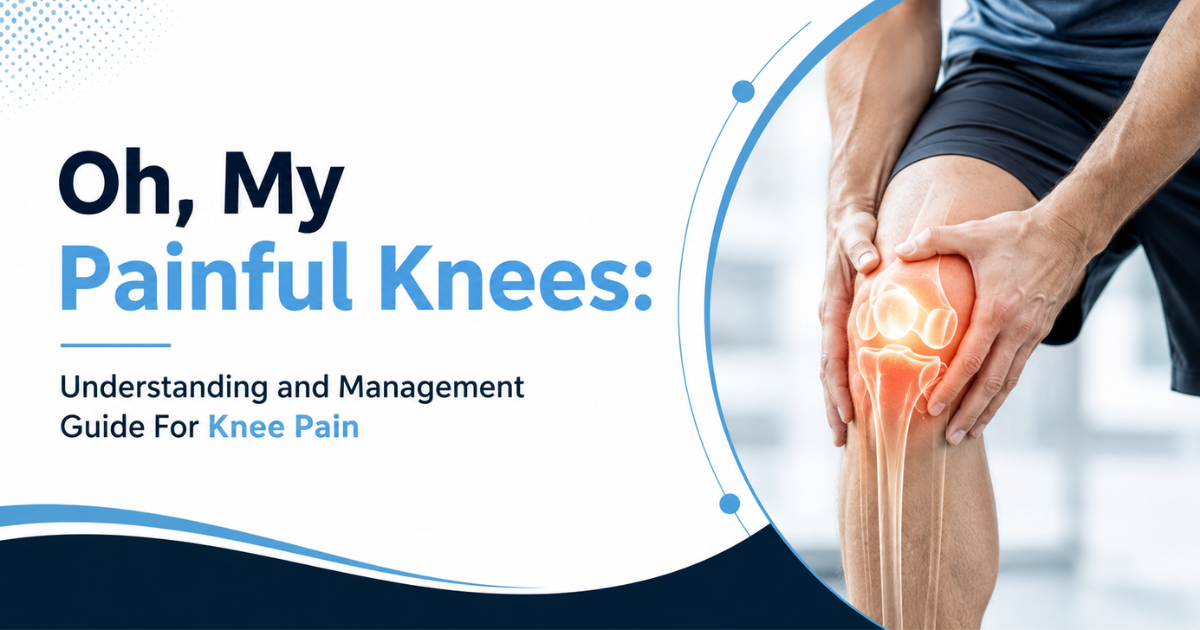
To be truthful, you won’t appreciate your knees until you begin to experience knee pain, from a quick, sharp “stab” to difficulty standing in a confined space. Is it me, or is climbing every flight upstairs similar to climbing up Mount Everest? No doubt, the second most universal complaint of all people who have pain in one form or another is knee pain.
The good news? Most knee pain isn’t a “forever” sentence. With the right approach, you can get back to moving without the soundtrack of pops and cracks.
Why is it so painful?
The knee is one of the most highly developed pieces of biological engineering in your body. It is a hinge joint that connects three bones; your femur(the thigh bone), your tibia(the shin bone), and your patella(the kneecap). It is connected through several ligaments and is also protected from damage or injury through the presence of cartilage, which acts as a cushioning agent for both the femur and tibia.
- The “Weekend Warrior” Strain – Too much exercise during the weekend, such as hitting the gym or playing soccer on Saturday, impacts your tendons and muscles negatively.
- Osteoarthritis – This is a degenerative arthritis caused by the wearing away of the cartilage over time, which leads to stiffness and pain.
- Runner’s Knee – Also known as patellofemoral pain syndrome (PFPS), this condition occurs when there is improper tracking of the kneecap within its groove.
- Meniscus Tears – This type of injury occurs from a rapid twisting motion and results in a tear in the shock-absorbing “cushion” that protects the knee.
The “At-Home” Rescue Plan: R.I.C.E.
If your pain is mild and didn’t result from a major trauma, the R.I.C.E. method is your first line of defense:
Rest: Give it a break. Avoid activities that aggravate the pain.
Ice: Apply a cold pack for 15–20 minutes several times a day to reduce swelling.
Compression: Use an elastic bandage to provide support and keep inflammation down.
Elevation: Keep your knee propped up on pillows—ideally above the level of your heart.
Pro Tip: Don’t just rest forever! Total inactivity can make joints stiff. Gentle movement, like swimming or stationary cycling, keeps the joint lubricated without the high impact.
When to See a Pro
I’m all for DIY recovery, but sometimes you need an expert. Seek medical advice if:
You can’t put weight on the leg.
The knee looks visibly deformed or “out of place.”
There is significant swelling or redness (which could indicate infection).
The knee “locks” or feels like it’s going to give way.
Strengthening: Your Best Long-Term Defense
The best way to protect your knees isn’t actually by working on the knees themselves—it’s by strengthening the muscles around them. Strong quadriceps, hamstrings, and glutes act like shock absorbers, taking the pressure off the joint.
Straight Leg Raises: Great for the quads without putting pressure on the joint.
Wall Sits: Controlled, static strength building.
Clamshells: Essential for hip stability, which prevents your knees from collapsing inward.
Knee pain is frustrating, but it’s usually your body’s way of asking for a little more support—literally and figuratively. Listen to it, strengthen your foundation, and don’t be afraid to take it slow.